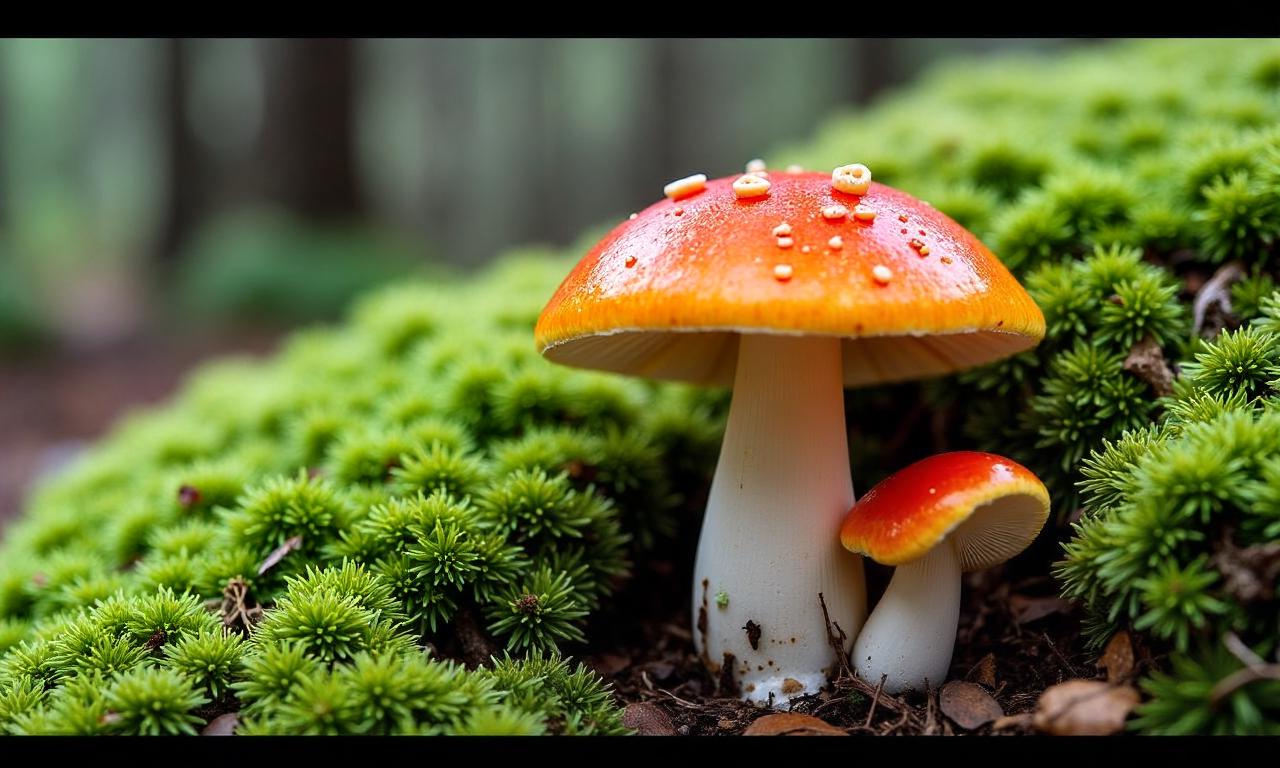
Killer fungus’ Potential to Restore UK Habitats
Samael.lol – British scientists have uncovered a previously unknown fungus that targets the aggressive heath-star moss, offering a glimmer of hope for revitalizing native ecosystems that have been severely impacted. This discovery highlights a natural defense mechanism against invasive species, which has long posed a threat to the country’s biodiversity. The fungus, named *moss die-back*, has been identified as a key player in the decline of the heath-star moss, a plant that has spread rapidly across the UK, displacing native flora.
A Natural Counterattack
While fungi are typically viewed as detrimental, this particular species is emerging as a beneficial force. Dr. George Greiff, a researcher at Amgueddfa Cymru museum in Cardiff, first noticed the effects of this fungus while exploring the Isle of Wight four years ago. He observed dead patches of heath-star moss on a cliffside and collected samples, only to later realize the cause of their demise. Over time, he documented increasing instances of moss decay, which led to a collaborative effort with scientists in France to unravel the mystery.
“The first time I saw it, I had no idea what it was. I threw it in the bin,” says Greiff, reflecting on his initial encounter with the invasive plant.
Greiff’s findings reveal that the fungus, now officially recognized as *moss die-back*, has been silently dismantling the heath-star moss. This plant, known for its aggressive spread, has colonized hillsides, sand dunes, and even urban gardens, often outcompeting native species. Greiff notes that its reach extends to tarmac, underscoring its relentless nature. “It’s a pretty-looking thing,” he acknowledges, plucking fragments from a dead moss clump. “But it’s caused a lot of problems.”
The Spread of Invasive Species
Over 2,000 non-native plants and animals have been introduced to Britain from global regions, either accidentally or intentionally. Some, like the North American grey squirrel, have dramatically altered the landscape, nearly driving out native red squirrels. In the plant kingdom, species such as Japanese knotweed and rhododendron stand out for their destructive impact. Japanese knotweed, for instance, can damage infrastructure, while rhododendron releases toxins into soils, stifling growth of other vegetation.
The heath-star moss, however, has proven particularly damaging to fragile habitats. Scientists speculate that it arrived in the UK during the 1940s from the southern hemisphere and rapidly spread by the 1990s. “This moss has just exploded,” Greiff explains, contrasting its current dominance with the native species that once thrived in the same heathlands. He points out that native mosses have either vanished locally or been drastically reduced, leaving behind areas of ecological concern.
Revealing the Fungus
Greiff’s journey to identify the fungus involved meticulous observation and DNA sequencing, a process that required extensive laboratory work. During a visit to Bannau Brycheiniog national park near Abergavenny, south Wales, he led a walk through the landscape, highlighting the fungus’s visible effects. “It’s a big as my hand,” he remarked, gesturing to a brown ring of dead moss. While the scene was less dramatic than anticipated, macro lenses captured the fungus’s microscopic activity, revealing white blobs suspended on moss tips. These structures are the fungus in action, decomposing the invasive plant.
“It’s taken a lot of DNA sequencing to fully identify this fungus,” Greiff says, demonstrating dead moss under a microscope. “The fungus clings onto the moss stem, ballooning like candy floss around a stick.”
Interestingly, the fungus appears to have a specific target: the heath-star moss. Greiff’s research suggests it may also affect a limited number of other moss species, though further studies are needed to confirm this. He hypothesizes that the fungus could originate from a native species that has evolved to combat the invasive plant. This theory aligns with the broader pattern of natural defenses against non-native organisms, such as the ash die-back fungus, which has devastated up to 80 million ash trees.
Ecological Significance of Moss
Mosses play a vital role in Britain’s ecosystems, forming the foundation of rare habitats like coastal woodlands and carbon-rich peatlands. With over 1,000 moss species in the UK, their presence is essential for maintaining biodiversity. However, invasive plants like the heath-star moss are challenging this balance, outcompeting native species for resources. Greiff’s discovery provides a potential solution: a natural agent that could reverse the damage caused by these intruders.
His work underscores the importance of understanding both threats and solutions to environmental challenges. By identifying the fungus’s role in decaying heath-star moss, Greiff has opened new avenues for conservation. He jokes that the map of the fungus’s spread mirrors his own travel routes, emphasizing its widespread presence. “It’s a rare example of the British environment fighting back,” he says, highlighting the significance of this natural process in preserving native habitats.
Despite its benefits, the fungus remains a subject of study. Researchers are still investigating its full range of effects, including whether it could impact other species. For now, Greiff sees it as a tool for restoring balance to ecosystems where heath-star moss has thrived unchecked. As more data emerges, the potential of this “killer fungus” to aid conservation efforts becomes increasingly clear. Its discovery may inspire new strategies in the ongoing battle against invasive species, offering a natural ally in the fight to protect Britain’s delicate ecological heritage.