Why have US-South Africa relations soured?
Trump’s critique and the shifting alliance
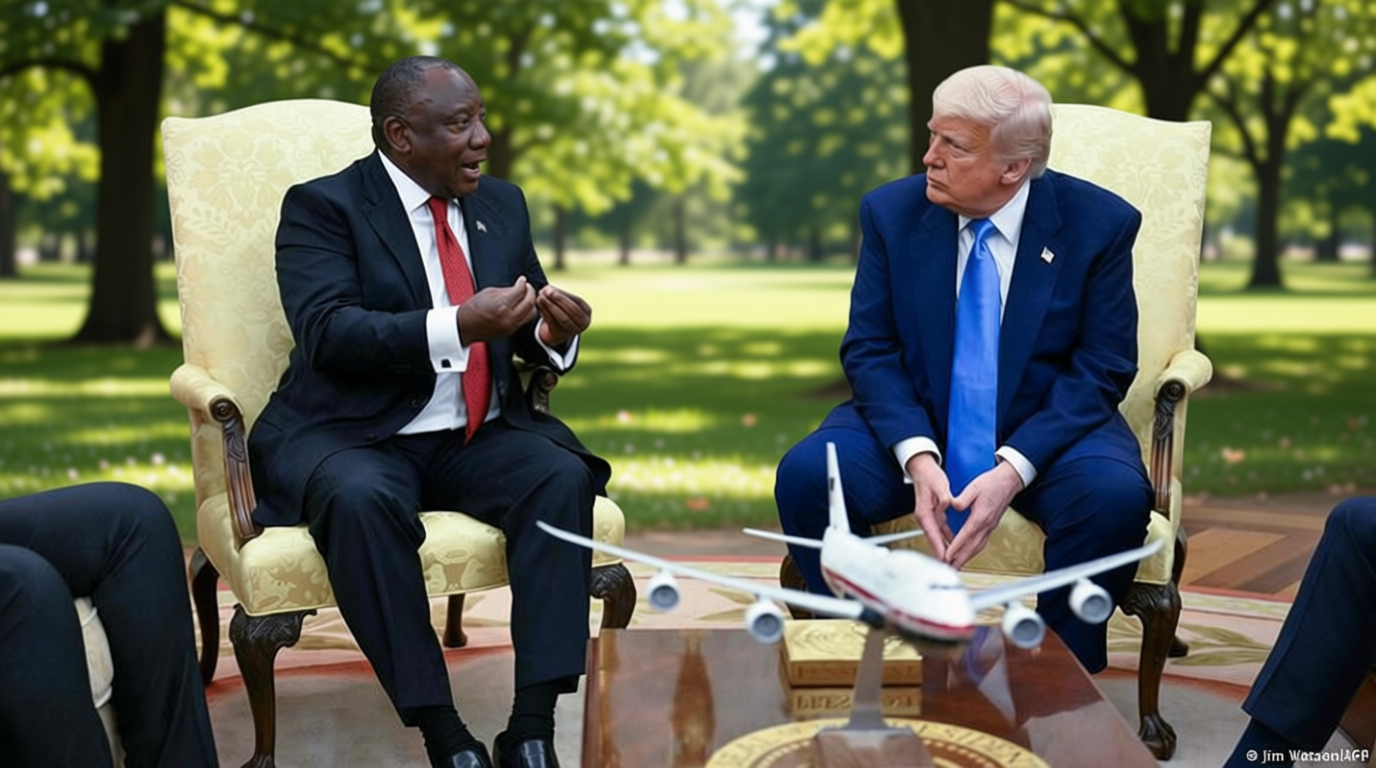
Samael.lol – South African President Cyril Ramaphosa recently criticized “vicious global right-wing forces,” a remark widely interpreted as a direct jab at US President Donald Trump. This tension has escalated significantly since Trump’s re-election in 2025, with the president accusing the nation’s white minority of facing a genocide, though no substantial evidence has been presented to support the claim.
“This has been a long time coming,” said Daniel Silke, head of the Political Futures Consultancy in Cape Town. “Over the past decade, South Africa has gradually realigned its foreign policy, moving away from the US and the West toward emerging economies like the BRICS states.”
South Africa’s new direction includes strengthening partnerships with BRICS nations, which challenge the dominance of Western alliances such as the G7. The ANC’s historical ties to Moscow, dating back to the anti-apartheid era, have influenced its current alignment with Russia, despite its invasion of Ukraine. Similarly, closer links with China, another BRICS member, have further complicated ties with the US.
Historical distrust and policy changes
Relations between the two nations have not always been smooth. As early as the 1980s, the ANC expressed skepticism toward the US, particularly after Reagan’s administration hesitated to impose strict sanctions on the apartheid regime. This sentiment intensified when Bill Clinton took office, marking a shift in US-South Africa diplomacy post-apartheid.
The Trump administration has since taken a more confrontational stance, influencing decisions like cutting aid to South Africa and disinviting it from the G7 summit in Evian. These moves have had tangible consequences, including disruptions to HIV programs and a reduction in refugee admissions, which South Africa argues have worsened its humanitarian challenges.
Geopolitical dynamics and domestic influence
Noor Nieftagodien, director of the History Workshop at the University of the Witwatersrand, noted that Trump’s inner circle, including figures like Elon Musk and Peter Thiel, has deepened the rift. Musk, a South African native, and Thiel, who grew up in Namibia, have linked the US to right-wing groups that spread the narrative of a white genocide in South Africa.
Washington’s latest ideological shift has placed it in direct conflict with the ANC. The Trump era has seen a strategic realignment, with the US aiming to counter South Africa’s growing influence among emerging economies. Meanwhile, South Africa’s recent accusations against Israel at the International Court of Justice in December 2023 further strained ties, prompting the US to formally support Israel in March 2026.