Depression fears drove Orie’s retirement decision
Samael.lol – Delicious Orie’s choice to leave boxing was fueled by concerns over his mental well-being. In a candid moment with BBC Sport, he admitted,
“I fear I would have become a world champion, but one who was deeply unhappy, lonely, and full of sorrow.”
This realization came after his professional debut a year prior, where he seemed destined for success.
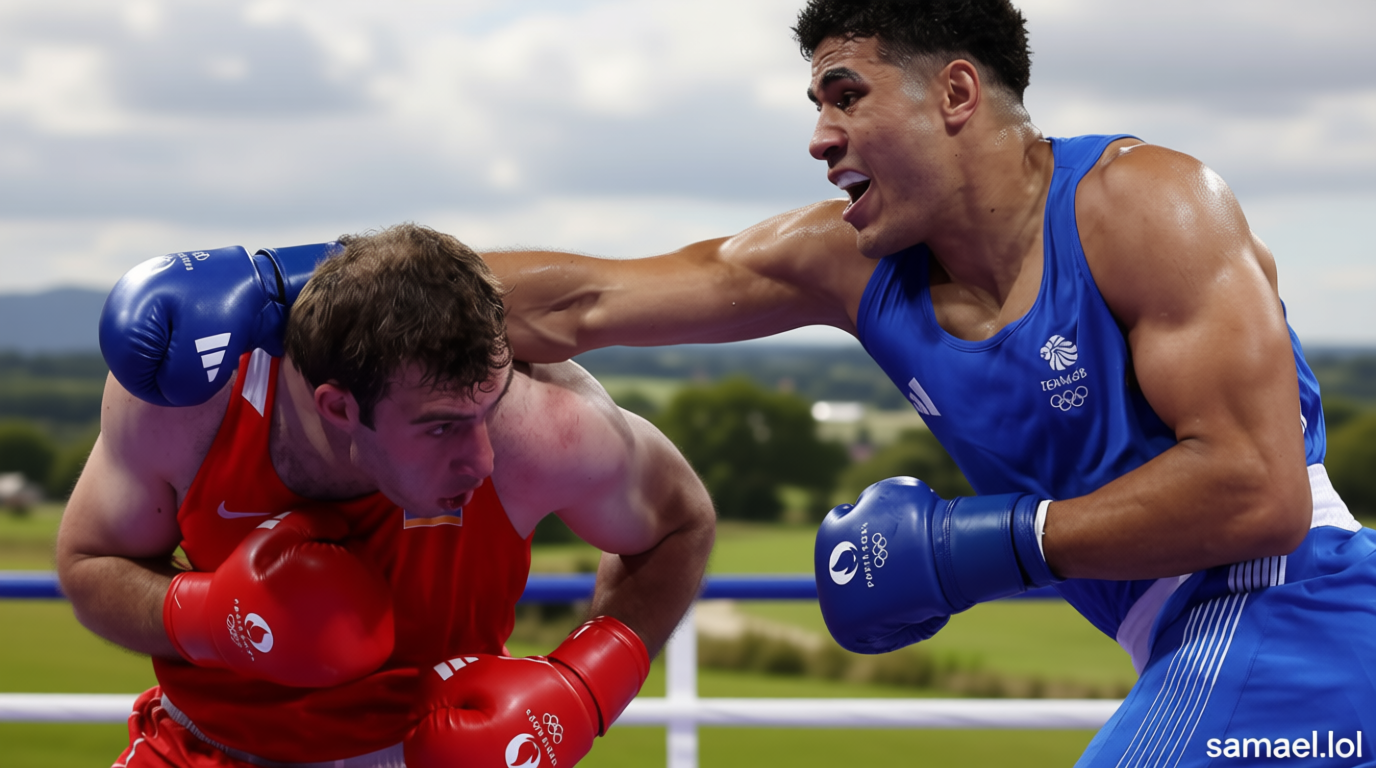
Orie, who relocated to the UK as a child from Russia, had already made a name for himself in amateur boxing. Despite starting at 18, he rose to prominence, eventually securing a place in Team GB. His ambitions were clear: to win Olympic gold. However, at the Paris Olympics, his dreams were dashed when he was eliminated in the round of 16 by Armenia’s Davit Chaloyan.
Following his Olympic exit, Orie became a focal point for major promotions. Frank Warren’s Queensberry secured his rights over Eddie Hearn’s Matchroom and even drew interest from the WWE. Yet, a month later, he stunned the boxing world by announcing his retirement.
“I wanted to step back before the sport revealed its toll,” he explained. “I turned pro for financial stability, but money alone couldn’t fill the void I felt.”
Orie noted that while money provided some happiness, it offered no true fulfillment.
His professional journey began with high expectations. The debut win over Milos Veletic was intended to be a smooth entry, but it was anything but. The fight was grueling, and he questioned his purpose.
“I had to choose between retreating when I felt defeated or continuing despite the doubts,” he said. “There was a moment where I could have walked away, but I kept going for the prize.”
This decision was driven by both financial needs and a fear of losing his mental health.
Orie’s struggle mirrored that of other boxers, like Tyson Fury, who faced similar challenges.
“I saw how mental health can be overlooked until it’s too late,” he reflected. “Being strong doesn’t mean ignoring emotions; it’s about addressing them before they take over.”
He also emphasized the importance of education in recognizing these signs.
Now, Orie works as a financial advisor, aiming to guide young athletes toward a balanced life. He regrets not sharing his decision with those close to him, as they were equally surprised.
“I want to be a role model, like Anthony Joshua was to me,” he said. “If I kept pushing, I’d only be chasing external validation, not inner satisfaction.”
His focus has shifted from the ring to inspiring others to prioritize fulfillment over fame.