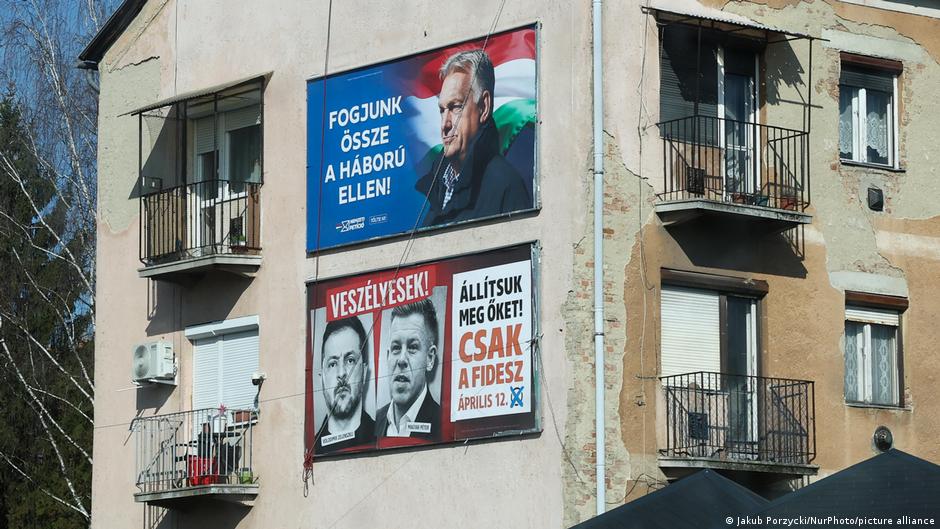
Hungary: Scandal, Fear and Hope Ahead of Vote
Samael.lol – Hungary’s upcoming election has become one of the most tense contests in decades, marked by rampant fake news and a surge in political scandals. Since the fall of the Soviet Union in 1989, the nation has not seen such a charged atmosphere before a vote. Opposition leader Peter Magyar, though not yet elected, has begun acting as if he already held the prime ministership, outlining the priorities of the new government and expressing willingness to engage with voters who support his rival. Magyar, a 42-year-old lawyer and former diplomat, has been the face of the opposition for two years, yet his recent confidence seems to have grown significantly.
Magyar’s shift in demeanor reflects a broader optimism among many Hungarians, who view the election as a potential turning point. While dissatisfaction with Prime Minister Viktor Orban’s leadership has been building for years, the current campaign has sparked a sense of urgency for change. However, this optimism is tempered by deep unease over Orban’s efforts to sway the outcome, which have painted a stark, alternative picture of Hungary’s future. Recent opinion polls indicate that voters are increasingly worried the election might be canceled at the last minute or manipulated to favor Orban’s party.
A Shift in Perception
Political scientist and sociologist Laszlo Keri, who once mentored young Orban during his law studies, draws comparisons between the present moment and the 1989–1990 period. “This is an election that could shape Europe’s future,” Keri said in an interview with the Hungarian newspaper Uj Szo, adding that voter turnout could match that of the first free parliamentary elections held in March 1990. At the same time, researchers from the Budapest-based Policy Capital institute note a transformation in the election’s dynamics, describing it as a move “from a safe choice to an uncertain one,” echoing Fidesz’s own campaign slogan.
“This is an election that could influence Europe’s future, at a moment when Europe is trying to find its way.” — Laszlo Keri
As the vote approaches, Orban and his Fidesz party have faced a series of major controversies. These scandals have eroded support among undecided voters, with independent polls suggesting a decisive win for Magyar and his Tisza party. One poll even predicted a two-thirds majority, though experts caution that such results may not fully capture the views of all demographics. Despite this, the data clearly shows that a majority of voters are eager to end the Orban era and embrace a new political, social, and economic direction.
Scandals That Shook the Campaign
A pivotal moment came when Bence Szabo, a former criminal investigator, went public after his department—typically focused on online child pornography—was repurposed by Orban’s regime for a covert intelligence operation targeting Tisza. Szabo’s revelations resonated widely, as his story mirrored the concerns of many Hungarians who feel marginalized by the government. Another controversy involved the Hungarian army, which was described as operating under conditions ranging from risky to dire as it prepared for a costly deployment to Chad. The mission, critics argue, was driven by Orban’s son Gaspar, who envisioned a “religious mission to save Africa.”
Recent weeks have also unveiled other scandals, including the documentary The Price of the Vote, released on YouTube in late March. It alleges that Fidesz spent years purchasing votes from drug users, Roma communities, and economically disadvantaged groups. Earlier in February, news emerged that the government was aware of hazardous working conditions at a Samsung battery plant near Budapest, which also polluted soil and water, yet took no action. These events have deepened public distrust, positioning the election as a critical test for Hungary’s political landscape.