Why Cloud Computing Still Relies on Coal and Gas
Samael.lol – Despite the rising use of renewable energy in powering data centers, fossil fuels continue to dominate the electricity supply for these energy-intensive facilities. As demand for data processing grows, grid operators are increasingly turning to coal and gas to meet immediate needs, even as plans for renewable expansion face delays.
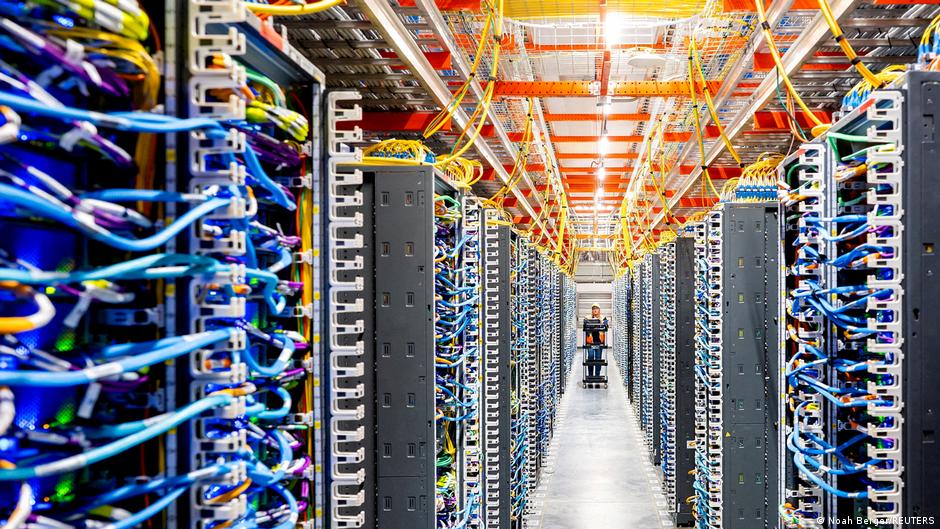
The United States hosts the most data centers globally, with Virginia dubbed the “data center capital of the world.” These centers require massive energy consumption to run servers and support digital services, including AI models. This surge has pushed transmission grids to their limits and raised electricity costs, prompting utilities to prioritize traditional energy sources.
According to a recent Reuters report, the nation’s largest power grid delayed or scrapped the closure of 60% of its fossil fuel plants in 2023. PJM Interconnection, which serves 13 eastern states, including Virginia, has kept many coal and gas facilities operational. “Electricity demand is outpacing supply, and generators are adapting,” said Jeff Shields, a PJM spokesperson, emphasizing the urgency of securing power.
Some companies are compromising on clean energy goals to ensure reliability. Dominion Energy, based in Virginia, has shifted focus toward gas and nuclear power until 2039, despite its earlier pledge to achieve 100% renewables by 2045. In Nevada, NV Energy warned that data centers could hinder progress toward its 2030 renewable target. North Carolina, home to nearly 100 data centers, saw NextEra Energy abandon its 2045 zero-carbon plan in December.
Global energy analyst Dave Jones of Ember noted that data centers’ unique energy demands justify the continued reliance on fossil fuels. Current AI centers consume as much power as 100,000 homes, while future projects may require 20 times that. The unpredictability of technological growth complicates long-term planning. “Many companies see gas as the simplest solution,” Jones explained, adding that some centers are exploring on-site generation.
The International Energy Agency reports that natural gas accounts for over 40% of data center electricity in the U.S., with coal contributing 15%. Globally, these fuels are expected to cover more than 40% of additional energy needed by data centers through 2030. Demand from new facilities will likely drive growth in gas and coal plants in the near term.
Low gas prices, coupled with import tariffs on solar panels and other renewables, have slowed the expansion of clean energy infrastructure. Jones also pointed to political factors, citing the rollback of climate policies under President Trump. “There’s little appetite for climate responsibility these days,” he said. “Many clean energy commitments have been abandoned.”
Since taking office, Trump has actively promoted fossil fuels through executive orders. The Department of Energy has highlighted the role of coal and nuclear energy in sustaining the nation’s power needs, particularly for data center expansion and AI development. “How can we reindustrialize America or win the AI race without this trajectory?” the Energy Secretary asked, underscoring the policy’s impact on energy trends.
To view this video, please enable JavaScript and upgrade to a web browser supporting HTML5 video.
To view this video, please enable JavaScript and upgrade to a web browser supporting HTML5 video.