Iran War: Second Attempt at Peace Talks Takes Shape
Samael.lol – The White House confirmed that U.S. envoys Steve Witkoff and Jared Kushner will travel to Islamabad on Saturday to engage in discussions with Iran. This marks the second round of ceasefire negotiations between the two nations, following previous efforts. Iran’s Foreign Minister Abbas Araghchi is also visiting Pakistan, according to official statements.
U.S. Delegation and Iran’s Stance
White House press secretary Karoline Leavitt shared that Vice President JD Vance, who led initial talks in Islamabad two weeks ago, will not accompany the delegation this time. However, she noted that Vance remains “deeply involved” in the process. “Everybody will be on standby to fly to Pakistan if necessary,” Leavitt added, emphasizing the U.S. president’s intent to assess Iran’s position.
“We’ve certainly seen some progress from the Iranian side in the last couple of days,” Leavitt remarked, though she refrained from specifying the details of the U.S. team’s findings.
Araghchi stated via social media that his visit to Islamabad, Muscat, and Moscow aims to “closely coordinate with our partners on bilateral matters and consult on regional developments.” While he confirmed his travel plans, he did not explicitly confirm talks with the U.S. This follows a phone conversation between Araghchi and senior Pakistani officials earlier Friday.
Regional Impact and International Support
Pakistani authorities have been actively working to facilitate renewed dialogue between the U.S. and Iran. Meanwhile, French President Emmanuel Macron expressed readiness to “mobilize its partners” by hosting a conference to aid Lebanon’s military and economic recovery. This pledge came after Lebanese President Joseph Aoun urged the European Union to support reconstruction efforts during a speech in Cyprus.
“Lebanon’s stability is part of the region’s stability,” Aoun declared. “Lebanon refuses to be a bargaining chip in regional conflict.”
Aoun highlighted Iran’s role in the ongoing talks, noting that the country has prioritized a permanent ceasefire between Israel and Hezbollah. He reiterated Lebanon’s commitment to “de-escalation, stability, and peace,” a stance that aligns with its 2025 goal of disarming Hezbollah, despite cautious steps to avoid internal strife.
Conflict Escalation and Human Toll
Israel has intensified airstrikes in Lebanon, claiming they target Hezbollah operatives and command structures. These actions have displaced over a million people, nearly 20% of the population, as the country seeks to create a buffer zone for northern Israel. Hezbollah maintains its “right to resist” Israeli occupation, framing the conflict as a defense of its territory.
Indonesia’s government reported the death of a fourth peacekeeper in the UNIFIL mission, Chief Private Rico Pramudia, who was injured by an Israeli tank’s artillery near Adchit Al Qusayr on March 29, 2026. The Foreign Ministry called for a UN investigation into the incident, condemning the attack as a “serious violation” of peacekeepers’ safety.
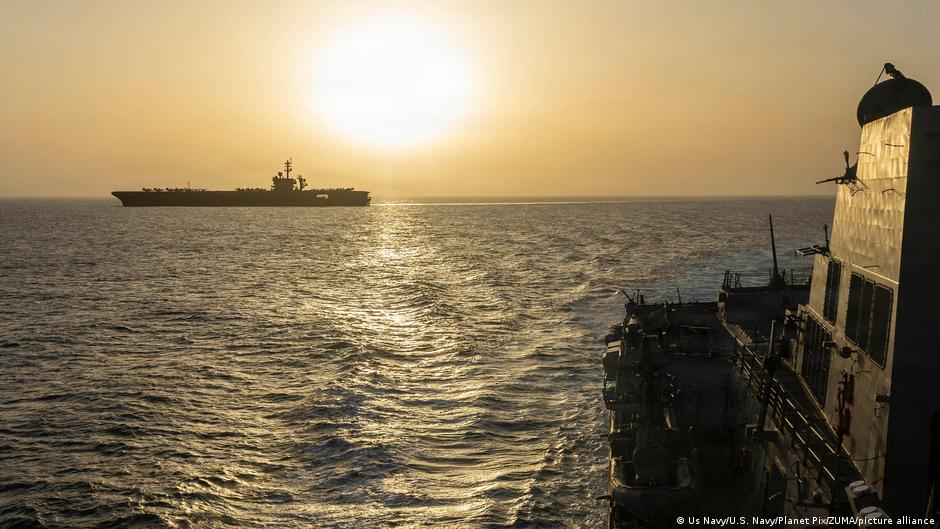
France and the U.K. are spearheading a multinational mission to secure the Strait of Hormuz, aiming to ensure safe shipping and long-term regional stability. Further insights on this initiative can be found in a report by DW’s Brussels correspondent Anchal Vohra.