New World Cup Rule Targets Players Covering Mouths During Confrontations
Samael.lol – A significant change to football regulations has been introduced ahead of the 2026 World Cup, introducing a potential red card for players who cover their mouths when addressing opponents during disputes. This rule was finalized during a recent gathering of the Fifa Council in Vancouver, Canada, where two key amendments were ratified. The decision follows a growing concern over verbal offenses in competitive matches, particularly instances where players attempt to conceal their words from referees or spectators.
The updated guideline allows referees to issue a red card to any player who covers their mouth while speaking to an opponent during a confrontation. This measure was inspired by a controversial moment at the Africa Cup of Nations, where Senegal’s players left the field in protest after a disputed penalty decision against Morocco. Although the match continued with Brahim Diaz scoring a Panenka-style goal, the Confederation of African Football (Caf) later revoked Senegal’s victory, awarding Morocco a 3-0 win. This incident highlighted the need for stricter rules on players’ verbal conduct, prompting further discussion among governing bodies.
Two Key Amendments Approved by Fifa Council
The rule change is part of a broader set of proposals approved by the International Football Association Board (Ifab) during their annual meeting in Wales. Alongside the mouth-covering regulation, another amendment addresses situations where players leave the pitch to express dissatisfaction with a referee’s call. These adjustments were ratified as opt-in measures for World Cup competitions, meaning they will be implemented during the tournament starting in June 2026. The International Football Association Board (Ifab) confirmed that the rules will take effect in the coming months, with referees having the final authority to enforce them based on the context of each situation.
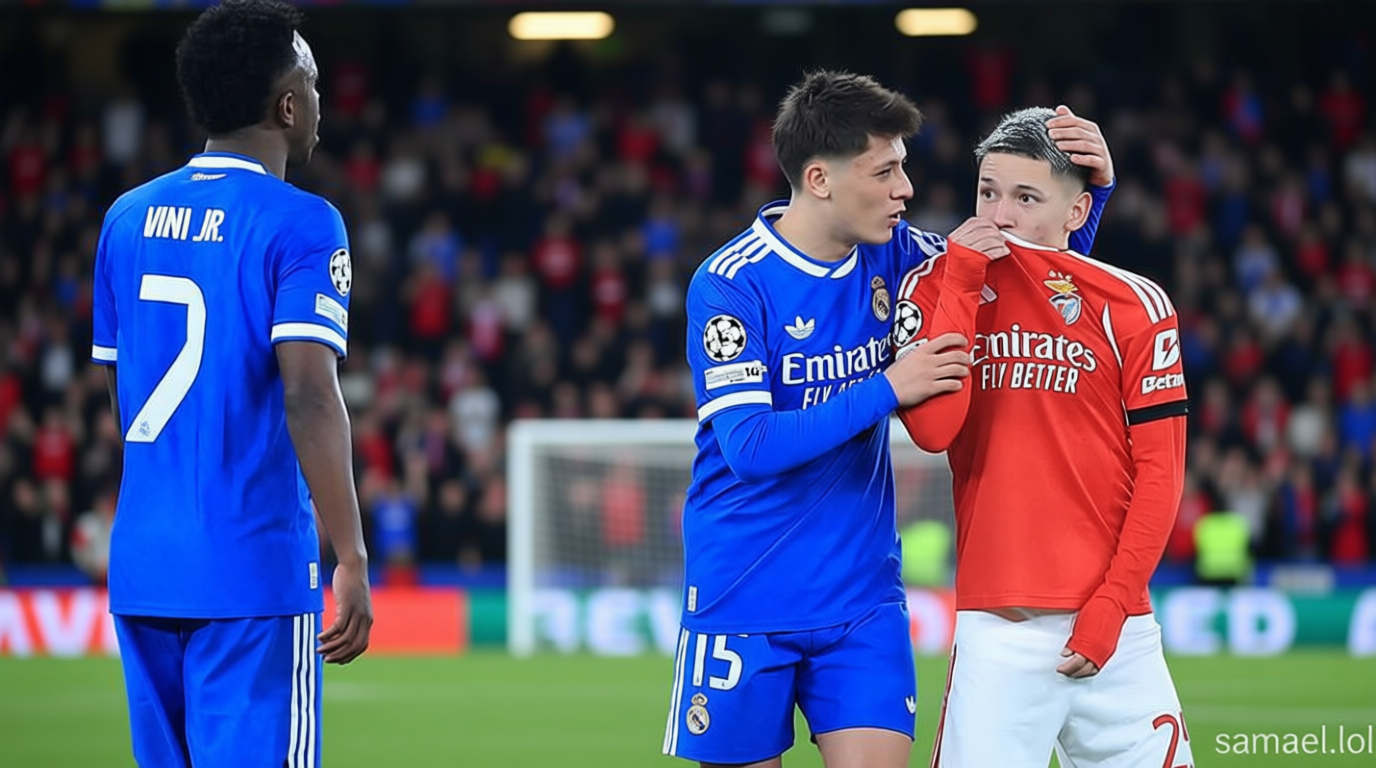
The decision to cover mouth-related offenses stems from an incident in February involving Gianluca Prestianni, a winger for Benfica. During a Champions League game, Prestianni raised his shirt while conversing with Real Madrid’s Vinicius Jr, an act that led to accusations of racist abuse. Following a Uefa investigation, Prestianni was initially banned for one match before being found guilty of homophobic conduct and receiving a six-match suspension, with three matches postponed. This case underscored the importance of monitoring verbal interactions on the field, leading to the inclusion of the rule in the Fifa Council’s agenda.
Gianni Infantino’s Support for the Rule
Fifa President Gianni Infantino expressed strong support for the new regulation, emphasizing its deterrent effect. In a statement, he argued that covering one’s mouth during a confrontation implies a hidden message. “If a player covers his mouth and says something, and this has a racist consequence, then he has to be sent off, obviously,” Infantino explained. “There must be a presumption that he has said something he shouldn’t have said, otherwise he wouldn’t have had to cover his mouth. That’s it, as simple as that.” His comments align with the goal of penalizing players for discriminatory remarks, ensuring accountability in real-time interactions.
The rule’s implementation is designed to address instances of verbal abuse in football, particularly in high-stakes scenarios. By allowing referees to act swiftly, the regulation aims to prevent players from using their mouths as a shield to avoid public scrutiny. While the exact application depends on the referee’s judgment, the rule provides a clear framework for addressing offensive language during critical moments in the game. This approach reflects a shift towards stricter enforcement of on-field conduct, particularly in international competitions.
Broader Implications for Team Officials
Significantly, the new rule extends to team officials who may encourage players to leave the pitch during disputes. This means that any coach, manager, or support staff member inciting such behavior could face disciplinary action. In the event a team causes a match to be abandoned, the regulation states that the team will, in principle, be deemed to have forfeited the game. This expansion ensures that responsibility for verbal misconduct is not limited to players alone, but also includes those in positions of authority within the team.
The decision to include this rule in the World Cup highlights a growing focus on eradicating racial and homophobic abuse from the sport. With the tournament set to take place in the United States, Canada, and Mexico, the regulations aim to create a fairer environment for all participants. The International Football Association Board (Ifab) has emphasized that the rule is a necessary step to uphold the integrity of football and protect players from discriminatory behavior.
As the 2026 World Cup approaches, the new regulations will serve as a reminder to players and officials of the importance of clear communication on the field. While the rule may add an extra layer of scrutiny to on-pitch interactions, it is expected to contribute to a more respectful and inclusive atmosphere in international football. The focus on verbal conduct reflects a broader effort to address issues of bias and discrimination in the sport, ensuring that players are held accountable for their words as much as their actions.
Related Topics in Football Governance
Alongside the mouth-covering rule, other initiatives are being explored to enhance football governance. One such proposal involves a potential yellow card amnesty during the World Cup group stage, offering players a second chance for minor infractions. Additionally, there are discussions about expanding the role of Video Assistant Referee (VAR) technology to include more detailed analysis of on-field decisions. These changes aim to modernize the sport’s officiating standards and improve transparency in critical moments of play.
Another key development is the introduction of tactical timeouts as a strategy to optimize team performance. This approach, which allows managers to pause the game briefly for strategic adjustments, has been met with mixed reactions. While some argue it enhances tactical play, others believe it disrupts the flow of the match. These varied opinions underscore the ongoing debate about how to balance fairness and competitive integrity in football.
The mouth-covering rule is part of a larger movement to address the issue of verbal abuse in football. With players like Vinicius Jr having faced 20 alleged cases of racist abuse during his eight-year tenure at Real Madrid, the need for stricter penalties has become more pressing. The regulation is expected to send a clear message that discriminatory language will not be tolerated, even in moments of heightened emotion or tension on the field.