Pro-Palestinian Demonstrations Under Scrutiny as Government Considers Restrictions
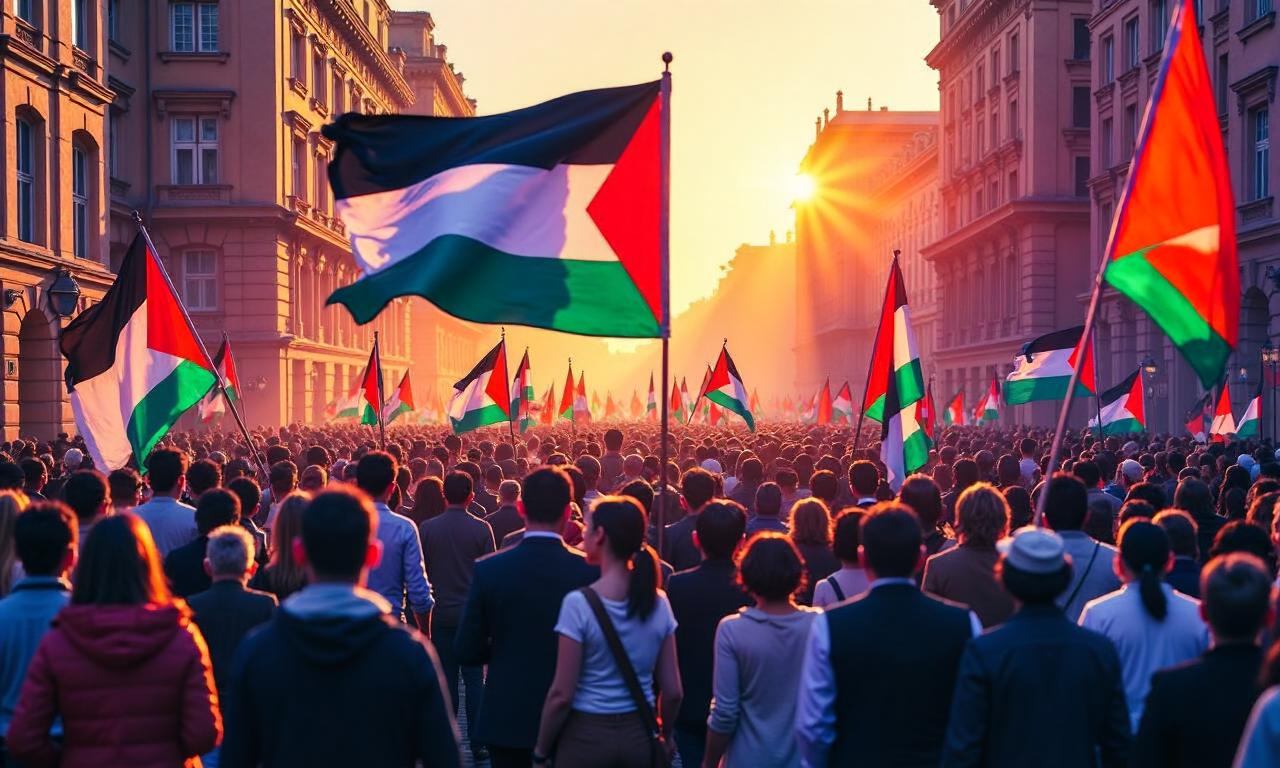
Samael.lol – A senior Home Office minister has raised concerns that pro-Palestinian marches in the UK have been “hijacked” by individuals aiming to stoke division, as debates intensify over the government’s handling of recent protests. Alex Davies-Jones, the minister, emphasized the presence of antisemitic activities during these demonstrations, arguing that the government was ready to impose bans if needed. However, she underscored that protest itself remains a “fundamental right” and stressed that not all participants in the marches were driven by antisemitic motives.
Golders Green Attack Sparks Debate Over Jewish Safety
The minister’s remarks follow a tragic attack in Golders Green, a northern London neighborhood, where two Jewish men were stabbed on Wednesday. Authorities classified the incident as a terror attack, reigniting discussions about the safety of Jewish communities in the UK. Chief Rabbi Sir Ephraim Mirvis, a prominent voice in the conversation, has joined calls for a temporary halt to pro-Palestinian marches. He argued that the demonstrations have contributed to a “tone of Jew hatred” within the country, warning of the growing normalization of antisemitism.
“We are witnessing the normalisation of antisemitism, and it most definitely has not been taken seriously enough,” Sir Ephraim stated during an appearance on BBC Radio 4’s Today programme.
His comments align with the views of Jonathan Hall KC, the government’s reviewer of terrorism legislation, who proposed a “moratorium” on pro-Palestinian marches. Hall claimed that such events were “clearly impossible at the moment” to avoid “incubating” antisemitism. He urged immediate action to prevent the spread of hatred, suggesting that the next demonstrations should be scrutinized more closely.
Protesters Defend Rights Amid Calls for Bans
Despite these criticisms, the Stop the War Coalition, a key organizer of previous pro-Palestinian marches, has dismissed the link between the demonstrations and antisemitism. The group asserts it opposes “all forms of antisemitism and racism” but argues that the marches should not be targeted for their role in Jewish community tensions. “It is wrong to connect the marches to any attacks on Jews,” the coalition stated, highlighting the importance of preserving the right to protest.
The government’s proposed restrictions on protests are part of broader legislation reviews aimed at improving public order and hate crime protections. Police in England and Wales have the authority to impose limitations on demonstrations, such as setting specific routes or designating end times. Full bans require the home secretary’s approval and are rarely invoked, typically reserved for cases involving “serious public disorder.” Last month, the Metropolitan Police successfully requested a ban on the Al Quds Day march in London, marking the first such action since 2012.
“That is wrong – but people do have the right to protest the actions of Israel if that’s what they deem fit,” Davies-Jones explained to Times Radio, balancing her concerns with the fundamental nature of protest.
She acknowledged antisemitic activity at some marches, citing “chants of death” and “calls for global intifada” as examples, but insisted these were not representative of all participants. “They have been hijacked by certain individuals who are seeking to cause division and hatred in our country,” she added, describing the behavior as a deliberate attempt to foster fear and intimidation.
Police Seek to Maximize Safety at Major Protests
Metropolitan Police Chief Sir Mark Rowley echoed the government’s concerns, stating his force would “go as far as we absolutely can” within legal boundaries to ensure “maximise the sense of safety” in London. He mentioned that the police were reassessing the “reasonable” restrictions that could be applied to upcoming major protests, including the annual Nakba Day march planned for 16 May. The Stop the War Coalition is organizing this event, which commemorates the 1948 displacement of Palestinians during the establishment of Israel.
Meanwhile, a separate rally titled “Unite the Kingdom,” led by far-right activist Tommy Robinson, is also scheduled for the same date. This has drawn attention to the broader political landscape, where tensions between different groups are intensifying. The government, which had commissioned a review of public order and hate crime laws last year, has yet to publish the findings expected in February. However, Prime Minister Keir Starmer hinted at the possibility of new restrictions, indicating ministers are already considering further measures.
“It is really really important here that we recognise that not everybody on these marches is antisemitic,” Davies-Jones reiterated, emphasizing the need for context in evaluating the protests.
She noted that while antisemitic elements had been observed, the marches’ core purpose was to express support for Palestinian causes. The minister’s argument centers on the idea that these demonstrations have been “hijacked” by a minority group seeking to dominate the narrative and amplify hostility toward Jews.
Historical Context and Terminology in Question
The term “intifada,” which has become central to the debate, originally emerged during the 1987 Palestinian uprising against Israeli occupation in the West Bank and Gaza Strip. For Jewish groups, the phrase has taken on a more contentious meaning, often associated with calls for violence against Jewish people. Pro-Palestinian organizations, however, argue that the term refers to peaceful resistance efforts against Israeli control.
This divergence in interpretation has fueled controversy, with critics claiming the use of “intifada” during marches has contributed to a climate of fear. The prime minister has specifically targeted the chant “globalise the intifada,” calling for its prosecution. “This phrase has left British Jews feeling scared and intimidated,” he said, linking it to the broader issue of antisemitism in public spaces.
As the debate unfolds, the government faces the challenge of balancing security concerns with the right to protest. While some ministers and officials advocate for stricter measures, others, including the Stop the War Coalition, argue that such actions risk undermining the very purpose of demonstrations. The upcoming marches on 16 May will serve as a critical test of these differing perspectives, with the potential to shape the future of protest in the UK.
Broader Implications for Free Speech and Community Relations
The situation highlights the delicate balance between protecting communities from hate and preserving the right to peaceful assembly. Critics of the proposed bans argue that targeting pro-Palestinian marches could set a precedent for restricting other forms of protest. Meanwhile, supporters contend that the current environment has allowed antisemitic rhetoric to go unchecked, necessitating intervention.
Jonathan Hall KC’s call for a moratorium has been met with mixed reactions. While some see it as a necessary step to prevent the escalation of antisemitism, others view it as an overreach. The Stop the War Coalition has accused the government of using the Golders Green attack as a pretext to limit free speech, suggesting the measures could have broader implications for political expression.
As the review of legislation remains pending, the minister’s comments and the police chief’s statements reflect an ongoing effort to address the issue of antisemitism in public demonstrations. The government’s actions will likely influence how future protests are managed, with the potential to either strengthen safeguards or redefine the boundaries of free expression.
“The next demonstrations are a chance to demonstrate the government’s commitment to both security and the right to protest,” Davies-Jones concluded, framing the situation as a test of policy consistency.
With tensions rising and the upcoming events drawing significant attention, the UK’s approach to managing pro-Palestinian marches will remain a focal point in discussions about civil liberties and community safety.