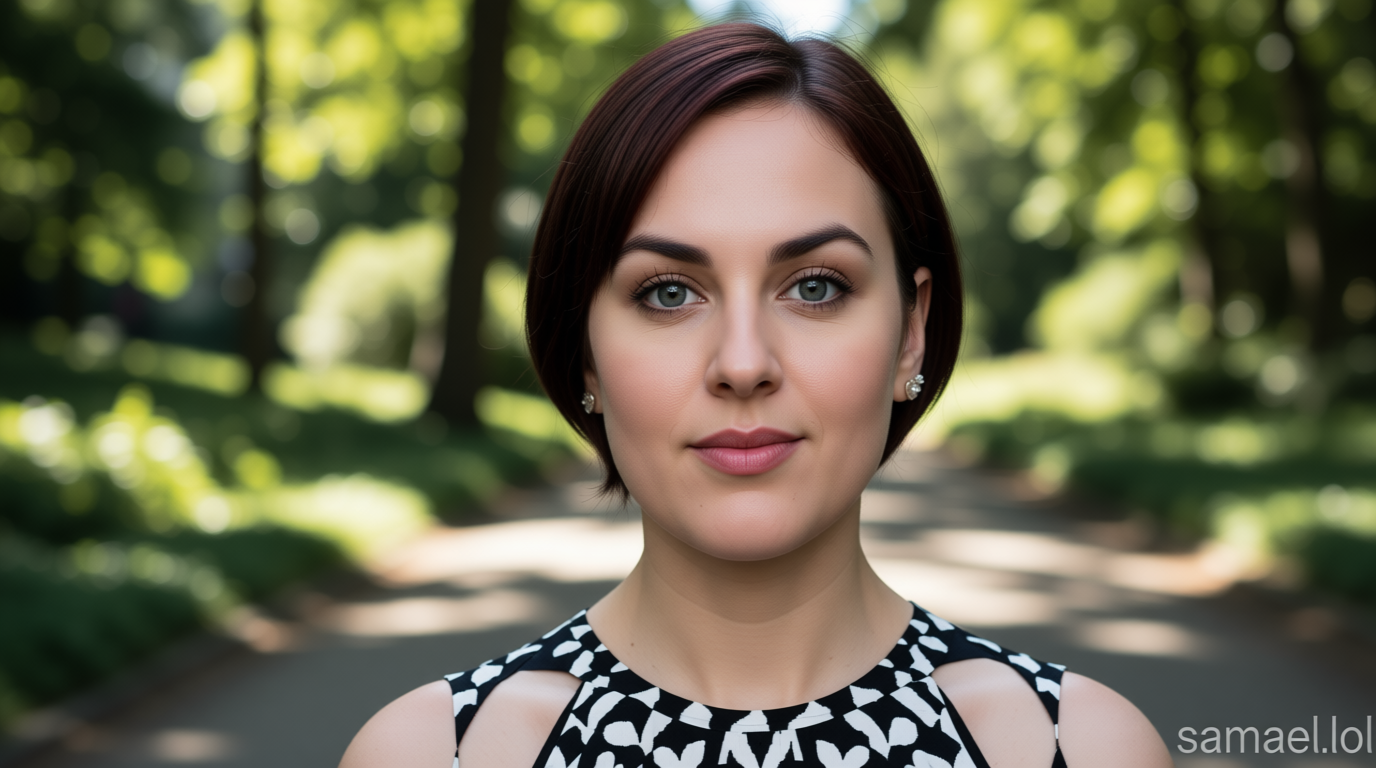
Is this the real face of Anne Boleyn?
Samael.lol – Anne Boleyn, the second wife of King Henry VIII, remains an enduring figure in history. Her life was marked by dramatic events: a marriage that changed the course of English monarchy, a child who would later reign as Queen Elizabeth I, and a swift execution in 1536. Yet, centuries later, her appearance continues to spark debate. A recent study by a computer science team has reignited discussions about her true likeness, claiming they have uncovered a previously unseen sketch of the Tudor queen through advanced facial recognition technology.
A Mystery Carved in Time
Every surviving portrait of Anne Boleyn was created posthumously, leaving historians to speculate about her actual appearance. While the Holbein drawings, including a labeled sketch, are widely regarded as contemporary depictions, doubts persist. Critics argue that the name on the sketch was added long after her death, in an 18th-century hand, and that certain features—such as her light-coloured hair and pronounced chin—conflict with historical accounts describing darker hair and a thinner neck.
“We don’t have a lifetime painted portrait of her that’s absolutely secure, a wonderful painting that we can use as a reference point,” says Dr Charlotte Bolland, a senior curator for research and 16th-Century collections at the National Portrait Gallery. “Her reign wasn’t necessarily long enough for an established iconography… and there is this tantalising suggestion that perhaps some of her images might have been deliberately destroyed.”
Unlocking the Past with Algorithms
The research team, led by the University of Bradford, employed facial recognition to analyze the Holbein collection of Tudor court portraits. This method, which has already found applications in fields like biometric security and law enforcement, aims to strip away human bias by comparing key facial features across drawings. The Royal Collection Trust, which holds these artworks, acknowledges the study but does not endorse its conclusions, noting that the technique could still be used to explore other historical mysteries.
Prof Hassan Ugail, an expert in visual computing at the University of Bradford, explains that the team digitized all the drawings in the collection and ran them through a machine-learned algorithm. “What we are looking at is a bunch of drawings, and then we are comparing these drawings through a machine-learned algorithm,” he says. The goal was to identify the correct sketch of Anne Boleyn, a task that has long perplexed scholars.
Contested Evidence and Skepticism
Despite the excitement surrounding the study, not all art historians are convinced. Dr Bendor Grosvenor, a prominent figure in the field, calls the findings “a load of rubbish” and questions the reliability of the methodology. He argues that questioning 500 years of art history with a “flawed methodology” is problematic, especially since the labeled sketch in Holbein’s collection has been accepted by many as a genuine portrait of Boleyn.
However, the researchers believe their analysis reveals a hidden truth. Karen Davies, the lead author of the study, claims that the computer system has uncovered a sketch of Anne Boleyn that had been overlooked as an “unidentified woman” for centuries. “The result has shocked us completely,” she explains. “Based on our interpretation of the system’s analysis, we believe it has found a portrait of Boleyn that has been hiding in plain sight.”
A Cleaner’s Passion Project
Karen Davies’ journey to this discovery is as compelling as the findings themselves. Since August 2024, she has worked as a cleaner to support her true passion: historical research. Her skepticism about the labeled sketch stems from years of studying details like the sitter’s informal attire and the 18th-century hand that added the name. These inconsistencies led her to question whether the drawing truly captured Anne Boleyn, prompting her to seek collaboration with Prof Ugail.
While cleaning a client’s home, Davies shared her theory, which caught Prof Ugail’s attention. He invited her to join the project, blending her deep knowledge of historical context with his technical expertise. The team’s approach combines digital tools with traditional art analysis, aiming to bridge the gap between human intuition and computational precision. “The results are results, isn’t it?” Ugail reflects, acknowledging the controversy but emphasizing the potential of the technology.
Reconstructing Identity in a Digital Age
The use of facial recognition in art history represents a new frontier for historical inquiry. By eliminating subjective interpretations and focusing on measurable features, the algorithm offers a fresh perspective on how we reconstruct the past. However, this method also raises questions about its limitations. Can a machine truly discern the subtle nuances of a historical figure’s identity, or does it risk oversimplifying the complexities of human representation?
For Davies, the study is more than an academic exercise—it’s a personal triumph. Her work as a cleaner, often unnoticed, now underpins a groundbreaking discovery that challenges established narratives. The team’s findings suggest that the Holbein drawing labeled as Anne Boleyn may not be the definitive portrait, but that doesn’t diminish its historical value. Instead, it opens the door to a more nuanced understanding of how art evolves and how biases shape our perception of the past.
Legacy and the Future of Art History
Anne Boleyn’s legacy extends far beyond her brief reign. Her story, intertwined with the birth of the English Reformation and the rise of Elizabeth I, continues to captivate the public. The recent study, though controversial, highlights the role of technology in redefining historical research. As the Royal Collection Trust welcomes the exploration of its artworks, the debate over her appearance will likely persist, evolving with each new method introduced.
Whether the findings are groundbreaking or speculative, they underscore the ongoing fascination with Anne Boleyn. Her face, once a subject of endless speculation, now stands at the intersection of art and science. While some may dismiss the study as a “flawed methodology,” others see it as a testament to the power of innovation in uncovering hidden truths. In the end, the question remains: does the algorithm reveal a more accurate image of the Tudor queen, or does it merely shift the mystery to a new realm?
As the field of art history embraces digital tools, the case of Anne Boleyn serves as a reminder that even the most iconic figures can be reshaped by modern analysis. The sketch, once considered a mere possibility, now stands as a symbol of the dynamic relationship between technology and tradition in preserving the past. Whether it’s accepted as the true face of the queen or not, the study has undeniably sparked a new conversation about how we see history through the lens of art.