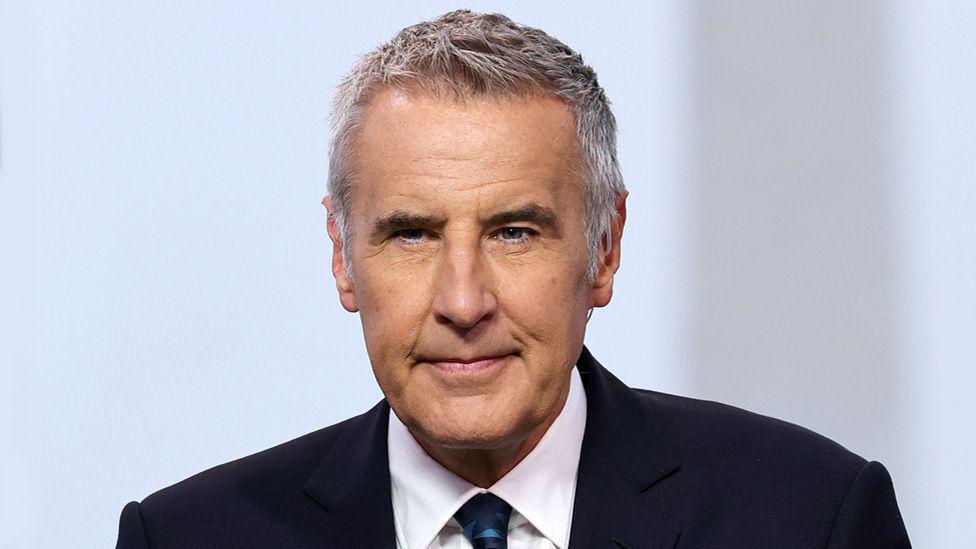
Chris Mason: PM seeks to draw contrast with critics within his party and beyond
Amid Rising Global Tensions and Domestic Unrest
Samael.lol – Amid rising global tensions and domestic unrest, the Prime Minister’s recent remarks in a BBC interview underscored a pressing concern: why would one seek political chaos in an era already fraught with instability? The interview, broadcast on the Today Programme, came as the country grapples with a series of high-profile events that have tested the boundaries of public discourse and governance. Sir Keir Starmer, the Labour leader, now finds himself in a precarious position, having to navigate a landscape defined by both international conflict and local outrage.
The Weight of Recent Conflicts
The backdrop to the Prime Minister’s address included the ongoing war between America and Israel against Iran, which erupted in late February, and the recent attack on two Jewish men in Golders Green, a district in north London, on Wednesday. These incidents, as he noted, carry profound implications across diplomacy, military strategy, economic stability, and societal cohesion. Starmer, who has been at the helm of the Labour Party, faces mounting pressure not only from external forces but also from within his own ranks, where the Lord Mandelson saga and growing speculation about his political fate have intensified.
A Defiant Reiteration of Values
During the interview, the Prime Minister emphasized his vision for a Britain he describes as “decent, tolerant, live and let live, diverse.” He framed this as a core identity under threat, stating,
“I want to live in a Britain that I love, which is a decent, tolerant, live and let live, diverse Britain. But that is contested now in a way that it hasn’t been contested in my lifetime.”
This argument, which he has previously articulated, took on added urgency in light of the Golders Green attack and the broader climate of political tension. The focus on diversity and tolerance, however, has drawn sharp criticism from some factions within the Labour Party and opposition groups, who argue it lacks the necessary bite to address systemic issues.
The Criticism of Internal and External Critics
Starmer’s remarks were not only a response to recent events but also a strategic move to highlight his commitment to core principles while subtly distancing himself from rivals. He explicitly targeted Zack Polanski and the Green Party of England and Wales, whose positions on antisemitism he views as divisive. Meanwhile, his critique of Reform UK was more implicit, suggesting a broader discontent with the party’s influence on public sentiment. The Prime Minister’s challenge is twofold: to reconcile his advocacy for free expression with the need to protect vulnerable communities, while also countering the perception that he is hesitant to take decisive action.
Law Reform and the Path Forward
As the government prepares to implement new measures, the independent review by Lord Macdonald, a former Director of Public Prosecutions, looms large. Commissioned following the October synagogue attack in Manchester, this report is due for release in the coming weeks and could shape the legal framework for managing protests and hate crimes. Starmer, who has long championed progressive policies, now finds himself in a position where he must balance the rhetoric of inclusivity with the practical need to address the surge in provocative demonstrations.
The upcoming protests in central London, scheduled for Saturday, 16th May, will serve as a litmus test for the government’s approach. One rally is pro-Palestinian, while the other, organized by “Unite the Kingdom” and featuring Stephen Yaxley Lennon—known as Tommy Robinson—a far-right activist, has raised concerns about the language used to incite unrest. The Prime Minister has criticized the phrase “globalise the intifada,” labeling it as “egregiously offensive, provocative and dangerous.” This rhetoric highlights a growing divide between those advocating for more stringent protest regulations and those defending the right to free speech.
The Broader Implications of Conflict
Starmer’s comments also touched on the broader ramifications of the Iran conflict, which he compared to the scale of the pandemic, Brexit, and Russia’s invasion of Ukraine. He described the situation as an “international shock” of unprecedented magnitude, underscoring its impact on global stability. Economically, he warned that the “green shoots of change” observed previously are now “very vulnerable if not ripped out,” signaling a need for stronger European alignment to safeguard the UK’s interests.
The Prime Minister’s call for a closer relationship with the EU reflects a shift in his stance since taking office. While he has maintained a pragmatic approach, emphasizing the UK’s sovereignty and self-reliance, his recent rhetoric suggests a desire to reposition the country as a key player in European affairs. This includes prioritizing defense, security, energy, and economic integration with the bloc. However, his commitment to European unity is tempered by existing constraints, such as his decision to forgo rejoining the single market, customs union, and freedom of movement, which he sees as politically necessary.
Challenges in Governance and Public Trust
Despite these efforts, Starmer’s government faces significant hurdles. The negotiations for defense cooperation with Brussels have been complex, revealing the tensions between his pro-European ambitions and the UK’s historical reluctance to cede influence. Critics, both within and outside the Labour Party, argue that his approach is too cautious, pointing to the need for more assertive policies to address the rising frequency of demonstrations that they claim undermine public safety.
As the Prime Minister seeks to solidify his position, he must navigate a delicate balance between upholding democratic freedoms and addressing the anxieties of the Jewish community, which has been disproportionately affected by recent protests. His critics, including members of opposition parties, accuse him of offering “warm words and platitudes” about antisemitism without actionable steps. For Starmer, this is a test of leadership: can he demonstrate that his vision for a united, diverse Britain is both feasible and grounded in tangible progress?
Conclusion: The Road Ahead
The coming weeks will be crucial in determining the success of the Prime Minister’s strategy. With the Lord Macdonald report on the horizon and the May protests looming, the government will need to craft a coherent narrative that reassures the public while maintaining the momentum of its agenda. The challenge is not just in passing legislation but in winning the trust of an electorate that remains divided on the role of protest in shaping national policy. As Starmer navigates these waters, the question remains: will his party and the public support the measures he proposes, or will they view them as a step toward political control?