Struggling High Streets Fuel Political Discontent in Upcoming Local Elections
Samael.lol – The state of Britain’s town centres has become a growing concern for residents, with many expressing frustration over the decline of once-vibrant community hubs. In the West Midlands town of Walsall, a midweek morning reveals a mix of activity and nostalgia. While shoppers and strollers fill the streets, some recall a time when the High Street was a bustling market, stretching the entire length of the town. Debbie Tapper, a lifelong resident, laments this transformation. “I am proud to be from Walsall,” she says, “but I’m not proud of the way the country is at the moment.” Her words reflect a shared sentiment among locals who feel the community is losing its vitality and, by extension, its political relevance.
A Mirror to Local Decline
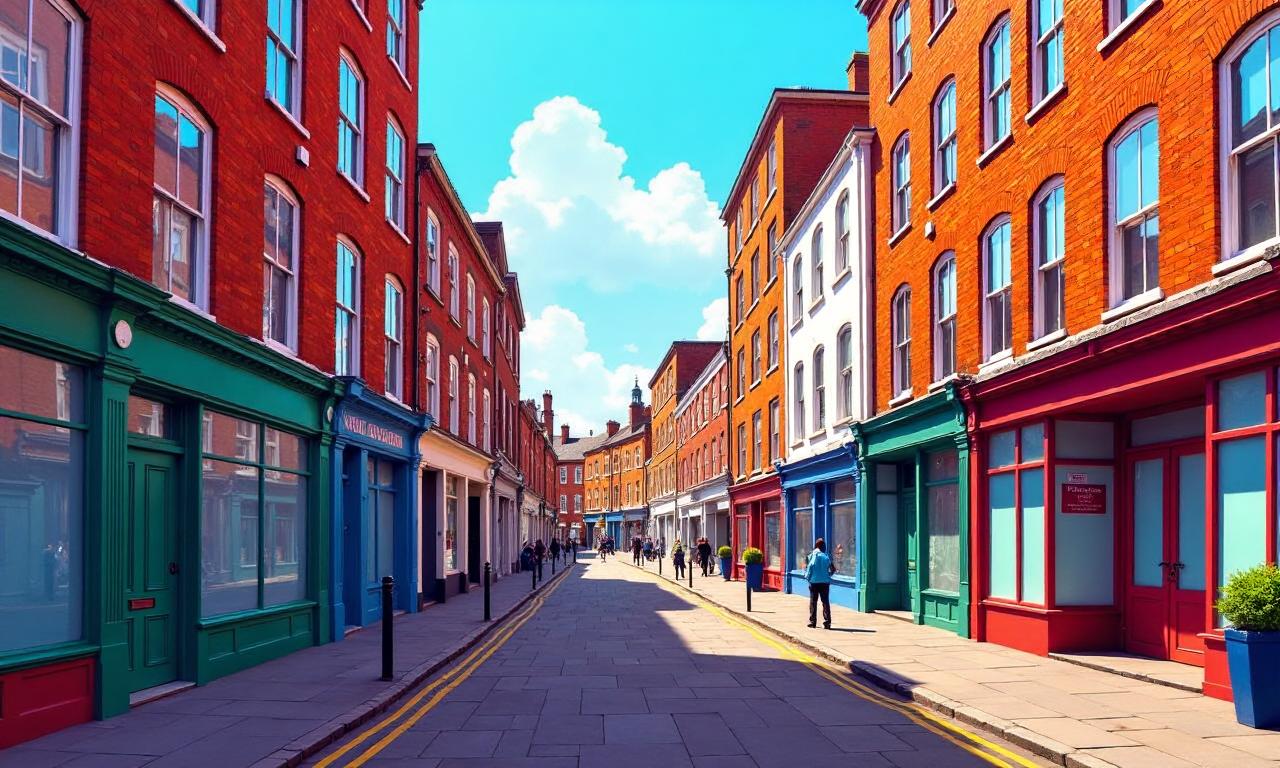
Walsall is not alone in its struggle. Across England, High Streets are grappling with a wave of closures and dwindling foot traffic. The rise of online shopping, the shift to out-of-town retail parks, and broader economic changes have left many town centres in a state of disrepair. Once-thriving commercial areas now host shuttered stores, with large retailers replaced by smaller, niche businesses such as barbers, vape shops, and bookmakers. This evolution, while convenient for some, has sparked a sense of disconnection among residents who see it as a sign of neglect.
“The public judge their local area and community by the state of the High Street. Signs of neglect are seen as symptoms of wider decline.”
According to Luke Tryl, UK director of the polling company More in Common, the condition of High Streets serves as a visible indicator of broader societal trends. He describes the phenomenon as a “wider malaise” that, while seemingly minor, steadily erodes people’s confidence in their communities. “It chips away at perceptions of local progress,” Tryl explains, “making voters feel their areas are being overlooked.” This sentiment could play a pivotal role in shaping outcomes during the May local elections, as residents seek leaders who can address their concerns.
Local shopkeepers like Sharday Hodges and Carmel Yates echo this frustration. They acknowledge Walsall’s charm but highlight its struggles. “It’s really run down,” Carmel says, emphasizing the town’s economic challenges. “There’s a lot of deprivation, and jobs are scarce. That has a knock-on effect on people’s ability to spend.” Sharday adds that high rents and parking fees are major hurdles for both businesses and shoppers. “We used to have such a rich market history,” she remarks, “and it’s such a shame to see so many stalls disappear.”
Efforts to Revive Town Centres
Despite the challenges, initiatives are underway to breathe new life into struggling High Streets. Central government has allocated funds for regeneration projects, while local authorities are experimenting with mixed-use developments that integrate housing and public services like healthcare facilities. Historic England’s four-year programme, for instance, has focused on repurposing abandoned buildings into community spaces, such as cinemas and market halls, and hosting cultural events to attract visitors.
In Walsall, a £1.5bn regeneration plan is set to transform the town centre. Yet, for many voters, the timeline for improvement is too slow. “The council has come up with their 2040 plan,” Sharday notes, “but waiting until I’m 41 for Walsall to be great again isn’t enough.” Her comment underscores a common impatience with long-term strategies that fail to address immediate issues. For residents like her, the problem is not just about aesthetics but about the tangible effects of economic stagnation on daily life.
Regional Disparities and Economic Linkages
The decline of High Streets is not evenly distributed. While some areas, such as London and Cambridge, have managed to maintain strong commercial activity, others like Bradford face severe challenges. Last year, a report by the Centre for Cities think tank revealed that town centre performance is closely tied to the health of local economies. In London, only one in 12 High Street units were empty, compared to nearly one in five in Bradford. This disparity highlights how economic factors directly influence the vibrancy of town centres.
“Some High Streets are doing well, especially in and around London and the greater South East,” says Ant Breach, director of policy and research at the Centre for Cities. “In places where people have less money to save or spend, the local High Street has suffered.”
Breach views High Streets as a “visible barometer” of economic well-being. He argues that when these areas decline, voters naturally demand action, expecting more than superficial fixes. “They see boarded-up shops, fly tipping, and graffiti-covered metal grills,” Breach explains. “This creates a perception of neglect, and people feel their communities are being forgotten.” The emotional weight of these signs can translate into political pressure, as residents seek leaders who prioritize their needs over short-term policies.
Political Awareness and Future Prospects
Once dismissed by Westminster politicians as a parochial issue, the state of High Streets has gained national attention. Communities Secretary Steve Reed acknowledges this shift, stating that High Streets are central to how people evaluate the effectiveness of local governance. “Fixing High Streets is critical to showing people politics is back on their side,” Reed emphasizes. He describes the current scene as a “wasteland” where boarded-up shops and littered streets signal a loss of local pride. “We can’t allow that situation to continue,” he adds, warning that ongoing neglect risks deepening public disillusionment.
Reed’s comments align with growing recognition that town centres are more than just places for shopping—they are cultural and social anchors. For residents, the decline of High Streets represents a broader erosion of community identity and economic opportunity. As local elections approach, the challenge lies in translating these frustrations into actionable policies. While regeneration projects and funding initiatives are a start, they must be accompanied by targeted efforts to address unemployment, affordability, and investment in public spaces.
Experts caution that the issue requires more than cosmetic changes. The Centre for Cities report underscores that High Streets reflect the economic conditions of an area, with deprivation and lack of resources exacerbating their decline. In regions where poverty is entrenched, the impact is particularly stark. This has led to calls for a more integrated approach, combining retail revitalization with social and economic support to ensure long-term sustainability.
The government has announced a £301m fund to support High Street recovery, signaling a commitment to addressing the problem. However, the success of such measures depends on how effectively they are implemented and adapted to local needs. For towns like Walsall, the hope is that these investments will restore a sense of pride and possibility, proving that political action can reverse the tide of decline. Until then, the struggle of High Streets will remain a powerful symbol of what voters perceive as a failing system.