Antonelli Wins in Miami to Extend Title Lead
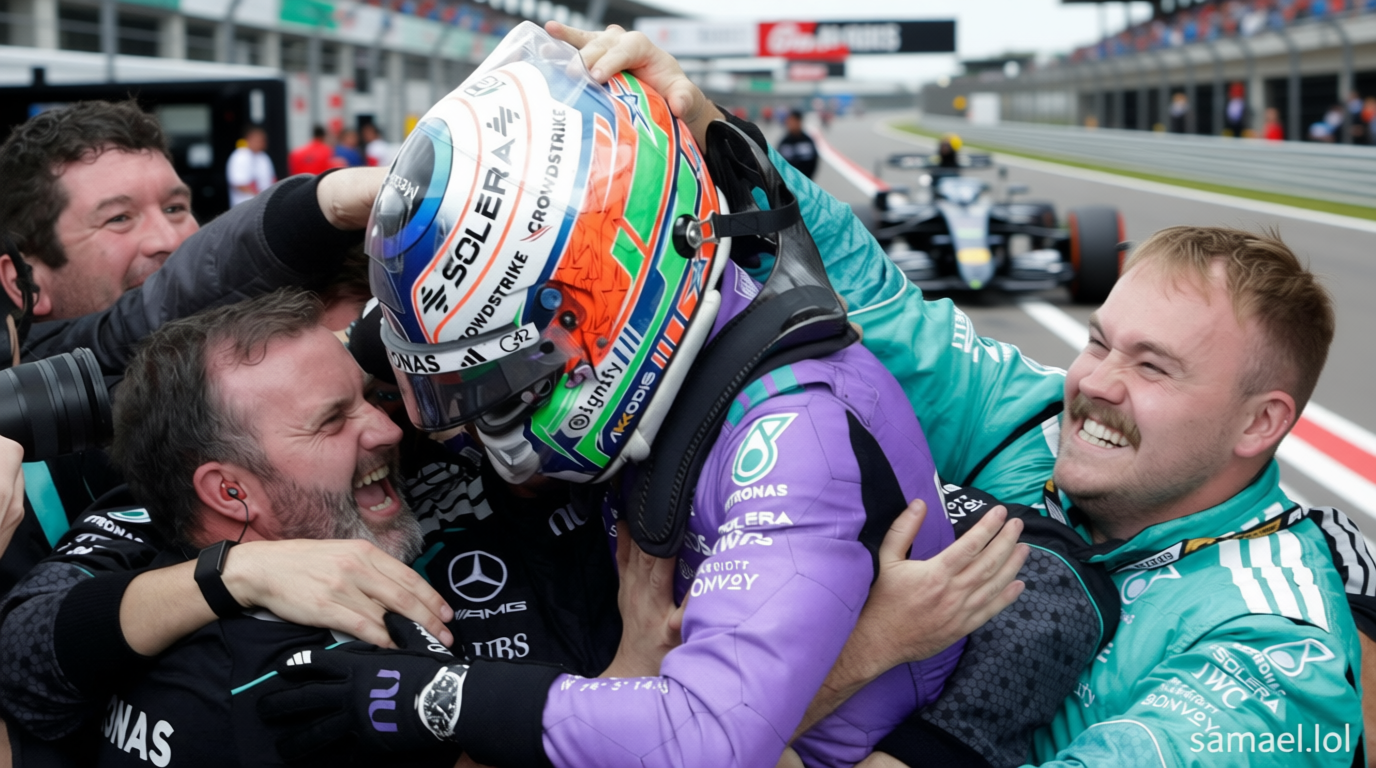
Samael.lol – Kimi Antonelli’s triumphant victory at the Miami Grand Prix marked a significant milestone in his career, as he became the first driver to secure three consecutive wins from pole position. This achievement not only solidified his position at the top of the championship standings but also highlighted his growing dominance in the season’s early races. The 19-year-old Italian outpaced McLaren’s Lando Norris in a closely contested battle, claiming the title lead with a commanding performance that showcased his ability to maintain consistency under pressure.
Race Dynamics and Strategic Battles
The race began with high stakes, as Antonelli’s Mercedes faced immediate challenges from the outset. Despite a poor start that saw him lose positions in all four grands prix and the sprint events so far, the Italian driver displayed remarkable resilience. A fierce three-car duel involving Ferrari’s Charles Leclerc and Red Bull’s Max Verstappen initially defined the early stages, with Antonelli narrowly avoiding a collision as he fought to retain his lead. Verstappen, who had spun on the first lap, recovered admirably to finish fifth, though he was penalized five seconds for crossing the white line during a pit stop.
As the race progressed, the battle for the lead narrowed to Antonelli and Norris, who engaged in a tense exchange of positions. The weather played a pivotal role, with rain threatening to disrupt the race but ultimately failing to materialize beyond scattered showers mid-race. This allowed the race to proceed under dry conditions, favoring tire management and track position over defensive driving. The strategic decisions of the teams became critical, particularly when Antonelli opted to pit for fresh tires on lap 24, while Norris delayed his stop, hoping for a late rain advantage.
“We got undercut, no excuses,” Norris admitted after the race. “We should have boxed first. As a team we have to be happy. I am gutted to miss out on a win. It was possible today. Didn’t have the pace to get back past him at the end.”
Norris’s early lead was short-lived, as Antonelli capitalized on his pit stop to regain the advantage. The two drivers’ contrasting strategies underscored the tactical complexity of the race. While Norris waited for potential weather changes, Antonelli’s fresher tires enabled him to pull away in the final laps, finishing with a two-second margin over his rival. This win further widened the gap between Antonelli and his team-mate George Russell, who finished fourth and fell 20 points behind in the championship standings.
Penalties and Competitive Shifts
The race also saw several penalties that altered the final order. Ferrari’s Leclerc, who had led early, was docked 20 seconds for multiple laps off the track during the final stages, dropping him to eighth place. This penalty pushed Lewis Hamilton up from seventh to sixth, adding another layer of complexity to the standings. Meanwhile, Verstappen’s earlier spin and subsequent penalty for crossing the white line during a pit exit did not affect his overall position, though it did highlight the challenges of maintaining focus in high-speed corners.
Leclerc’s penalty was a turning point, as it allowed Hamilton to climb the order and maintain his position as a strong contender. The Italian driver, however, remains a key figure in the championship, having already secured three podium finishes this season. His performance in Miami, though not as strong as anticipated, demonstrated the importance of adaptability in Formula 1, where a single misstep can cost valuable positions.
Yo-Yo Racing and Team Revival
Miami’s race was characterized by its unpredictable nature, with drivers frequently switching positions in what became known as “yo-yo racing.” This phenomenon, which has sparked debate among fans and analysts, was evident throughout the event. Norris and Antonelli’s battle was emblematic of this trend, as their positions fluctuated multiple times due to differing fuel strategies and tire compounds.
McLaren’s resurgence this weekend was another key storyline. The team’s upgrades appeared to restore some of their lost pace, allowing Norris to challenge Antonelli effectively. This revival raised hopes for a stronger performance in the coming races, particularly as Norris’s recent wins have positioned him as a formidable opponent. Meanwhile, Antonelli’s dominance continued to overshadow Russell, who, despite finishing fourth, now trails his young rival by a significant margin.
Antonelli’s Championship Lead
Antonelli’s third consecutive victory has positioned him as the dominant force in the title race. His early season form, marked by three wins in the first four races, has outpaced Russell, who has struggled to match his pace. The Italian driver’s ability to convert pole positions into wins is a testament to his skill and the Mercedes team’s support. “This is just the beginning. The road is still long. We are working super hard and the team is doing an incredible job,” Antonelli stated, emphasizing his determination to maintain his lead.
The championship implications of this win are profound. With a 20-point gap over Russell, Antonelli has created a formidable buffer, making it difficult for his team-mate to close the gap. The race also highlighted the strengths of the Mercedes team, as they consistently outperformed their rivals in key moments. Norris, while narrowly missing out, remains a threat, and his ability to challenge Antonelli in the final laps demonstrates the competitiveness of the field.
Key Moments and Driver Reactions
Several dramatic moments defined the Miami Grand Prix. The safety car, deployed after two accidents on lap six—Isack Hadjar’s crash at the final chicane and Pierre Gasly’s somersault at the final corner—added tension to the race. Hadjar’s frustration after the crash was palpable, as he watched his Red Bull retire with a damaged chassis. The incidents also forced teams to adjust their strategies, with some opting for early pit stops to manage tire wear and fuel levels.
Verstappen’s early spin, while costly, was a minor setback compared to the challenges faced by other drivers. His recovery to fifth place underscored his resilience, though the five-second penalty for crossing the white line during a pit exit was a reminder of the fine margins that define Formula 1. The stewards also cleared Verstappen and Russell after minor contact, acknowledging that the collision was not severe enough to impact the championship race.
The yo-yo racing effect was most pronounced in the closing stages, as Antonelli and Norris traded positions repeatedly. Norris’s early lead was challenged by Antonelli’s superior tire management, which allowed him to outpace his rival in the final laps. The race’s conclusion highlighted the importance of strategic timing and the unpredictable nature of Formula 1, where a single decision can determine the outcome.
Antonelli’s victory in Miami not only extends his title lead but also cements his status as a rising star in the sport. His ability to consistently deliver strong performances, despite early-season setbacks, has made him a fan favorite. The race’s drama and intensity, combined with the strategic nuances, provided a compelling display of the sport’s unpredictability. As the season progresses, Antonelli’s dominance and the challenges posed by Norris and Russell will continue to shape the championship battle.