Raducanu Withdraws from Rome with Post-Viral Symptoms
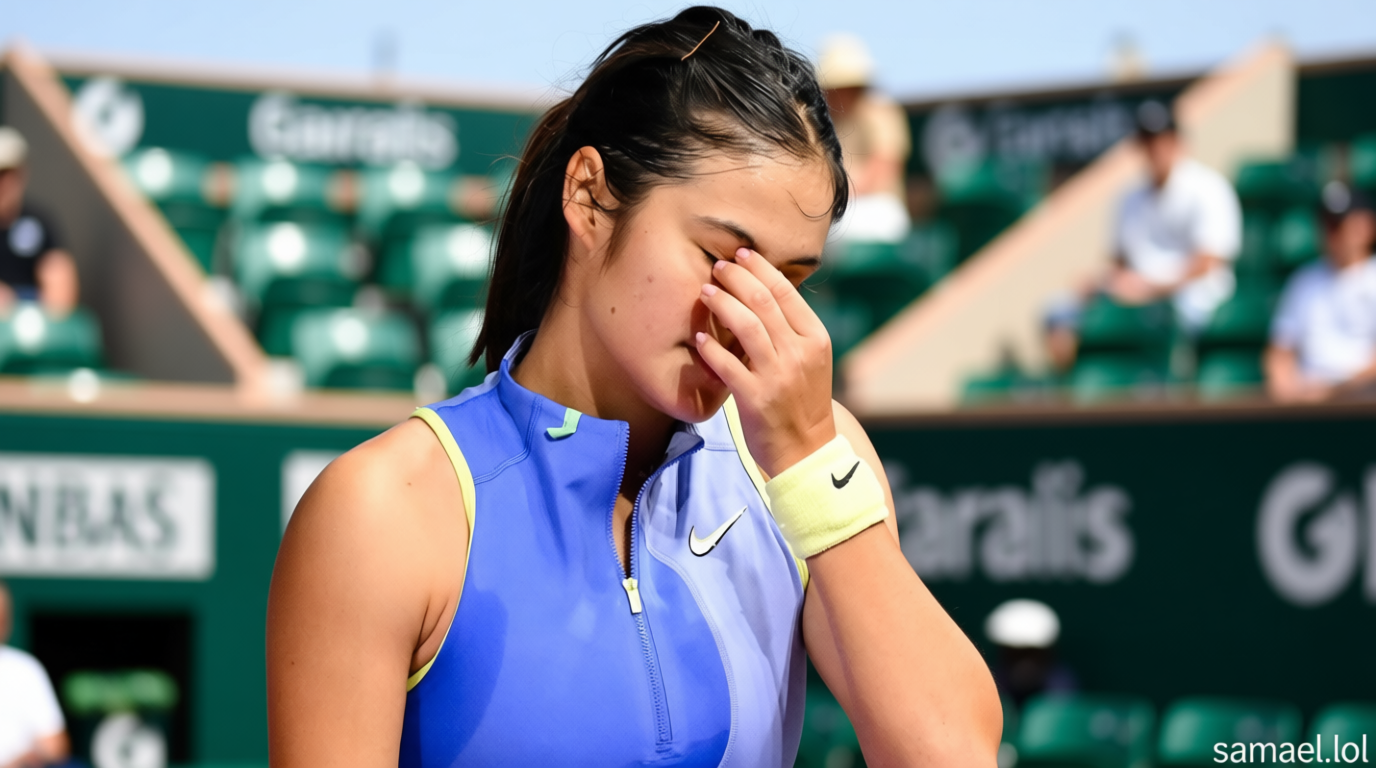
Samael.lol – Emma Raducanu, the British tennis star, has opted to step back from the Italian Open after grappling with lingering effects of a viral infection that have sidelined her from the WTA Tour for two months. The 23-year-old, currently ranked 30th in the world, announced her withdrawal just hours before her final media session in Rome, where she had been training intensively. Despite her efforts to regain fitness, the physical toll of the illness has proven challenging, forcing her to reconsider her participation in the clay-court event.
Practice Sessions and Media Obligations
Raducanu had been engaging in training at the Ferrer Academy near Benidorm in Spain, as well as the National Tennis Centre in London, during her recovery phase. She confirmed her presence in Rome just 30 minutes prior to the official announcement of her withdrawal, indicating that her return to competitive play was still in progress. According to the WTA’s rulebook, players are required to attend media sessions even if they withdraw from a tournament. Failure to comply could result in financial penalties, though Raducanu’s decision came with a clear indication of her commitment to the process.
“I feel really good right now in terms of where I am headed,” Raducanu stated in a BBC Sport interview. “I think I have put a lot of good work in the last three weeks, but it’s relatively early on in my return.”
The player emphasized her progress, noting that the six weeks of focused recovery had been essential. However, she acknowledged the demanding nature of clay courts, which require a level of endurance and adaptability that her current condition hasn’t fully restored. “Coming on to the clay courts is much more physically demanding than potentially other surfaces,” she added, “but I want to come back 100% ready.”
Absence from Major Events
Raducanu’s absence since March 8 has disrupted her schedule, missing key tournaments such as the Miami Open and clay-court events in Linz and Madrid. Her last match before this setback was at the Indian Wells tournament, where she had competed successfully. The Italian Open, held in Rome, represented a crucial step in her comeback, but the post-viral symptoms have now forced her to withdraw. This decision marks the latest in a series of adjustments to her schedule as she navigates her return to top-level competition.
The British number one has been working closely with her support team, including Jane O’Donoghue, a former LTA national coach, and physiotherapist Emma Stewart. These professionals have been instrumental in her rehabilitation process, accompanying her during practice sessions and media appearances. Raducanu’s statement during her interview highlighted the importance of having the right team around her to maintain consistency in her training and preparation.
“I’m feeling in a better place – not 100% – and I feel like I have got a great purpose and a way about how I am approaching things right now,” she explained. “I had six weeks almost of doing nothing just trying to recover from the virus, and it takes a lot out of you physically.”
Raducanu’s comments reflect her determination to return to the sport at her best, even if it means delaying her participation in Rome. Her focus remains on building a solid foundation for future matches, with an eye on the upcoming clay-court events in Strasbourg and Rabat. These tournaments will serve as her final opportunities to compete on the WTA Tour before the French Open, which begins on May 24.
Future Prospects and Ranking Impact
Raducanu’s withdrawal from the Italian Open leaves her with a narrow window to reclaim her footing before the grass-court season. If she misses both Strasbourg and Rabat, she could face a three-month absence from the tour, which would have a noticeable impact on her world ranking. At present, she is seeded 30th, but her inability to defend the points earned from her fourth-round run in Rome last year may see her drop several positions by the time the French Open rolls around.
Despite the setback, Raducanu remains optimistic about her ability to re-enter the competition. She mentioned that her goal is to compete at Roland Garros as an unseeded player, which she views as a chance to demonstrate her resilience. “I have been building my way up slowly and looking forward to when I get out there,” she said, underscoring her patience and strategic approach to recovery.
Reconnection with Coach Andrew Richardson
During her time in Rome, Raducanu reunited with Andrew Richardson, her former coach who played a pivotal role in her 2021 US Open victory. Now serving as the tennis director at the Ferrer Academy, Richardson has continued to support her development, and their collaboration has provided a sense of continuity. Raducanu described their time together as a “nice week,” highlighting the value of maintaining professional relationships even after parting ways following her triumph in New York.
“We stayed in touch, and we stay on good terms, so that’s incredibly important,” she remarked. “He’s someone I’ve known since I was 10 years old and I really wanted to get on the European clay.”
Raducanu expressed her appreciation for Richardson’s mentorship, though she noted that their partnership has no immediate plans to resume. “He is a great person and I enjoyed being on court with him,” she added, explaining that their current dynamic is more about personal connection than formal collaboration. She also mentioned Richardson’s involvement with the academy and his own commitments as factors in their decision to take a break.
The Italian Open withdrawal serves as a reminder of the unpredictable nature of recovery from illness, particularly in high-performance sports. Raducanu’s situation highlights the balance between pushing forward and ensuring she is physically prepared for the demands of competition. Her focus on gradual progress aligns with the broader strategy of many athletes who prioritize long-term health over short-term achievements.
Clay-Court Challenges and Strategic Planning
Raducanu’s decision to withdraw from Rome underscores the physical challenges of the clay-court season. The surface is known for its slow play and high physicality, which can be difficult for players still recovering from viral fatigue. Her remarks during the interview suggested that she is carefully assessing her readiness, aiming to avoid rushing back and risking further setbacks.
With the next WTA events in Strasbourg and Rabat, Raducanu has positioned herself to make a strong comeback. However, the timeline of her recovery will be critical in determining her participation in these tournaments. If she is unable to compete at the start of the clay swing, her absence could stretch into the French Open, where she will need to rebuild her momentum from scratch.
The broader implications of her withdrawal extend beyond her