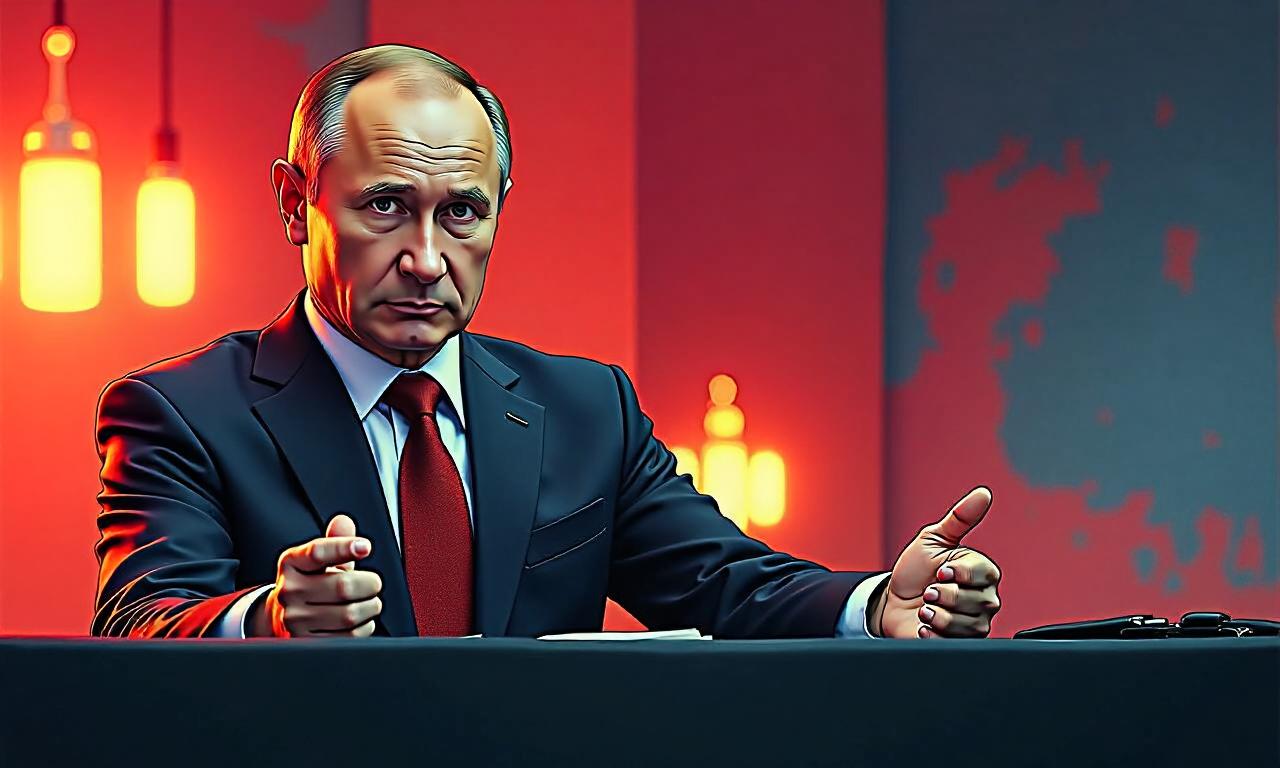
Putin Indicates End of Ukraine Conflict in Victory Day Address
Samael.lol – Russian President Vladimir Putin expressed optimism during a recent address to journalists, suggesting that the ongoing conflict with Ukraine is approaching resolution. His remarks followed a scaled-back military parade in Moscow, held to commemorate the Soviet victory in World War Two. The event, traditionally a showcase of Russia’s military might, featured fewer displays of armored vehicles and weaponry due to heightened security measures. Authorities had concerns that Ukraine might launch drone attacks on Red Square, prompting a reduction in the parade’s scale.
The Kremlin’s decision to limit the parade’s grandeur reflected a shift in focus from military spectacle to diplomatic signals. Putin’s comments came just hours after he delivered a speech on Victory Day, in which he framed the war as a necessary and justified action. “I think that the matter is coming to an end,” he stated, referencing the “special military operation” in Ukraine. This assertion marked a subtle but notable change in tone compared to earlier months, when the conflict was portrayed as an unyielding struggle.
Putin condemned Western support for Ukraine’s government, accusing the West of prolonging the war through persistent backing. “They (West) promised assistance and then began fuelling a confrontation with Russia that continues to this day,” he said during a press conference. Despite acknowledging the conflict’s end was “a serious matter,” his remarks hinted at a strategic pivot. The international community, however, remained cautious, interpreting his words as either a sign of progress or a calculated move to ease pressure.
“I think that the matter is coming to an end, but it is a serious matter.”
Earlier in the week, a last-minute ceasefire brokered by former U.S. President Donald Trump had eased tensions. This agreement, reached over the weekend, included a prisoner exchange of 1,000 individuals from each side. Yet, Putin emphasized that the deal was not yet finalized, stating that Russia had not received formal communication from Ukraine regarding the swap. “We have not yet heard from Ukraine about any exchanges,” he noted, underscoring the continued uncertainty in the peace process.
The conflict’s trajectory has been marked by significant milestones. In 2014, Russian forces annexed Crimea and occupied regions in eastern Ukraine, setting the stage for a larger confrontation. The full-scale invasion in February 2022 intensified the situation, leading to widespread destruction and a global outcry. Putin’s current stance appears to signal a desire to transition from active combat to political resolution, though the specifics of this strategy remain unclear.
Putin outlined his vision for resolving the war, proposing a meeting with Ukrainian President Volodymyr Zelensky once a lasting peace deal is reached. “A meeting in a third country is also possible, but only once final agreements have been reached on a peace treaty for a long-term historical perspective,” he said. The idea of a third-party negotiation suggests a willingness to engage with neutral mediators, yet he stressed that the treaty must represent a definitive conclusion. “It must be a final step,” he added, implying that any agreement would need to be comprehensive and irreversible.
When questioned about Western assistance to Ukraine, Putin reiterated his belief that the conflict was being artificially extended. He cited NATO’s role in arming Ukraine, calling the alliance a “whole bloc” of aggressors. “Ukraine is an aggressive force that has been armed and supported by the whole bloc of NATO,” he claimed. This accusation has been a recurring theme in his speeches, reinforcing his narrative of a defensive war against a Western-backed threat.
Putin also named Germany’s former Chancellor Gerhard Schröder as his preferred negotiating partner. Schröder, a former leader of the Social Democratic Party, has maintained a close relationship with Putin. His involvement in Russian energy firms, particularly Rosneft, has sparked debate over his neutrality. Despite these controversies, Putin viewed Schröder as a reliable intermediary, highlighting the importance of European political figures in shaping the conflict’s resolution.
The Victory Day parade, a key event in Russia’s annual commemoration of wartime triumphs, featured a stark contrast to previous years. For the first time in nearly two decades, no military hardware was displayed in Red Square. This absence underscored the current state of the war, as logistical challenges and security risks forced a simpler presentation. The event also drew a smaller international audience, with several media organizations restricting access to journalists. This reduction in coverage may reflect a deliberate effort to control the narrative, or it could indicate a waning interest in the conflict’s military aspects.
While the ceasefire has temporarily calmed hostilities, the road to peace remains complex. Putin’s remarks suggest a belief in the war’s nearing conclusion, but the geopolitical stakes are still high. The success of the prisoner exchange and the potential for further negotiations will depend on the willingness of both sides to compromise. As the conflict enters a new phase, the focus is shifting from battlefield victories to diplomatic agreements, with Putin positioning himself as a pragmatic leader ready to conclude the war on his terms.