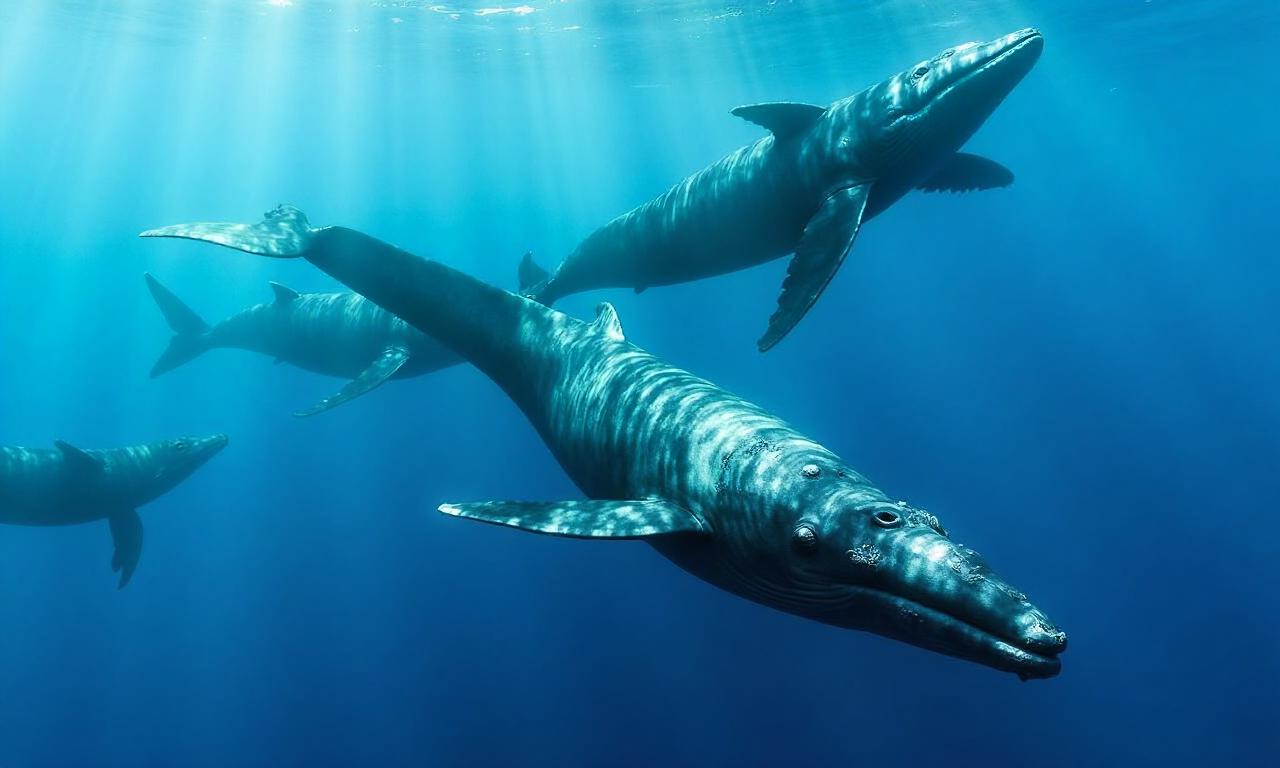
Whales could be harmed by diverted ships avoiding Middle East, scientists warn
Samael.lol – Global trade shifts have intensified concerns over the unintended consequences for whale populations, particularly those near South Africa’s southwestern coast. Scientists warn that the increased use of alternative shipping routes—designed to circumvent the Middle East—may elevate the risk of ship-whale collisions. A recent study by researchers at the University of Pretoria’s Whale Unit highlights this growing threat, linking it to geopolitical tensions such as the Houthi rebels’ capture of a British-flagged vessel in 2023. This event prompted widespread rerouting, with vessels now traversing the Southern Ocean instead of traditional paths through the region.
Shifting Routes and Rising Collision Risks
Since early 2023, the number of commercial ships circumnavigating the Cape of Good Hope has more than doubled, according to the PortWatch report. This surge is a direct response to the heightened risks in the Middle East, where conflicts have disrupted safe passage for maritime traffic. As a result, cargo routes from Asia to Europe now pass through the Southern Ocean, increasing the likelihood of encounters with whales. The study’s authors note that the rerouted ships are entering areas where whale activity is concentrated, leading to a potential spike in collisions.
Professor Els Vermeulen, leading the University of Pretoria’s Whale Unit, explained that the team mapped whale distribution patterns alongside new shipping lanes. “Our analysis revealed overlapping zones where both whales and vessels are likely to be present,” she said. These findings were presented to the International Whaling Commission, emphasizing the environmental impact of geopolitical conflicts. The researchers argue that the shift in shipping routes has created an unexpected danger for marine life, which could threaten entire populations if left unaddressed.
Tracking the Hidden Impact of Ship Strikes
Accurately measuring the effects of ship-whale collisions remains a challenge, as many incidents go unnoticed. Vermeulen pointed out that whales often sink to the depths after collisions, making it difficult to track their deaths. “Cryptic mortality is a major issue,” she said. Without reliable data, it’s hard to determine how many whales are being affected by the diverted traffic. The team is advocating for more advanced tracking methods, including aerial surveys and boat-based monitoring, to capture the full scope of the problem.
Current data collection efforts are limited, with most collisions occurring far from shore. Vermeulen emphasized that this fragmentation hampers the ability to assess the true scale of the threat. “We need a systematic approach to monitor these events,” she added. The study’s call for improved methods aligns with broader discussions about integrating environmental safeguards into maritime planning. By understanding whale movements and ship traffic patterns, researchers hope to develop strategies that minimize harm while maintaining global trade efficiency.
Vermeulen and her colleagues suggest that adjusting shipping routes and reducing vessel speeds could help mitigate the risk. “Slower speeds in high-risk areas might reduce fatal collisions,” she said. However, implementing these changes requires further analysis and stakeholder cooperation. The researchers are urging maritime authorities to collaborate with conservation experts to refine navigation practices. “Until we have concrete data, it’s challenging to make targeted recommendations,” she noted. The goal is to present updated findings to the International Whaling Commission to inform policy decisions.
The study underscores the delicate balance between economic demands and environmental preservation. As trade routes shift due to regional instability, the Western Cape—a vital habitat for several whale species—faces increased pressure. Vermeulen’s work highlights how human activity can disrupt marine ecosystems, even when the intention is to avoid conflict. “We’re not just talking about a handful of whales; this could be a crisis for entire populations,” she warned. The findings serve as a reminder that global trade decisions have far-reaching ecological implications, necessitating a proactive approach to protect marine life.