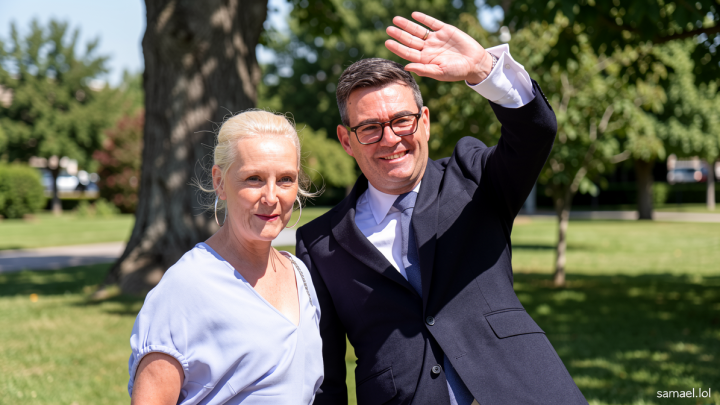
Henry Zeffman: PM puts himself back in the game for now
Samael.lol – At the start of today’s routine cabinet meeting, Sir Keir Starmer tested the waters with a statement that hinted at a deeper strategy. The prime minister, addressing his 28 colleagues, issued a challenge: “If you think you’re tough enough, come and have a go.” This remark, though brief, set the tone for a potential leadership contest that has been simmering within the Labour Party. While the meeting’s primary agenda was the economic fallout from Middle East tensions, Starmer’s words were clearly aimed at Wes Streeting, the health secretary, who has been vocal about his readiness to step into the leadership race if needed.
A Fractured Front
Streeting, a prominent figure in the party, has long signaled his intent to lead should the opportunity arise. However, he has consistently maintained that he would not be the one to initiate a leadership challenge. This stance has placed him in a delicate position, as factions within Labour now view him as a key player in the contest. The prime minister, aware of this, has opted to leverage Labour’s unique rules to regain control. Unlike the Conservatives, where a leader can be ousted with a simple vote of no confidence, the Labour system requires a formal threshold: 81 MPs must back a specific opponent to challenge Starmer. This creates a window for internal dissent to consolidate, rather than act impulsively.
While the number of MPs willing to support a challenge is significant, the prime minister has managed to exploit the division among them. Some ministers, including those who back Andy Burnham, prefer a more gradual process. Burnham, not currently an MP, is seen as a long-term alternative, but his supporters argue that the timing is ripe for a decisive move. Others, like Streeting, are more impatient, pushing for an immediate contest. This split has allowed Starmer to position himself as the unifying figure, even as tensions rise.
Timing the Move
Despite the pressure, Streeting did not immediately respond to Starmer’s overture during the cabinet meeting. The discussion quickly shifted to the economic impact of Middle East conflict, with the prime minister delivering his opening remarks and then steering the conversation toward its planned focus. This smooth transition suggests a calculated effort to minimize the leadership debate’s prominence, at least for now. However, the message was clear: Starmer is ready to defend his position, and he has the institutional tools to do so.
There are reports that a group of ministers attempted to approach Starmer after the meeting to discuss his leadership. Yet he reportedly declined their visit, signaling a firm stance. In contrast, a large faction of ministers, including Peter Kyle and Liz Kendall, emerged in support of the prime minister. Notably, Kyle and Kendall are often associated with Streeting’s ideological circle, indicating that even within the party’s inner circle, there is room for collaboration. This support is crucial, as it bolsters Starmer’s position and limits the momentum of his rivals.
Unseen Alliances and Unspoken Agendas
Ed Miliband, the energy secretary, was observed remaining silent as he exited the cabinet. His absence during the leadership-related discussion raises questions about his alignment with Miatta Fahnbulleh, the business secretary who resigned this morning and called for Starmer’s leadership to be reconsidered. Fahnbulleh, a known advocate for Andy Burnham, has positioned herself as a key figure in the opposition. Her departure suggests a shift in strategy, with her followers now seeking to rally behind Burnham’s bid for a return to parliament.
Burnham’s supporters have been actively working to secure a parliamentary seat for him. Their goal is to create a scenario where he can enter a by-election and challenge Starmer directly. The timing of this effort is critical. While yesterday presented an ideal opportunity for Burnham to make his move, the prime minister’s calculated presence today may have delayed the process. This delay gives Starmer time to solidify his base and prepare for any potential challenges.
What’s Next?
The Labour Party’s rules offer multiple pathways for a leadership contest. If a direct challenge is launched, Starmer would automatically appear on the ballot, even without prior nominations. This means he could emerge as the frontrunner, with support from those who want him out but are unwilling to replace him with Streeting. The possibility of this scenario underscores the complexity of the situation, as the party’s factions remain in flux.
Analysts suggest that the “soft left