Germany: Hope Fades for Stranded Humpback Whale’s Survival
Samael.lol – German authorities have declared an end to attempts to assist a young humpback whale trapped in the Baltic Sea. A protected zone has been created to let the creature “pass away peacefully.” After days of intense activity, officials from the northern coast of Germany confirmed that further intervention would no longer be pursued. The decision follows a week of tireless efforts to save the animal, which had initially become lodged on a beach near Timmendorf on March 23.
Final Decision to Let Whale Rest
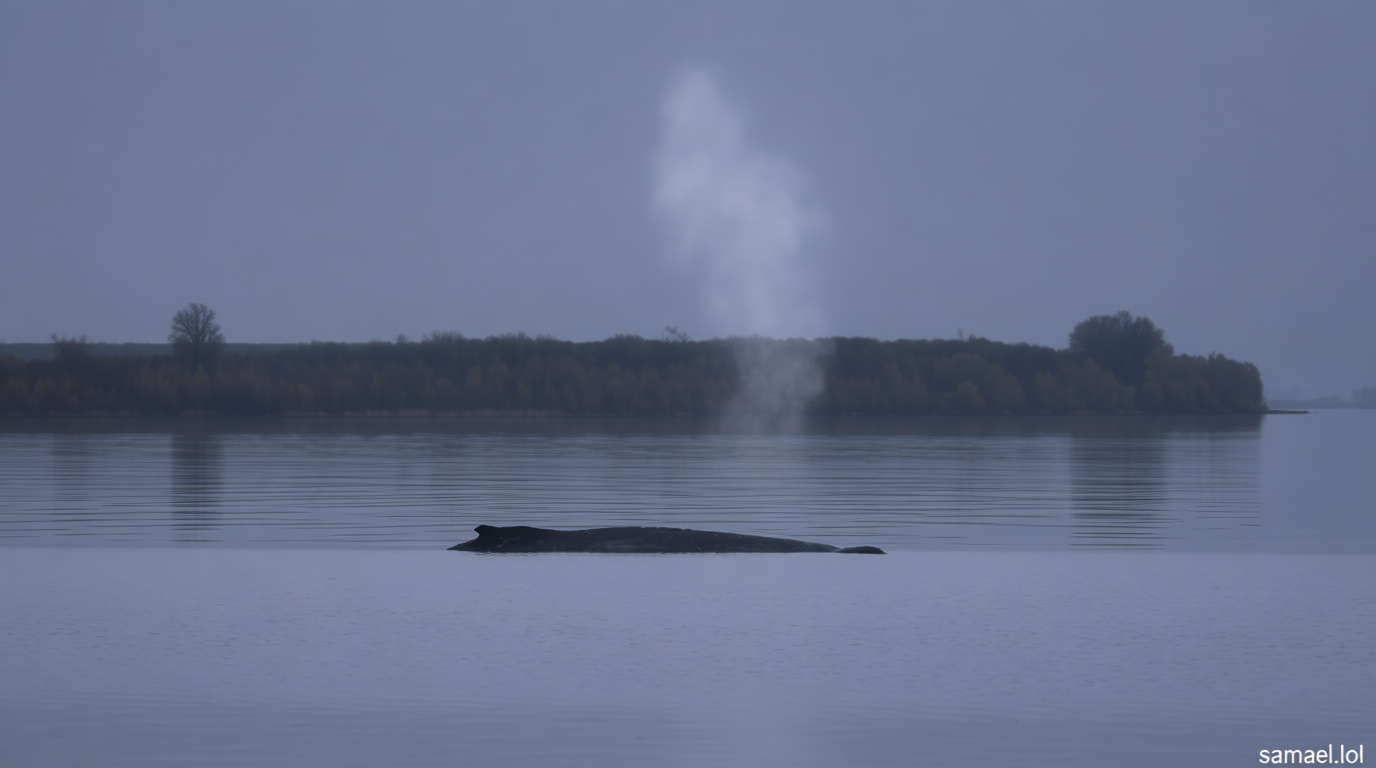
Till Backhaus, the environment minister for Mecklenburg-Western Pomerania, stated during a moving press conference that all possible measures had been tried. “We did everything we could to offer it a chance. This is a rare tragedy, but it chose its own path,” he remarked. The whale is currently resting in shallow waters near the Poel island, close to Wismar, where it shows faint signs of breathing and minimal movement.
“We would need to push it forcefully to free it, which would be pointless given its lack of strength,” said rescue specialist Burkard Baschek. “Any further attempt to relocate it would be cruel, as survival seems unlikely.”
Baschek emphasized the importance of “respect for nature” in the decision, adding that at a certain point, “we must allow it to rest.” The whale, nicknamed “Timmy” by media, has been battling severe skin issues caused by low salinity and still has fishing net fragments in its mouth, which were only partially removed.
Whale’s Journey and Struggles
Native to the North Atlantic, the young male is estimated to be between 12 and 15 meters long. It has been drifting through the Baltic Sea for roughly four weeks, first becoming stranded on a sandbank near Schleswig-Holstein last week. Excavators and dredges were used to free it, but it re-beached itself in Wismar Bay. On Monday, it briefly escaped using acoustic signals from experts.
Though the whale was able to move slightly on Monday evening, it returned to shallow waters by Tuesday afternoon. Officials initially gave it time to recover, but by late Tuesday, they concluded its survival prospects were bleak. “Its response to our presence was nearly nonexistent,” Baschek noted, underscoring the futility of continued efforts.
To view this video, enable JavaScript and upgrade to a web browser that supports HTML5 video.