Scheffler Emerges PGA Championship Leader Amid McIlroy’s Struggles
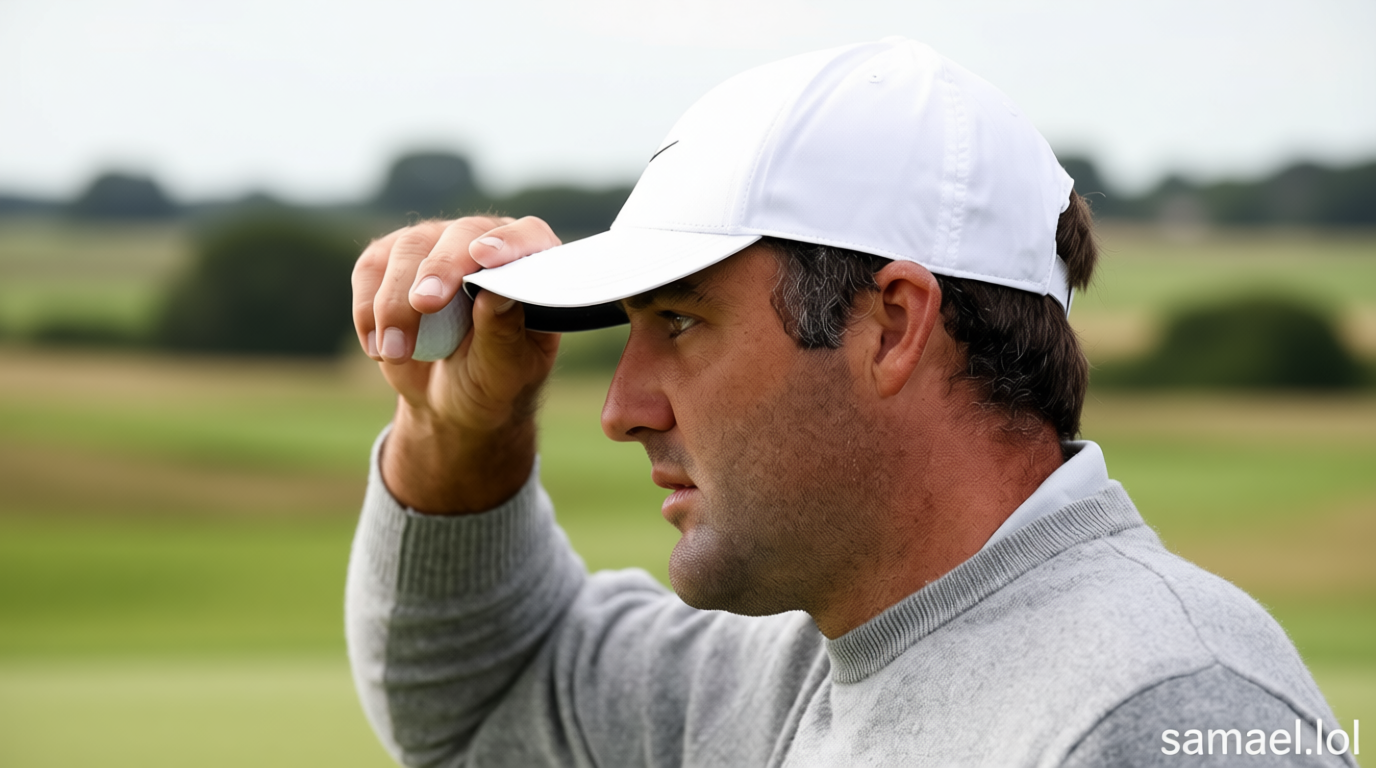
Samael.lol – Scottie Scheffler, the reigning world number one, has taken an unexpected step into the spotlight after a strong opening round at the US PGA Championship. The 29-year-old American, who previously struggled to secure a swift start to his tournaments, has now found himself in a seven-player tie for the lead following a three-under-par 67. This performance has raised eyebrows, as it marks a significant turnaround from the expectations set by the course’s formidable reputation.
PGA Championship First-Round Leaderboard
The first-round leaderboard was dominated by a handful of international stars, including Germany’s Martin Kaymer and Stephan Jaeger, South Africa’s Aldrich Potgieter, Australia’s Min-Woo Lee, Japan’s Ryo Hisatsune, and the United States’ Alex Smalley. These players, along with Scheffler, managed to navigate the challenges of Aronimink Golf Club with relative ease. The course, located in Pennsylvania, proved to be a tough test for even the most seasoned professionals, with only 32 competitors—just 20% of the 156-man field—posting scores below par.
Among the leaders, the names of Kaymer, Jaeger, and Smalley stood out as surprises, given their lack of prior prominence in the major championship. This unexpected surge in form has created a dynamic leaderboard, with the top group showing resilience against the course’s undulating terrain and thick rough. Meanwhile, the rest of the field faced significant hurdles, as the firm, sloping greens and unpredictable pin placements made every shot a gamble.
Rory McIlroy’s Early Struggles
World number two and Masters champion Rory McIlroy found himself at the bottom of the leaderboard after a dismal round that ended with a four-over-par score. The Northern Irishman, known for his power and precision, struggled to adapt to the course’s demands, particularly in the later stages of his round. His strategy of aggressively hitting the driver faltered as erratic tee shots led to a cascade of mistakes, culminating in four consecutive bogeys. This marked a sharp contrast to his usual dominance, leaving him seven strokes behind the leaders.
McIlroy’s difficulties were compounded by the course’s rough, which he described as a “devilish” obstacle. “There certainly is a penalty for missing the fairway. Probably more than what I anticipated,” he said after the round, highlighting the toll of misjudged shots. The tournament’s setup, with its firm greens and challenging pin positions, seemed to have caught him off guard, despite his prior experience with similar conditions.
Course Challenges and Player Adaptation
Aronimink’s design posed a unique set of challenges for the field, particularly in the wake of overnight rain that softened the putting surfaces. This created a double-edged sword, as players who started early had to contend with faster greens, while those teeing off later faced the same pin positions under tougher conditions. The course’s reputation as a difficult test was vindicated, with even the top-ranked players finding it hard to capitalize on their skills.
Scheffler’s ability to maintain composure under pressure was evident in his round. His relentless focus and minimal fluster helped him navigate the course’s complexities, earning him a place among the leaders. This performance was notable for a player who has often struggled to start strong, a trait that has cost him dearly this season. By leading a major after 18 holes, Scheffler has defied the odds and set a strong tone for the tournament.
Jon Rahm, Spain’s top-ranked golfer, also finished one under par, but his comments during the post-round press conference suggested a lack of confidence in the course’s difficulty. “Earlier in the week there was some chatter where people thought 15 to 20 under par was going to win. And I think that got to somebody in the PGA [of America], and they did something about it,” Rahm said, reflecting on the course’s potential to disrupt even the most ambitious strategies.
Key Battlegrounds and Strategic Adjustments
The geometry of the greens became a pivotal battleground for many players, with precision often outweighing power. Bryson DeChambeau, the unorthodox power hitter, was a victim of this trend, posting a 76 as his aggressive approach was challenged by the course’s demanding putting surfaces. DeChambeau’s short game, typically a strength, failed to deliver, as he struggled to manage the green’s undulations. One particularly memorable moment saw his ball race past the 30-foot pin on the 11th hole, a costly error that underscored the course’s unpredictability.
Patrick Reed, the in-form American, was the only player to record a bogey-free round, showcasing his ability to handle the course’s challenges. However, he finished just one shot behind the leaders, a testament to the high level of competition. Meanwhile, England’s Dan Brown, making his overseas major debut, found himself at a one-shot deficit, highlighting the difficulty of adapting to new environments.
McIlroy’s Expletive and Past Triumphs
Rory McIlroy’s frustration with his first-round performance was palpable, as evidenced by his expletive-laden response during the post-round news conference. When asked about the reasons for his poor showing, the world number two began his answer with a four-letter word, capturing the essence of his exasperation. “I started missing fairways. I missed the fairway right on four, the fairway right on six, the fairway right on seven, fairway,” he said, his voice tinged with disappointment.
McIlroy’s struggles this week are particularly significant given his history at the US PGA Championship. The player has claimed the title twice before, most recently in 2014, but has not returned to victory since. His current performance suggests a return to form may be challenging, as the course’s unique conditions have tested his ability to execute under pressure. Despite this, the Northern Irishman remains a formidable contender, with his experience and talent still evident in his game.
The first round at Aronimink has already set the stage for a thrilling battle, as players adapt to the course’s nuances. Scheffler’s leadership, coupled with the presence of unexpected names on the leaderboard, signals a dynamic tournament ahead. For McIlroy, the challenge is to recover from his early struggles, while the rest of the field must prove their ability to overcome the course’s difficulties. As the US PGA Championship progresses, the competition promises to be fierce, with every shot carrying the weight of potential playoff drama.
“The players underestimated the difficulty of playing this golf course from the rough and we’re not seeing a whole lot of putts holed,” said former European Ryder Cup captain Paul McGinley, offering insight into the course’s impact on the field.
With the first round complete, the focus shifts to how players will adjust their strategies in the coming days. The leaderboard, now a mix of seasoned veterans and underdog hopefuls, sets the stage for an unpredictable tournament. Scheffler’s performance, while impressive, will be tested as the course’s challenges become more apparent. For McIlroy, the goal is to regroup and reclaim his position in the race for glory. As the US PGA Championship moves forward, the players’ ability to adapt will determine who stands on the podium at the end.