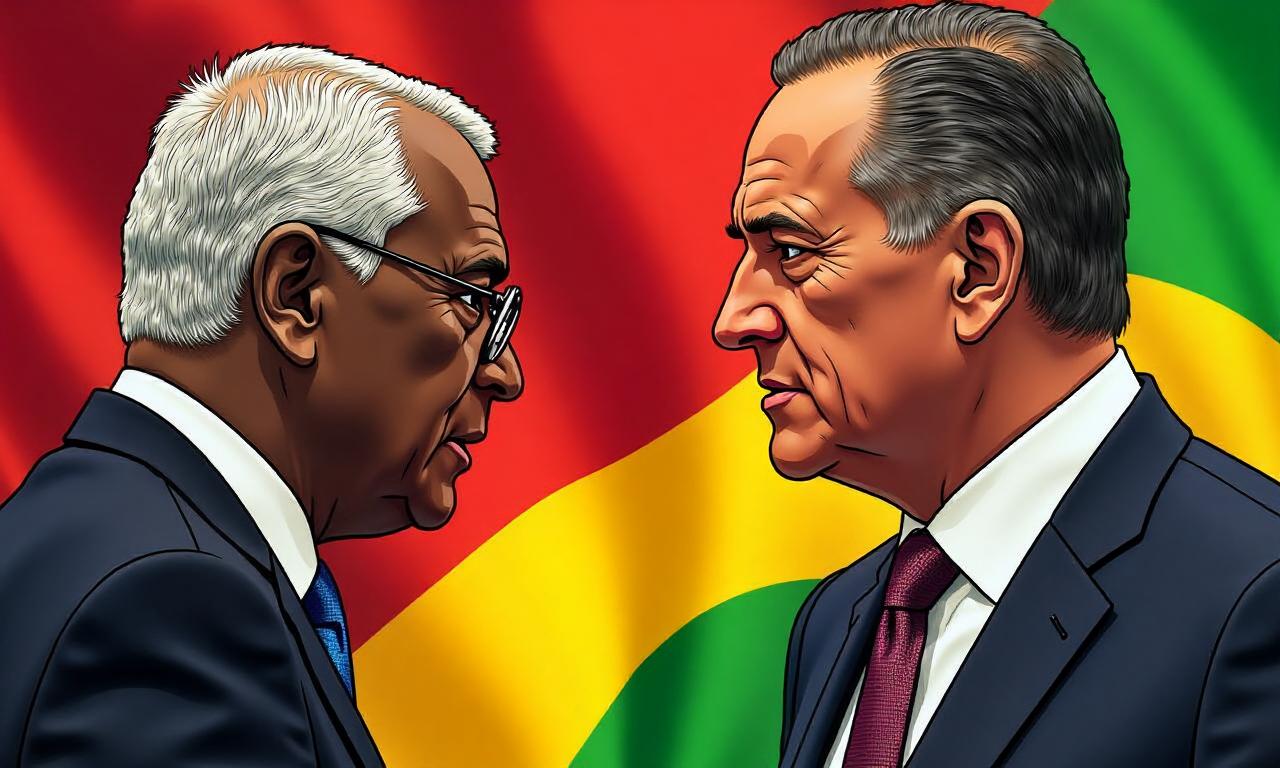
Senegal’s President Sacks PM and Former Ally After Months-Long Feud
Samael.lol – Senegalese President Bassirou Diomaye Faye has taken decisive action by dismissing Prime Minister Ousmane Sonko and dissolving the nation’s government, marking a significant shift in the country’s political landscape. The abrupt move, announced via a televised decree by a presidential aide, cited the end of Sonko’s duties and the subsequent removal of ministers and secretaries of state who were part of the administration. This decision follows a prolonged conflict between the two leaders, which has simmered for several months. The implications of the dissolution are far-reaching, as it signals a break from the previous coalition that brought them to power.
The Strain of Leadership
The split between Faye and Sonko has been a source of contention, with both leaders clashing over the nation’s economic trajectory. Sonko, a charismatic figure among Senegal’s youth, expressed his relief on social media, stating that he would “sleep with a light heart.” His departure from the government has sparked mixed reactions, with some celebrating the end of a contentious chapter while others worry about the instability it may bring. The situation is further complicated by the country’s dire financial state, as public debt has surged to 132% of its GDP, according to the International Monetary Fund (IMF). This figure underscores the immense pressure Senegal faces to implement effective reforms.
Faye’s decision to sack Sonko came after a heated parliamentary session on Tuesday, during which the prime minister publicly criticized the president’s handling of the debt crisis. Sonko’s remarks highlighted growing frustrations within the ruling party, Pastef, over the lack of progress in addressing the country’s economic challenges. The rift between the two leaders has not only shaken the government but also exposed the fragility of their alliance, which was once seen as a model of unity. Sonko’s dismissal followed a pattern of public disagreements, culminating in a moment where their political partnership unraveled.
A Shared Rise, A Growing Divide
Their political alliance began with a common goal: to unseat Macky Sall, the former president who had dominated Senegalese politics for years. Faye and Sonko, both imprisoned just weeks before the 2024 election, leveraged their shared struggle to rally public support. Their campaign slogan, “Diomaye is Sonko, Sonko is Diomaye,” symbolized the deep connection between their political ambitions. This partnership led to a historic victory, as they won the presidency and prime ministership in a landslide, capturing the imagination of a nation eager for change.
However, the alliance has since faced challenges. Faye, who owed much of his electoral success to Sonko’s popularity, has grown increasingly critical of the prime minister’s leadership style. In recent months, Faye accused Sonko of “excessive personalisation” within the ruling party, a move that Sonko interpreted as a betrayal. Meanwhile, Sonko alleged that Faye had failed to protect him from political opponents, accusing the president of undermining his credibility. The tension has escalated to the point where their former camaraderie now fuels a bitter power struggle.
“I will sleep with a light heart,” Sonko wrote on social media, reflecting his resolve despite the fallout. His words have resonated with young Senegalese, many of whom view him as a symbol of grassroots activism and political courage.
The economic crisis has become a focal point of their conflict. With the IMF reporting that public debt has reached 132% of GDP, the pressure to stabilize the economy has intensified. Sonko, who had been a vocal advocate for economic transparency, had criticized Faye’s approach to debt negotiations, arguing that the government’s policies were not adequately addressing the needs of the population. This has led to a stalemate, with both leaders blaming each other for the nation’s financial woes.
Student Protests and Public Unrest
The political turmoil has spilled into the streets, with several hundred students gathering in Dakar to voice their support for Sonko. Demonstrations, often led by youth activists, have become a common sight, highlighting the public’s dissatisfaction with the current leadership. These protests are not just symbolic; they reflect a broader frustration with the government’s inability to deliver on its promises, particularly in the face of rising inflation and unemployment.
Meanwhile, the lack of clarity surrounding the appointment of a new prime minister has left the political scene in limbo. Faye has not yet announced his choice, suggesting that the dissolution of the current government may be a strategic move to consolidate power. This uncertainty has raised questions about the future of Senegal’s governance and the potential for further instability. Analysts warn that the political vacuum could lead to increased protests or even a shift in public sentiment towards alternative leaders.
The IMF’s Role in the Crisis
The International Monetary Fund has played a pivotal role in amplifying Senegal’s economic challenges. Its decision to freeze a $1.8 billion lending program has added to the pressure on the government to present a viable economic plan. The move has been interpreted as a response to the country’s mounting debt and its inability to meet fiscal targets. For Faye, the situation is particularly precarious, as his administration is now under scrutiny for its handling of the crisis.
As the political and economic battles continue, Senegal’s leaders find themselves in a difficult position. The collapse of the previous coalition has left them to navigate the complexities of a divided government, with Faye and Sonko’s feud serving as a backdrop to the country’s broader challenges. The outcome of this power struggle will have lasting consequences for Senegal’s political future and its ability to address the economic pressures that threaten its stability.
The defection of Sonko from the government has also raised questions about the loyalty of other political figures. While Faye has maintained his position, the loss of a key ally has weakened his coalition. Some political analysts suggest that the president may now seek to restructure the government to align more closely with his vision, while others believe that Sonko’s departure could lead to a more fragmented political landscape. Regardless of the outcome, the situation in Senegal has taken a dramatic turn, with the nation’s leaders now facing the dual challenge of maintaining public confidence and resolving their internal conflicts.
As the dust settles, the focus remains on how Senegal will move forward. The dissolution of the government has not only reshaped the political scene but also set the stage for new alliances and potential rivalries. The public, weary of economic uncertainty, will be watching closely to see if the new leadership can address the country’s pressing issues or if the feud will continue to fuel instability. With the IMF’s lending program frozen and the political climate tense, the road ahead for Senegal appears uncertain, yet the resilience of its people offers a glimmer of hope.