Clashes as Venezuelan prisoners protest over alleged mistreatment
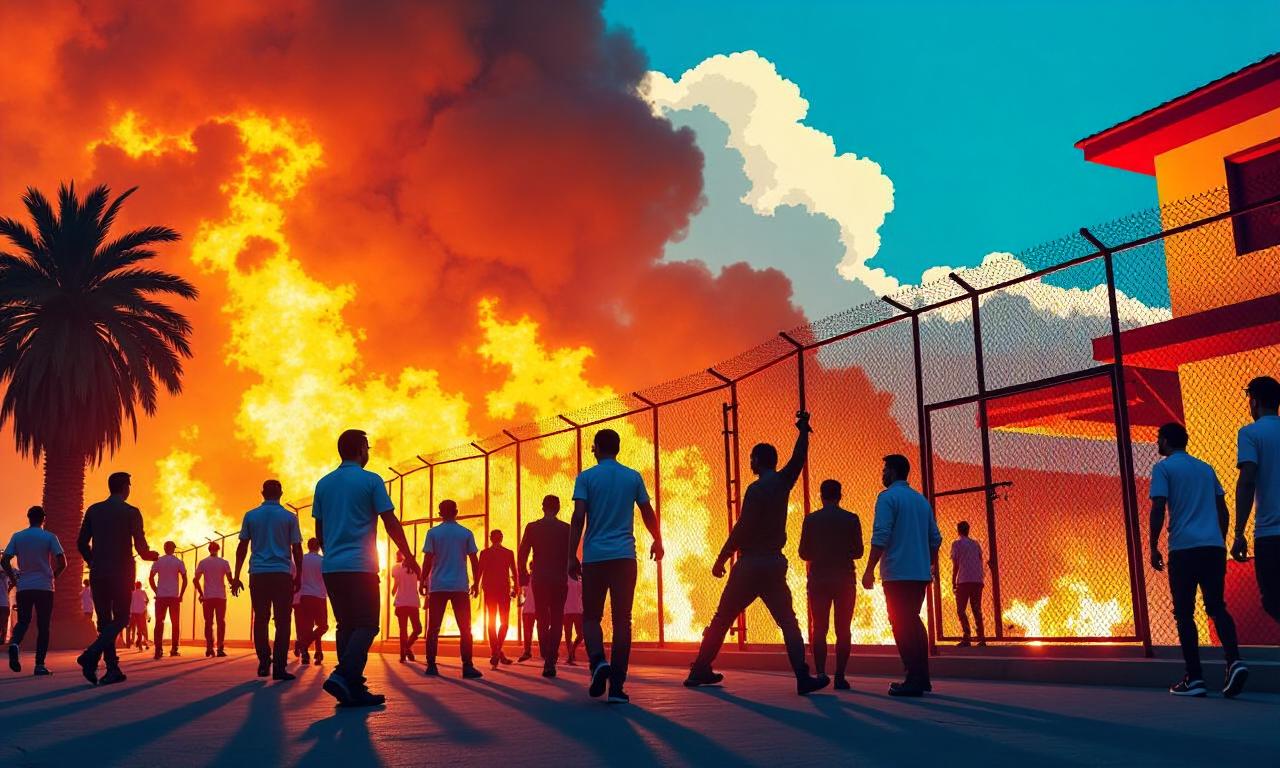
Samael.lol – Violent confrontations broke out between incarcerated individuals and security officers at a detention facility in Barinas, a state in Venezuela, following a wave of unrest. The incident, which escalated rapidly, involved prisoners scaling the prison walls and setting mattresses ablaze as part of a demonstration against the conditions of their confinement. Eyewitness accounts described the scene as chaotic, with reports of explosions and claims that inmates had been targeted by gunfire. This confrontation marks a significant moment in the ongoing struggle for better treatment within Venezuela’s prison system.
OVP’s Allegations and Inmates’ Grievances
The Venezuelan Prison Observatory (OVP), a non-governmental organization dedicated to monitoring detention conditions, has been vocal about the systemic issues within the country’s jails for years. In this case, the inmates at Injuba prison, the site of the recent clashes, have been voicing complaints for over a week about the harsh practices imposed under the new director’s regime. Their grievances include allegations of aggressive searches, prolonged solitary confinement, and physical abuse. These claims align with broader criticisms from human rights groups, who have consistently highlighted the deteriorating state of Venezuela’s correctional facilities.
“They’re shooting at us,” one prisoner shouted during the protest, as captured in footage shared by the OVP. Another inmate displayed wounds on his torso and arm, signaling the severity of the mistreatment they have endured. These personal accounts underscore the intensity of the situation, which has pushed the prisoners to take extreme measures to draw attention to their plight.
The OVP’s latest video footage reveals the inmates’ protest on the prison’s roof, where they gathered in solidarity. The visuals depict a group of prisoners burning mattresses, a symbolic act of defiance against the oppressive conditions. The organization has emphasized that the unrest is not an isolated event but part of a larger pattern of grievances. Despite the turmoil, the prison director and interim President Delcy Rodríguez’s administration have yet to issue public statements addressing the crisis.
Footage of the Protest and Inmates’ Demands
Among the recorded scenes, a striking moment featured a woman wearing dark glasses and a face mask confronting Delcy Rodríguez directly. She demanded the resignation of both the prison director and the minister responsible for detention policies, framing her protest as peaceful before outlining her key demands. One of her central requests was the provision of medical care for prisoners suffering from tuberculosis, highlighting the intersection of health and human rights in the Venezuelan context.
While the immediate cause of the clashes was the alleged mistreatment, the broader context reveals a persistent issue of systemic neglect. The OVP has repeatedly warned that many Venezuelan prisons fail to meet the “minimum standards” mandated by law. Their reports often cite overcrowding, inadequate food supplies, and limited access to medical treatment as critical factors contributing to the suffering of detainees. The Injuba facility, though not a primary site for political prisoners, has become a focal point for the latest outburst of anger.
“We want justice,” the prisoners chanted in the video, their voices echoing the frustration of a population that feels ignored by the authorities. The woman’s statement, “their protest is peaceful,” adds a layer of urgency to the situation, as she calls for accountability from the government.
Political Prisoners and US Influence
The release of hundreds of political prisoners since the United States’ military operation in Caracas on January 3, 2024, has been attributed to increased pressure on the Venezuelan government. This operation, which targeted Nicolás Maduro, has prompted a wave of detainees to be freed, particularly those linked to opposition groups. However, according to Foro Penal, a pressure group focused on prisoner rights, more than 400 political prisoners remain incarcerated, indicating that the crisis is far from resolved.
While Injuba prison is not traditionally associated with political detainees, the Venezuela Committee for the Freedom of Political Prisoners has expressed solidarity with the inmates there. The group alleges that the prison’s current policies are designed to intimidate and subdue prisoners through methods such as punishment, hunger, and solitary confinement. These tactics, they argue, are part of a broader strategy to maintain control over detainees and suppress dissent.
The role of the interim government in the aftermath of Maduro’s ouster remains a subject of debate. Critics claim that the administration has not adequately addressed the systemic issues in prisons, despite the symbolic release of political prisoners. The lack of public response from the prison director and the interim president’s office has fueled further unrest, with inmates feeling that their voices are not being heard.
International Response and Continued Concerns
In March, the United Nations’ High Commissioner for Human Rights, Volker Türk, echoed the concerns raised by the OVP and other organizations. His office received reports indicating that detainees continued to face torture and inhumane treatment even after Maduro’s removal. These findings reinforce the idea that the prison system in Venezuela remains a battleground for human rights, with detainees bearing the brunt of the conflict.
While the US military intervention has led to some progress, the situation at Injuba prison serves as a reminder that the struggle for justice is ongoing. The combination of physical abuse, lack of medical care, and limited access to basic necessities has created an environment where protests are not only expected but necessary. The footage shared by the OVP is a powerful testament to the resilience of the prisoners and their determination to demand change.
As the international community watches, the events at Injuba prison highlight the complex dynamics at play in Venezuela’s detention system. The clashes between inmates and security forces, the visible signs of mistreatment, and the sustained demands for reform all point to a deeper crisis. With the interim government under scrutiny, the question remains: will their silence continue to fuel the suffering of those behind bars, or will they take decisive action to address the grievances? The answer may shape the future of prisoners’ rights in Venezuela for years to come.