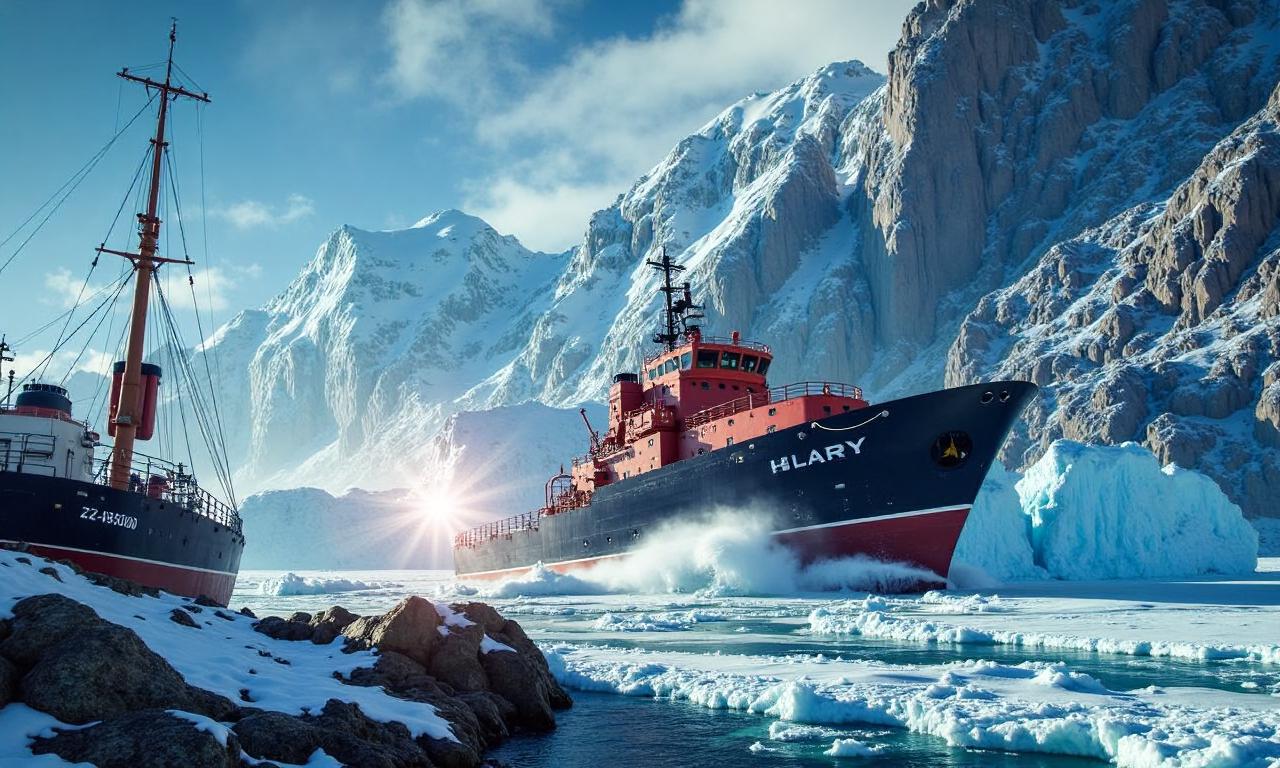
Breakthrough in Identifying Crew of the Doomed Arctic Expedition
Samael.lol – Researchers have successfully used DNA testing to determine the identities of three sailors who perished on the ill-fated 19th-century Arctic expedition. The discovery marks a significant milestone in solving the mystery of the crew of the Victorian-era HMS Erebus, which vanished in the mid-1800s and became a symbol of maritime tragedy. All 128 seafarers aboard the ship met their end after the vessel became trapped in ice, with some surviving only through desperate acts of cannibalism. Now, living relatives of the crew members have been contacted, and the remains of three individuals—Able Seaman William Orren, cabin boy David Young, and steward John Bridgens—have been confirmed.
The HMS Erebus: A Ship of History and Mystery
The HMS Erebus, constructed in Pembroke Dock in 1826, was originally designed as a bombship, a vessel with reinforced hulls capable of withstanding the force of heavy artillery. Though compact, its robust build made it an ideal choice for polar expeditions. In 1845, it embarked on a mission alongside the HMS Terror, aiming to chart the elusive Northwest Passage—a hypothetical sea route connecting the Atlantic and Pacific Oceans through the Arctic. The expedition, led by Sir John Franklin, was intended to be a scientific and navigational triumph, but it soon turned into a tale of survival and despair.
A Journey into the Frozen Unknown
The crew set sail from England, confident in their ability to navigate the icy waters of northern Canada. However, by 1846, both ships were immobilized by thick ice, leaving the sailors stranded in one of the harshest environments on Earth. With limited supplies and no hope of rescue, the survivors were forced to endure extreme cold, hunger, and isolation. As the expedition progressed, reports of cannibalism emerged, adding a haunting dimension to the story. The final fate of the ship remained a mystery until 2014, when its wreckage was discovered in the Arctic, revealing the grim reality of the sailors’ last days.
Dr. Douglas Stenton, a researcher from the University of Waterloo, has been pivotal in uncovering the identities of the crew members. His team, working with DNA samples from the remains, has matched genetic profiles to living descendants. This process has allowed them to confirm the identities of three individuals, including Orren, Young, and Bridgens. Additionally, Harry Peglar, a captain from the HMS Terror, was also identified through this method. While earlier studies of bones suggested evidence of cannibalism, the latest DNA analysis found no such signs on these specific remains.
Connecting Past and Present
Dr. Stenton emphasized the emotional weight of the project, noting that the descendants of the crew members are playing a key role in bringing the expedition’s history to light. “The families of the modern-day descendants don’t have much information about what happened to their ancestors,” he said. “It’s fitting that the men who didn’t return home are now helping to write a new chapter in this story.” The researchers have reached out to 130 families across seven countries, creating a bridge between the past and present. This connection not only aids in identifying individuals but also helps to humanize the historical narrative.
One of the most intriguing findings from the DNA work is the facial reconstruction of David Young, the cabin boy. By combining forensic techniques with genetic data, the team has crafted a likeness that brings the sailor’s story to life. “When you combine the forensic facial reconstructions with the DNA work, it brings people into the story in a way they can relate to,” Dr. Stenton explained. “The general public, as well as family members, can now see the faces of those who were lost to history.” This visual element adds a personal touch to the expedition’s legacy, making the past more tangible for those who study it.
Artifacts from the Wreckage
Alongside the human remains, the discovery of the HMS Erebus’s wreckage has yielded rare artifacts that offer insight into the daily lives of the crew. These items, including a bowl, dinner plate, a boot, belt buckle, and an ointment pot, are now set to be displayed for the first time at Pembroke Dock Heritage Centre. Tim Payne, a trustee of the heritage centre, highlighted the delicate nature of these objects. “We’ve had to purchase a hermetically sealed case to maintain the correct humidity levels,” he said. “Having items like a shoe worn by an officer aboard Erebus is incredible—it’s a direct link to the past.”
The exhibition, opening on 8 June 2026—exactly 200 years after the ship’s launch—will feature these artifacts alongside the DNA findings. Four descendants of Erebus crew members, including a relative of Sir John Franklin and a descendant of David Young, will attend the launch. Tim Payne shared a personal story about one of the local supporters: “One of our local supporters’ great, great, great uncles was the cabin boy on board HMS Erebus. He offered to loan his family’s Arctic Medal, which we have in the exhibition.” This gesture underscores the enduring impact of the expedition on families and communities.
The Mystery of Survival and Death
Dr. Stenton’s work has also shed light on the conditions the sailors endured. He described the challenges they faced as “dismal,” noting the extreme distance from shore and the scarcity of food. “We can’t imagine how all 105 of those men were healthy enough to pull heavy sleds for two years,” he said. “They were almost 30 kilometers from the coast, so fresh provisions were limited. Something went seriously wrong—was it lead poisoning? Scurvy? Beriberi? We don’t know exactly.” The uncertainty surrounding the cause of the crew’s demise adds to the enigma of the expedition, which has captivated historians and the public for generations.
Despite the initial hope of finding a viable sea route, the Franklin expedition became a cautionary tale of human endurance and the perils of exploration. The DNA identification not only confirms the identities of those lost but also provides a fresh perspective on their final days. For the families of the sailors, the discovery is a chance to connect with their ancestors and understand the sacrifices made during the mission. As the exhibition unfolds, it serves as a tribute to the crew and a reminder of the historical significance of their journey.
Historical Context and Legacy
The Franklin expedition, launched in 1845, was one of the most ambitious naval missions of the 19th century. The ships were equipped with state-of-the-art technology for their time, yet the Arctic’s unforgiving environment proved insurmountable. The tragedy of the Erebus and Terror has since inspired countless studies, books, and even fictional accounts, but the recent DNA breakthrough offers a new level of clarity. The artifacts and human remains found in the Arctic provide a wealth of information about the sailors’ lives, their struggles, and their ultimate fate.
With the exhibition opening on 8 June 2026, the story of the HMS Erebus is being redefined. The combination of scientific research and historical preservation ensures that the legacy of the expedition lives on. The participation of descendants adds a personal dimension to the narrative, allowing them to honor their ancestors and share their stories with a wider audience. As the public views the artifacts and learns about the sailors’ identities, the expedition’s place in history becomes more vivid and relatable. The Arctic, once a place of mystery, is now a repository of human history, offering a glimpse into the courage and resilience of those who braved its icy depths.