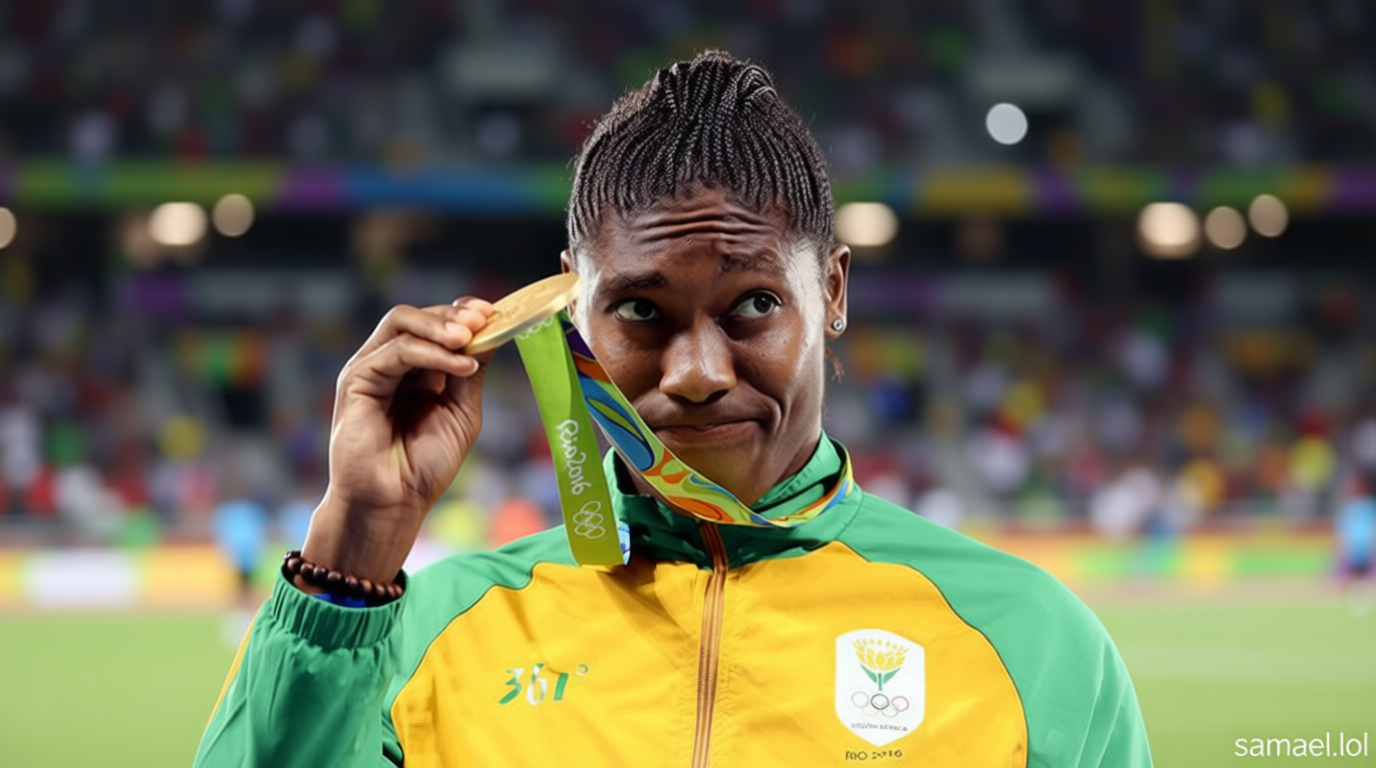
Semenya hits out at impact of Olympic ban on DSD athletes
Samael.lol – Caster Semenya has faced persistent gender debates since securing two Olympic gold medals. She recently criticized a new policy that she claims unfairly targets athletes with Differences in Sexual Development (DSD). While the latest rule, introduced by the IOC, has drawn attention to trans athletes, experts argue its consequences will be more severe for DSD individuals.
Laurel Hubbard, a New Zealand weightlifter, remains the sole trans athlete to compete in the Olympics. Though she struggled in the 2020 Games, Semenya was absent from Tokyo, unable to defend her 800-meter titles from 2016 and 2012. Her exclusion stemmed from a revised World Athletics policy requiring female athletes to maintain testosterone levels below 5 nmol/L for six months before competition. Semenya chose to challenge this requirement.
Testosterone has long been a focal point for athletes whose biology defies traditional male-female categorization. The new IOC policy creates a rare exception for those with Complete Androgen Insensitivity Syndrome (CAIS) or other DSD conditions, but otherwise relies on SRY testing—a cheek swab method used in the 1990s. This test detects the SRY gene on the Y chromosome, which is typically associated with male sex determination.
“Genetic screening is not, and never has been, a way to protect girls and women in sports. To call it that is to mask a monster. Let’s call this what it is: exclusion, just with a different name,”
Semenya stated in a Time magazine article. Previously, under Thomas Bach, the IOC had embraced a more flexible stance, acknowledging no single solution for gender classification. However, recent shifts have aligned the IOC with World Athletics, which now mandates similar testosterone thresholds for female athletes. Semenya accused the organization of singling her out.
A 2023 global scientific review noted that endurance, muscle strength, and power events are influenced by sex chromosomes and hormones, particularly testosterone. While trans athletes are generally accepted to have measurable advantages, DSD athletes face controversy over their competitive edge. Professor Alun Williams, a sports scientist, highlighted ethical dilemmas in testing young individuals, revealing biological details that could alter their identities.
DSD encompasses variations in genetic, hormonal, and reproductive development, such as differing genital structures. Trans athletes, in contrast, identify differently from their assigned sex and may undergo medical transitions. Semenya and boxer Imane Khelif, who won gold at Paris 2024, both fall under DSD, according to Williams. He warned that the current system risks sidelining athletes like them, reducing sex to a single gene on the Y chromosome.
“When you’re born with your differences, those are your differences and they don’t make you a great athlete,” Semenya asserted. “You are a great athlete through training, hard work, showing up every day, dedication. Not because of your given body,”
Her remarks reflect a broader critique of the policy, which she believes prioritizes exclusionary practices under the guise of fairness. The IOC’s decision mirrors that of World Athletics, where chief Sebastian Coe, a former Olympic champion, spearheaded the rule change. Semenya’s case underscores the tension between biological sex and athletic performance in competitive sports.
To view this video please enable JavaScript, and consider upgrading to a web browser that supports HTML5 video