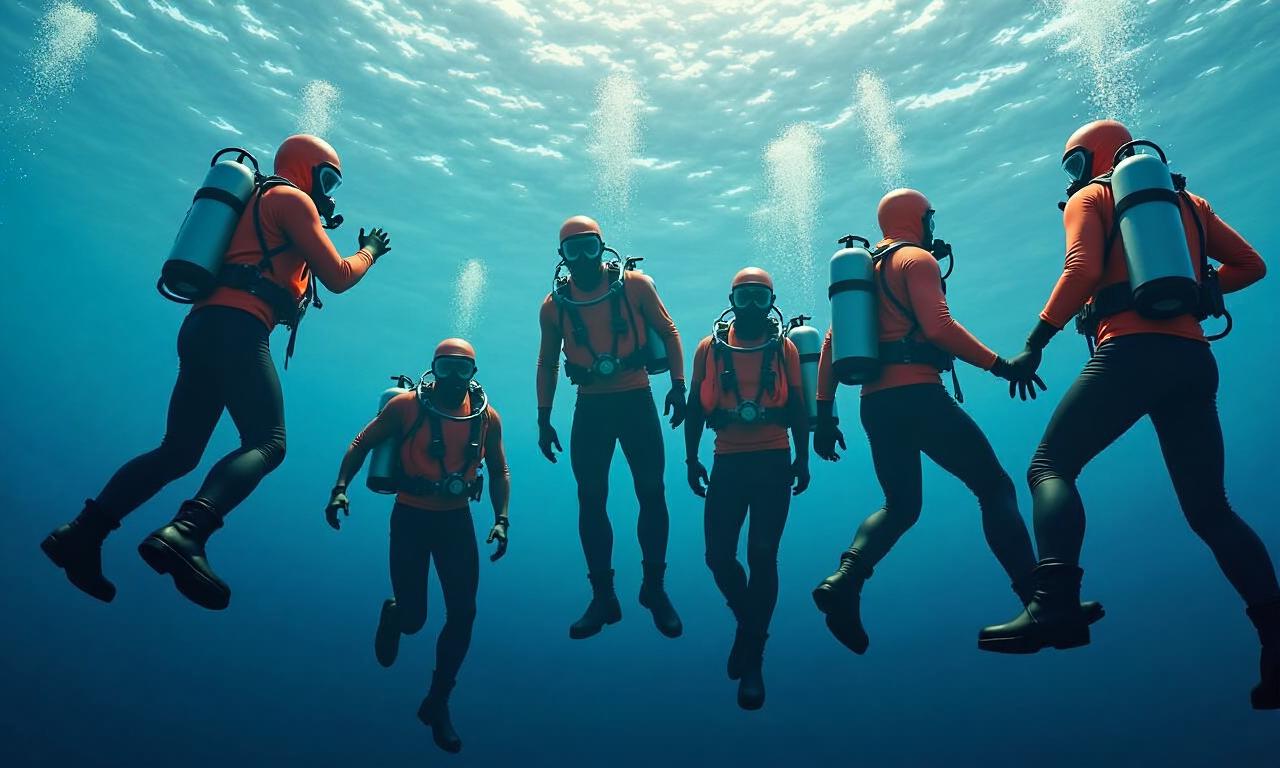
Bodies of Italian divers did not have optimal equipment, says rescuer
Samael.lol – The incident involving four Italian scuba divers in the Maldives has sparked discussions about the adequacy of their gear, according to Sami Paakkarinen, a Finnish diver who participated in the recovery operation. He described the conditions inside the cave where the bodies were discovered as exceptionally deep and demanding, emphasizing the challenges faced by the rescue team. The four divers were found together in a single section of the cave, a detail that Paakkarinen highlighted as critical to understanding the event.
Search and Recovery Efforts
The search for the missing divers began after they failed to resurface following a diving accident in the 60-metre-deep cave of Vaavu Atoll. It took several days for a specialized team of Finnish and Maldivian rescuers to locate the remaining group deep within the submerged structure. During this time, the team faced difficult conditions, navigating through the cave’s labyrinthine passages to retrieve the bodies. The operation culminated in the discovery of the fourth diver’s remains earlier this week, marking a significant milestone in the search.
A Maldivian rescue diver, Staff Sgt Mohamed Mahdhee, lost his life while searching for the group. Mahdhee was part of an eight-member team that ventured into the water on Saturday to locate the bodies. After finding the others unconscious, he was later pronounced dead, adding a tragic dimension to the operation. This incident has been described as the most severe diving accident in the Maldives’ history, a nation renowned for its vibrant coral islands and popularity as a tourist destination.
The Role of Equipment in the Incident
Paakkarinen, who captured images of the cave during the recovery, noted that the equipment found on the divers was not at its best. He suggested that the absence of proper gear could have contributed to the accident, stating that he and his team would never have entered such an environment without essential safety tools like a scuba diving reel or guide rope. These devices, he explained, are vital for navigation and are referred to as “Ariadne’s thread” in the diving community.
“In general, for those who visit caves, it’s known that it’s not very wise to do so without a safety line,” Paakkarinen remarked. “Unfortunately, in most cave diving accidents, the main cause is always human error.”
While Paakkarinen refrained from providing specific details about the equipment’s shortcomings, his remarks underscored the importance of proper preparation. The divers were found with gear that, according to him, lacked the necessary optimization for the cave’s conditions. This assessment has led to questions about whether the accident could have been prevented with better equipment.
Victims and Their Mission
The group of four Italian divers was part of a research expedition focused on studying the effects of climate change on marine biodiversity. Prof Monica Montefalcone and Muriel Oddenino, both affiliated with the University of Genoa, were among the participants. Their mission aimed to document ecological changes in the region, a goal that now seems overshadowed by the tragedy. The team also included Giorgia Sommacal, the daughter of Prof Montefalcone, and Federico Gualtieri, a recent graduate who joined the dive as part of the group.
The first body recovered was that of Gianluca Benedetti, a boat operations manager and diving instructor. His recovery occurred shortly after the group disappeared, but the full group was not found until several days later. The delay in locating the bodies was attributed to the cave’s complex structure and the challenging underwater environment. The divers had entered the water on May 14th, a date that now carries somber significance.
Weather and Rescue Challenges
Authorities noted that the area where the divers went missing experienced rough weather conditions. A yellow warning for passenger boats and fishermen had been issued prior to the incident, indicating the risk of hazardous conditions. Despite this, the group proceeded with their dive, raising questions about whether the weather played a role in the accident.
The death of Staff Sgt Mahdhee during the search has intensified scrutiny on the operation. His colleagues, having recovered the bodies, were quick to return to the water, but Mahdhee’s unconscious state was a stark reminder of the dangers involved. His sacrifice has added to the emotional weight of the incident, as his name is now linked to the loss of life in the Maldives.
Ongoing Investigation and Next Steps
As the recovery continues, the Maldivian authorities and the Italian team are working together to determine the exact cause of the accident. Post-mortem examinations are scheduled to take place in the coming days, which will provide crucial insights into the divers’ final moments. The results of these tests, along with analysis of the equipment and environmental conditions, will help investigators piece together the sequence of events that led to the tragedy.
Meanwhile, plans are in place to repatriate the four bodies to Italy by Saturday. This process will allow the families to give their loved ones a proper farewell and facilitate further investigation into the incident. The event has highlighted the importance of rigorous safety protocols in cave diving, especially in remote locations like the Maldives. It also serves as a reminder of the risks involved in exploring such environments, even for experienced divers.
The incident has drawn attention to the broader implications for underwater exploration in the region. With the Maldives relying heavily on tourism, the accident underscores the need for improved safety measures and equipment standards. The divers’ mission, aimed at understanding climate change’s impact on biodiversity, now stands as a poignant symbol of the challenges faced by researchers in such environments.
As the investigation unfolds, the focus remains on the equipment and safety practices that could have mitigated the disaster. The rescuers’ observations about the lack of optimal gear have sparked calls for a review of protocols for future dives. The memory of the four Italian divers and the Maldivian rescuer who died will serve as a cautionary tale for those venturing into the depths of the ocean’s hidden worlds.