Britain’s Protected Birds of Prey Still Face Threats Despite Legal Safeguards
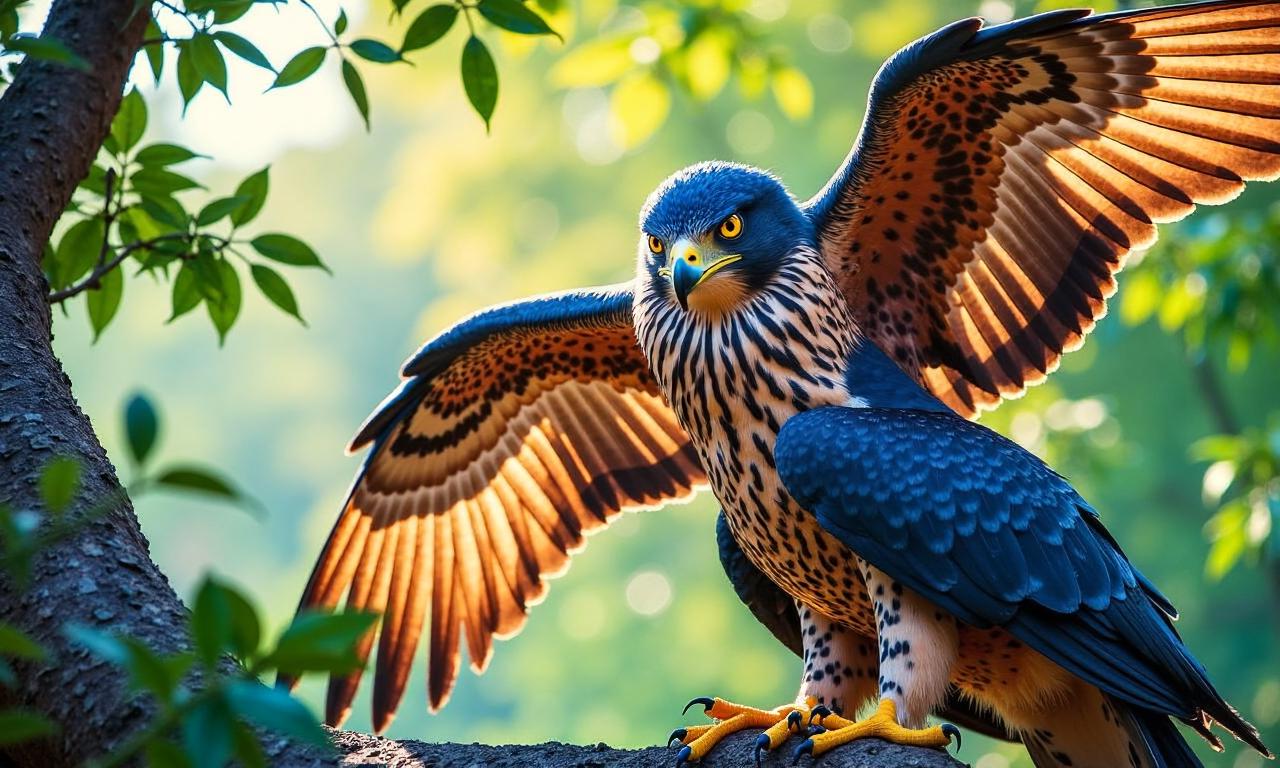
Samael.lol – Despite years of legal protections, some of Britain’s most vulnerable birds of prey continue to be killed illegally, a report by the Royal Society for the Protection of Birds (RSPB) has revealed. The charity’s findings, scheduled for release on Wednesday, highlight 921 confirmed incidents of harm between 2015 and 2024, with the majority occurring on or near land designated for game shooting. These attacks, according to the RSPB, are driven by economic interests, as predators are deliberately targeted to reduce competition for game birds like pheasants, partridges, and grouse, thereby increasing the number available for hunters to shoot.
Mark Thomas, leading the RSPB’s investigations team, described the practice as being “about money.” He emphasized that these birds, often seen as threats to game populations, are systematically removed to ensure more prey for paying customers. However, shooting organizations have strongly contested this narrative, insisting that such acts of persecution are not widespread across the industry. They argue that only a small number of individuals engage in these activities and that the practice is condemned by the majority of the sector.
The RSPB is now advocating for a licensing system for gamebird shooting in England and Wales, aiming to hold estates accountable when protected species are harmed on their land. This proposal mirrors the existing framework in Scotland, where red grouse shooting is already licensed. The charity believes that licensing would allow for stricter consequences, such as suspensions or revocations, based on civil rather than criminal standards of proof. This approach, they argue, could address cases where prosecutions are challenging but the harm is still significant.
The report details several cases where evidence of illegal activity was gathered through forensic, eyewitness, or video documentation. For instance, hidden-camera footage captured a planned attack on a hen harrier roost in the Yorkshire Dales, revealing a head gamekeeper, Racster Dingwall, arriving with a shotgun. Audio recordings from the same incident showed discussions about targeting other protected birds and the possibility of tagging a harrier to monitor its movements. Dingwall later admitted guilt in relation to the attempted killing of a hen harrier and was fined £1,520. Two other cases involved birds being beaten to death after they were caught in live-capture traps, with the victims identified as a buzzard and a goshawk.
Live-capture traps are currently permitted for pest control, targeting species such as crows and pigeons. However, the RSPB stresses that these traps must be monitored regularly to prevent the accidental harm of non-target species, which should then be released unharmed. The charity’s investigators, a team of former police officers and ornithologists, have used this method to secure three convictions this year. While these efforts have yielded results, the RSPB argues that the number of confirmed incidents remains alarmingly high, indicating that criminal prosecutions alone are insufficient to curb the practice.
Shooting organizations have expressed reservations about the RSPB’s proposals, claiming they would impose unnecessary bureaucracy on a sector that already adheres to environmental standards. Dr. Marnie Lovejoy of the British Association for Shooting and Conservation (BASC) told the BBC that licensing would add another layer of regulation to activities already governed by existing laws. “This would affect everyone involved in shooting, from land managers to hunters,” she said. She also highlighted the sector’s substantial contribution to conservation, noting that it invests approximately £500 million annually in nature recovery initiatives. According to BASC, this funding is equivalent to 26,000 full-time jobs and 14 million workdays.
“What we should do is strengthen law enforcement to prosecute individuals who commit these crimes. They have no place in the modern shooting community,” Dr. Lovejoy added.
The government has not yet endorsed the RSPB’s push for licensing, but it has indicated willingness to collaborate with the shooting industry and other stakeholders to explore broader measures. A spokesperson for the Department for Environment, Food and Rural Affairs (Defra) stated: “Many estates already meet high environmental standards, and we want all estates to achieve these same benchmarks.” This sentiment aligns with the RSPB’s argument that licensing would incentivize higher standards of protection for birds of prey.
Professor Davy McCracken, a long-time researcher at Scotland’s Rural College, has studied the interplay between upland management and wildlife for 35 years. He noted that the conflict between preserving birds of prey and managing land for grouse shooting is fundamentally economic. “That is where the root of the conflict actually lands,” he explained. McCracken acknowledged that while a minority of those with game-shooting interests engage in targeted persecution, focusing solely on them might overlook the broader conservation efforts within the sector.
The RSPB’s findings underscore a persistent challenge: even as recorded incidents of illegal killing have declined in recent years, the underlying motivations remain unchanged. The charity advocates for a system that holds estates responsible for the actions of their staff, ensuring that accountability is tied directly to land management practices. This would complement existing laws, creating a more robust framework to protect vulnerable species from harm.
Meanwhile, the shooting industry defends its practices, emphasizing their role in preserving habitats and supporting biodiversity. “Conservation work in the sector is vital,” McCracken said, adding that isolating a small group of offenders could mislead perceptions about the entire industry’s environmental impact. He suggested that while licensing is a potential solution, it should be paired with targeted enforcement to ensure effectiveness.
The debate reflects a broader tension between economic interests and wildlife conservation in rural Britain. As the RSPB pushes for stricter measures, the shooting community remains divided, with some advocating for enhanced legal action and others warning of regulatory overreach. The outcome of this discussion may shape the future of both bird protection and the sustainability of gamebird shooting in the coming years.
For more updates on climate and environmental issues, subscribe to the BBC’s Future Earth newsletter. If you’re outside the UK, join the international edition here.