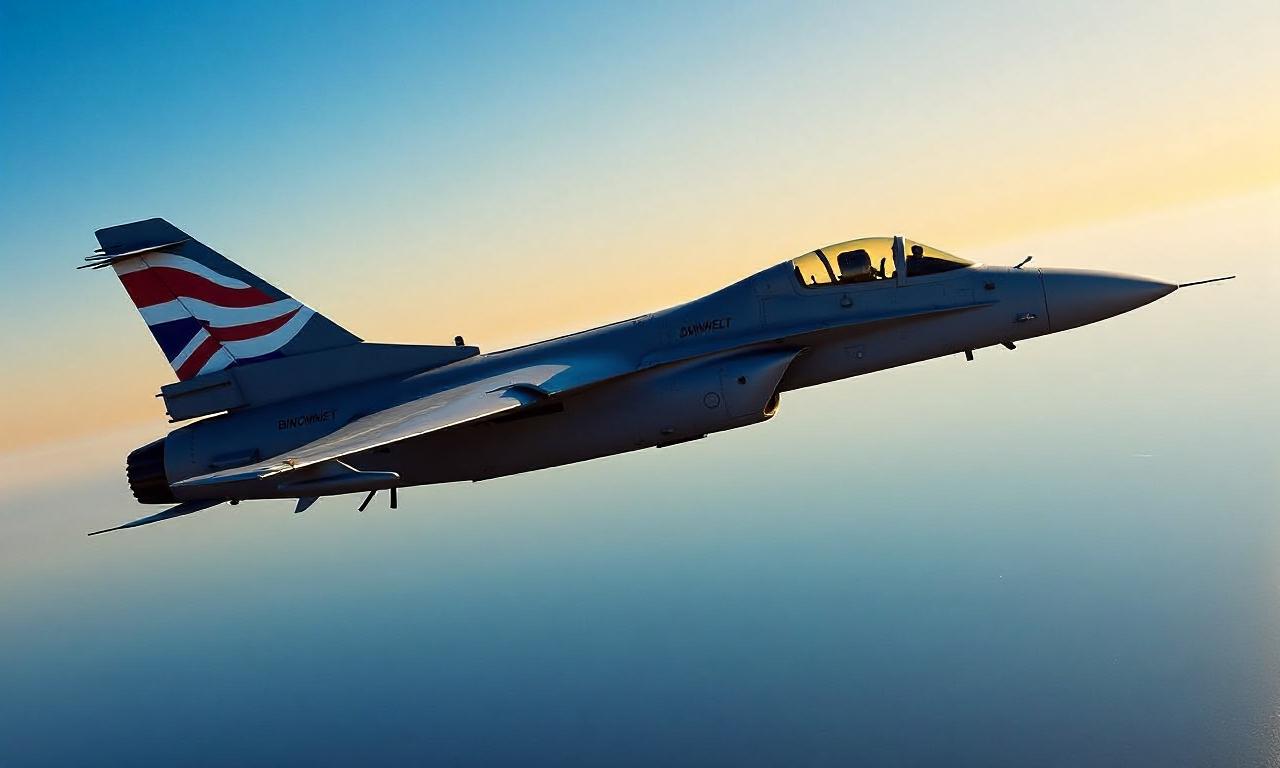
British Jets to Get New Anti-Drone Missile Systems
Samael.lol – The UK has announced plans to outfit its Royal Air Force Typhoon fighter jets with the Advanced Precision Kill Weapon System (APKWS), a move aimed at enhancing the efficiency of drone interception operations in the Middle East. This upgrade is expected to reduce the financial burden of countering Iranian drones, which have become a significant threat to regional security. The Ministry of Defence (MoD) highlighted that the system will allow for “targeted destruction at a significantly lower cost compared to existing missile systems,” marking a strategic shift in how the UK addresses aerial threats.
Rising Drone Threats in the Region
In recent months, Gulf nations and their allies have faced mounting challenges from Iranian drones, particularly the Shahed series. These drones are renowned for their affordability and effectiveness, often causing substantial damage despite their modest production costs. During the 2024 conflict between Israel and Iran, the UK reportedly deployed its air defenses to neutralize several of these drones, using missiles that cost approximately £200,000 each. This has raised concerns among defense analysts about the sustainability of such expenditures in prolonged aerial confrontations.
The APKWS Solution
The APKWS system represents a breakthrough in cost-effective precision weaponry. By integrating a laser-guided targeting mechanism into unguided rockets, it transforms standard munitions into highly accurate tools capable of engaging drones and other aerial targets. The MoD stated that this innovation aligns with the goal of “maximizing operational efficiency while minimizing financial strain.” The system’s cost is estimated at around $30,000 per unit, a figure that closely matches the price range of the Shahed 136, a long-range drone developed by Iran. This pricing parity is seen as a critical advantage in countering a foe that has mastered the economics of drone warfare.
“This system will allow the RAF to neutralize more drones at a much lower cost,” said Minister for Defence Readiness and Industry Luke Pollard. He emphasized the UK’s commitment to rapid deployment, having conducted trials with defense contractors BAE Systems and QinetiQ to ensure readiness within months.
Shahed Drones: A Tactical Challenge
The Shahed drones’ design has made them particularly difficult to detect and destroy. Their slender, streamlined profiles enable low-altitude flight, evading traditional radar systems and early warning networks that are optimized for missile threats. As a result, these drones have been increasingly used in attacks on military installations, civilian infrastructure, and strategic assets. For example, in March 2024, a Shahed drone struck RAF Akrotiri in Cyprus, causing “minimal damage” according to authorities. Days later, two additional drones were intercepted, with the Cypriot government suspecting the strikes originated from Hezbollah, an Iran-backed group based in Lebanon.
Broader Implications for Regional Security
The deployment of APKWS underscores the UK’s growing involvement in the Middle East’s escalating drone warfare. Since the outbreak of hostilities, Iran has launched numerous attacks on U.S. military assets and allied countries, targeting Israel, Bahrain, Kuwait, Qatar, the United Arab Emirates, and Jordan. The UAE, for instance, reported intercepting over 2,000 drones, 438 ballistic missiles, and 19 cruise missiles during the conflict, demonstrating the scale of the aerial threat. With the ceasefire established in early 2024 largely holding, even as sporadic exchanges of fire continued, the need for cost-effective countermeasures has become more pressing.
Qatar’s Strategic Investment
Qatar has also recognized the importance of anti-drone defenses, reportedly securing 10,000 APKWS units from the U.S. to bolster its own capabilities. This purchase reflects a broader trend of regional allies seeking to modernize their air defense systems in response to Iran’s drone-centric strategy. The APKWS’s adaptability and affordability make it an attractive option for nations looking to defend against low-cost, high-impact threats without relying on expensive surface-to-air missile systems.
Technical Advantages of APKWS
The APKWS is designed to provide a balance between cost and precision, addressing a key limitation of traditional anti-drone systems. While surface-to-air missiles can be effective, their high price tags and limited range make them less practical for sustained use. In contrast, the APKWS allows for targeted strikes with minimal collateral damage, as demonstrated by its application in the U.S. military. This dual-use capability positions the system as a versatile tool for both military and civilian defense scenarios. The UK’s adoption of APKWS not only strengthens its own operational capacity but also sets a precedent for other nations facing similar challenges.
Collaboration and Testing Progress
The UK’s partnership with BAE Systems and QinetiQ has been pivotal in refining the APKWS for operational use. These collaborations have enabled the MoD to conduct rigorous testing, ensuring the system’s reliability in real-world conditions. The focus on rapid deployment highlights the urgency of the situation, as the frequency of drone attacks continues to rise. With the system nearing readiness, the RAF is expected to significantly expand its ability to intercept and neutralize Iranian drones, reducing reliance on more costly alternatives.
Historical Context of the Conflict
The 2024 conflict between Israel and Iran has intensified the use of drones as a tactical weapon. Israeli and U.S. forces launched large-scale air strikes on Iranian targets on 28 February, aiming to disrupt the country’s military infrastructure. Despite these efforts, Iran has maintained a steady offensive, leveraging its drone fleet to target both adversaries and allies. The ceasefire, which began last month to facilitate diplomatic talks, has largely been respected, though occasional clashes have kept tensions high. This dynamic has created an environment where countries must adapt their defense strategies to counter evolving threats.
Future of Drone Warfare
As the use of drones becomes more widespread, the need for advanced countermeasures like APKWS will only grow. The UK’s investment in this technology reflects a broader shift in military strategy, prioritizing precision and cost-effectiveness in an era where drone proliferation has changed the nature of warfare. By equipping its Typhoon jets with APKWS, the MoD aims to provide a scalable solution that can be deployed across multiple fronts. This development is likely to influence the future of aerial combat, where the ability to neutralize drones with minimal expenditure will determine the outcome of conflicts.
The introduction of APKWS marks a significant step in the UK’s efforts to address the complexities of modern drone threats. With its potential to reduce operational costs and improve interception efficiency, the system is expected to play a key role in safeguarding military assets and civilian infrastructure in the region. As Iran continues to refine its drone capabilities, the UK’s proactive measures will be crucial in maintaining a strategic advantage and ensuring regional stability.