
Burnham to give mayors more power in 10-year plan to transform economy
Burnham to Give Mayors Greater Autonomy in Ambitious 10-Year Economic Vision
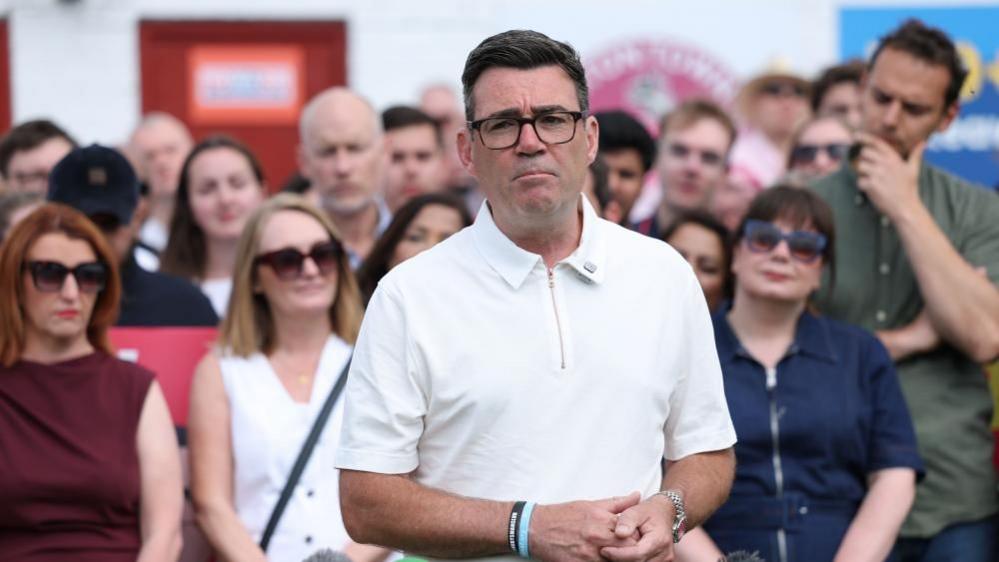
Burnham to give mayors more power – Andy Burnham is set to deliver a significant policy address later today, marking his first major speech since launching a bid to become prime minister. The event, scheduled in Manchester, will spotlight his proposal for a “No 10 North” initiative—a plan to decentralize decision-making and empower local leaders. Central to his agenda is a commitment to a 10-year mission aimed at elevating living standards, with a focus on youth employment and broader structural reforms to reinvigorate the UK’s economic foundation.
A Devolution-Driven Strategy for Regional Growth
Burnham’s vision includes granting mayors enhanced authority over critical areas such as social housing, welfare, and education. This shift would transfer current centralized budget controls from Whitehall to regional leaders, allowing them to tailor policies to local needs. The goal is to create a more responsive governance model, ensuring that economic progress is distributed evenly across every nation and region of the UK. In his speech, he is expected to emphasize the importance of devolution, positioning it as a cornerstone of his approach to rebuilding public trust and driving sustainable growth.
“Decision-making needs to be pushed to regions and local communities,” Burnham is anticipated to say. “This means good growth in every postcode, not just in a few select areas.”
While the core of his plan centers on regional empowerment, Burnham will also address broader fiscal strategies. He has signaled his intention to uphold the economic framework established by Chancellor Rachel Reeves, including rules that prioritize tax revenue over borrowing for daily government operations. These guidelines aim to ensure that public debt decreases as a percentage of national income by the end of the current parliament in 2029-30. However, this commitment may face scrutiny as the government navigates rising budget pressures and high borrowing costs, leaving little room for expansive spending.
Political Challenges and Leadership Dynamics
With no other Labour MP stepping forward as a potential leader, Burnham is poised to become prime minister on 20 July. This role requires him to not only outline his vision but also clarify his cabinet choices and whether he will adhere to Labour’s 2024 manifesto. Opposition voices have pressed him to define his priorities clearly, including the possibility of deviating from existing policies. During Monday’s speech, Burnham is likely to stress the need for a “circuit-breaker” to stabilize the economy, while also addressing the erosion of public confidence in political institutions.
“Burnham mustn’t repeat the mistake of previous administrations,” warned Liberal Democrat leader Sir Ed Davey. “People are impatient for change, and they’ve heard this sort of talk before only to be let down when nothing actually shifts.”
Burnham’s fiscal approach has drawn mixed reactions within his own party. While senior Labour figures have expressed unity behind his leadership, some left-wing MPs advocate for a more flexible strategy, arguing that relaxing Reeves’s self-imposed budget rules could unlock additional resources for public services. Burnham, however, is reported to be considering candidates like Ed Miliband, Wes Streeting, or Shabana Mahmood to replace Reeves if he assumes the premiership. This decision reflects a balancing act between maintaining fiscal discipline and addressing growing demands for investment in key sectors.
Defense Spending and National Security Priorities
A pivotal aspect of Burnham’s plan will involve the defense sector. The government is set to release its defense investment plan (DIP) ahead of the next prime minister’s appointment, outlining a multi-billion-pound funding boost. On Sunday, former Chief of the Defence Staff Admiral Sir Tony Radakin urged Burnham to commit to raising defense spending to 3.5% of GDP by 2035, framing this as essential to safeguarding the nation. “It is [to] keep our country safe,” Radakin told the BBC’s *Sunday with Laura Kuenssberg* programme. “You have this extraordinary responsibility—almost like a wartime prime minister at the moment.”
“Investing in what really keeps us safe is non-negotiable,” Radakin added. “Burnham must recognize the urgency of securing our national defense, even as he pursues economic reforms.”
Burnham’s upcoming speech will also tackle the debate over defense priorities. While his fiscal rules emphasize restraint, the pressure to commit to increased military funding is mounting. This challenge highlights the delicate balance he must strike between ambitious regional devolution and the need to secure national security in an evolving geopolitical landscape.
Opposition Critiques and the Politics of Devolution
Conservative Party chairman Kevin Hollinrake has criticized Burnham’s focus on devolution, arguing that it distracts from pressing reforms. “His big idea is to shuffle power between politicians rather than making welfare reforms, cutting taxes, or funding the defense our country desperately needs,” Hollinrake said. He accused the Labour leadership of prioritizing bureaucratic processes over substantive changes, labeling Burnham’s approach as a “politics of distraction.”
“Just more devolution, more committees, more process,” Hollinrake continued. “It’s the politics of distraction from a Labour Party that is deliberately avoiding the questions that actually matter.”
A Reform UK spokesperson echoed similar concerns, calling the speech a “lot of words for no actual concrete changes.” They suggested Burnham has adopted Starmer’s style of leadership, focusing on rhetoric while deferring to action. Meanwhile, Burnham’s vision for Scotland—yet to be fully detailed—has sparked speculation about how his leadership might influence the devolved government’s autonomy and priorities.
Strategic Moves and the Path to Prime Ministership
As Burnham prepares to assume the role of prime minister, his strategy hinges on consolidating support across the Labour Party and addressing key challenges. His ability to navigate internal divisions, defend fiscal rules, and balance regional empowerment with national priorities will determine the success of his tenure. The speech is expected to serve as a defining moment, setting the tone for his leadership and outlining how he intends to steer the UK toward a more equitable and dynamic economic future.
Reeves, who has been a key architect of Labour’s economic policies, urged Burnham to “stick to what I’m doing” in her recent address at a London conference. She highlighted the progress of the current fiscal approach, describing it as “beginning to bear fruit.” This endorsement underscores the importance of continuity in economic strategy, even as debates about devolution and spending flexibility continue within the party.
With the clock ticking toward the 20 July leadership announcement, Burnham’s ability to articulate a cohesive vision—and demonstrate how it will translate into tangible outcomes—will be critical. The coming weeks will test his leadership as he seeks to unify the Labour Party, address the nation’s economic concerns, and position himself as a viable alternative to Sir Keir Starmer. Whether his plan for a “No 10 North” will resonate with voters or fall short of expectations remains to be seen.
Do you have any views, comments, or questions about this story? Share your thoughts below. As the political landscape shifts, Burnham’s speech could signal the beginning of a new era in UK governance, or it may reveal the challenges of translating promises into action.