Dozens killed in Lebanon as Israel intensifies strikes
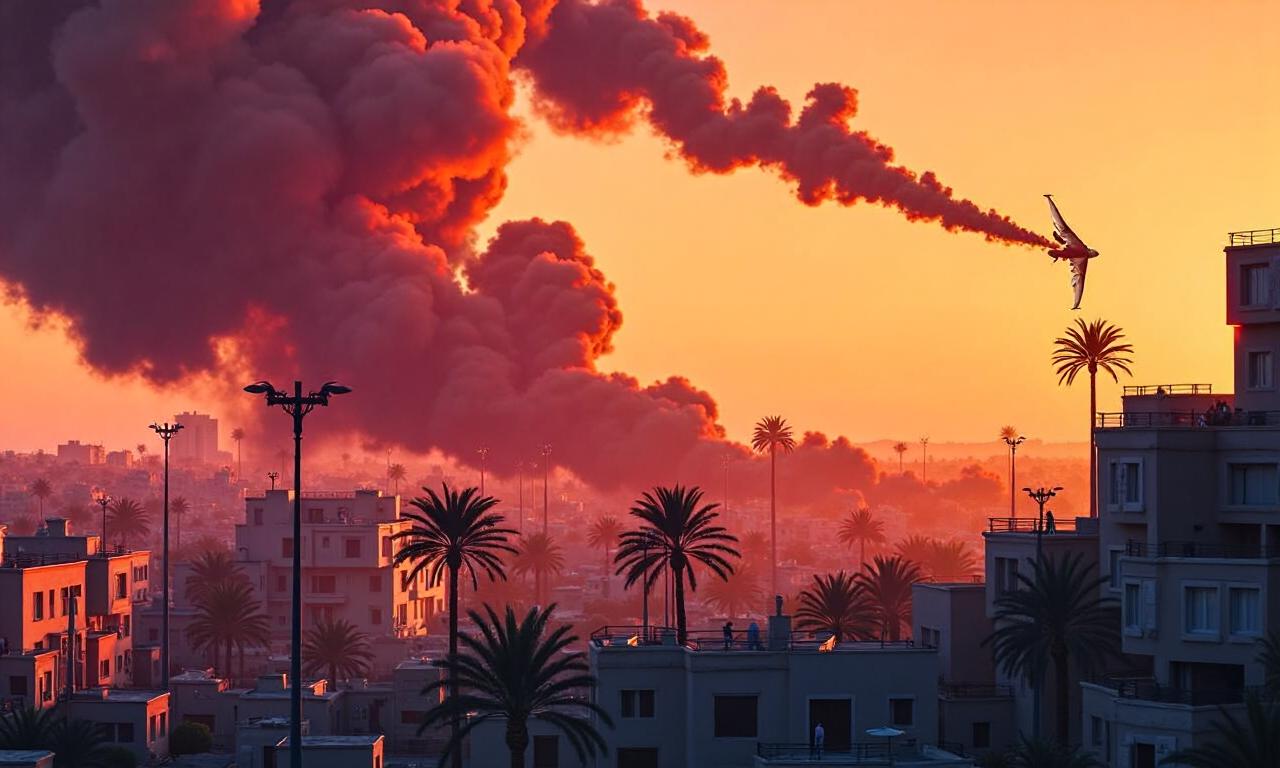
Samael.lol – Israeli air raids in southern and eastern Lebanon have claimed at least 31 lives, including several minors, as the nation’s military escalates its campaign against Hezbollah. The Lebanese health ministry confirmed the fatalities, highlighting the humanitarian impact of the ongoing conflict. This surge in violence follows Prime Minister Benjamin Netanyahu’s pledge to redouble efforts in targeting the Shia militant group, marking a critical phase in the region’s turbulent war.
According to the Israeli Defense Forces (IDF), the recent strikes focused on more than 100 Hezbollah sites, including command centers and operational hubs. The military described the attacks as among the most intense since the US-mediated ceasefire took effect in mid-April. The strikes have intensified in response to Hezbollah’s persistent rocket and drone attacks on northern Israeli communities, with Netanyahu vowing to “press the pedal even harder” in his strategy against the group.
Early Wednesday, sirens echoed across northern Israel as a projectile was launched from Lebanon into Israeli territory. The military noted that the missile landed in an open field, causing no injuries. This incident underscores the fragile state of the ceasefire, which has been repeatedly breached by both sides, jeopardizing peace talks between the US, Israel, and Iran. Despite the truce, violence continues to flare, with Israeli planes conducting relentless raids and Hezbollah retaliating with coordinated assaults.
Strategic Operations and Casualties
During a security cabinet meeting on Tuesday, Netanyahu emphasized the IDF’s “deepening operation in Lebanon,” stating that troops were securing key positions and reinforcing the security zone to shield northern Israeli towns from Hezbollah threats. The military’s focus on infrastructure has led to targeted strikes in the Bekaa Valley, where villages like Mashghara and Burj al-Shamali have suffered significant damage. Local media reported that some of these attacks occurred near Beaufort Castle, a UNESCO-recognized medieval fortress dating back nearly nine centuries.
The devastation in Mashghara is palpable. What was once a bustling community now resembles a war-torn ghost town, with crumbled homes and shuttered shops dotting the landscape. Ahmad, a municipal official, described the scene as apocalyptic, noting that residents, though not affiliated with Hezbollah, remain steadfast in their support for the resistance. “Everyone in the village stands with the resistance,” he said, “and the enemy is sparing no one.” His words were interrupted by the roar of jets, signaling the continuation of the aerial assault.
On Monday, a missile strike in Arab Salim claimed the lives of a man and his wife, while another attack in Kauthariyet El Rez resulted in two additional deaths. The Lebanese health ministry reported 11 bodies recovered from the rubble of Mashghara, including one woman and two children, alongside 15 injured individuals. Among the wounded was seven-year-old Mohammed, whose survival was made possible by rescue crews working through the night. “When I woke up, I felt like I couldn’t move,” he told the BBC, recounting the moment the missile hit his home, killing his father and two sisters. “I heard the sound of the guys who were rescuing me. They took a long time to pull me out.”
“We will deal them a crushing blow,” Netanyahu declared in a Monday video statement, responding to Hezbollah’s use of fibre-optic drones to evade Israeli defenses. The leader’s rhetoric has galvanized public sentiment, prompting widespread panic in Beirut’s southern suburbs, a Hezbollah stronghold. Residents fled their homes in droves, with thousands of vehicles clogging the streets as families sought refuge. Though the capital itself was spared, the relentless bombing continued through the night, with the BBC documenting over 50 separate strikes across the region.
The IDF’s aerial footage, released by the military, provides a stark visual of the destruction. In one video, rescuers frantically sift through debris, their efforts culminating in the discovery of two tiny arms protruding from the rubble. After hours of digging, the seven-year-old boy was pulled to safety, his face coated in dust and his body bearing the marks of the attack. The emotional toll of these strikes is evident in the accounts of survivors, who describe the chaos and fear that have gripped their communities.
Hezbollah’s attacks on Israeli civilians have intensified in recent days, with rockets and drones targeting settlements in the north. The group’s strategy of asymmetric warfare has forced the IDF to respond with greater precision and force, further destabilizing the fragile ceasefire. The repeated violations have raised concerns among diplomats and analysts, who warn that the ongoing talks to end the war could collapse if hostilities continue unchecked.
Meanwhile, the destruction in Mashghara has left families homeless and communities in disarray. The village, once a symbol of cultural heritage, now bears the scars of war. The UNESCO-protected Beaufort Castle, a landmark of historical significance, stands nearby, its ancient stones a reminder of the region’s rich past contrasted against its present turmoil. “Life here is dead,” Ahmad said, as he walked through the ruins of his neighborhood, the silence broken only by the distant hum of jet engines.
Netanyahu’s decision to escalate the campaign has been met with mixed reactions. While some in Israel view it as necessary to protect their citizens, others in Lebanon see it as a reckless move that risks plunging the country into further devastation. The military’s focus on infrastructure sites has disrupted Hezbollah’s ability to launch attacks, but it has also led to civilian casualties, fueling resentment among the Lebanese population.
As the conflict rages on, the human cost continues to mount. Families in the south of Lebanon recount stories of homes reduced to rubble, children injured, and communities fractured by the violence. The BBC’s reporting highlights the grim reality of these attacks, with dozens of incidents recorded in a single night. The resilience of the people, however, remains evident, as they navigate the aftermath of war with determination and hope for a resolution.
With the ceasefire hanging by a thread, the world watches as Israel and Hezbollah engage in a deadly dance of retaliation. The escalation has not only deepened the humanitarian crisis but also intensified the geopolitical stakes, drawing international attention to the ongoing struggle for control in the region. As the strikes continue, the question remains: how long can the fragile peace hold before it is shattered entirely?