Is it harder than ever to be prime minister?
Samael.lol – The current state of British politics is marked by a series of numerical indicators that highlight its volatility. Over the past seven years, five prime ministers have come and gone, none of whom have led a full parliamentary term. This rapid turnover has been accompanied by a similarly frequent reshuffling of senior roles, including seven foreign secretaries, six chancellors of the exchequer, and four cabinet secretaries. The pattern suggests a political landscape in flux, where leaders are not only replaced by events but also by shifting public sentiment and internal party dynamics. If Labour were to depose Sir Keir Starmer, the UK might witness yet another chapter in this narrative of instability, though Starmer’s parliamentary majority is arguably greater than that of Clement Attlee, the Labour leader who reshaped post-war Britain in 1945.
The Numbers Behind the Instability
Political analysts have noted that the UK’s leadership cycle has accelerated in recent years. The frequency of role changes reflects a system under strain, where even the most established parties struggle to maintain coherent governance. The question remains: what is fueling this relentless churn? Is it a reflection of the era’s challenges, or does it point to deeper structural issues within British democracy?
Leadership Under Pressure
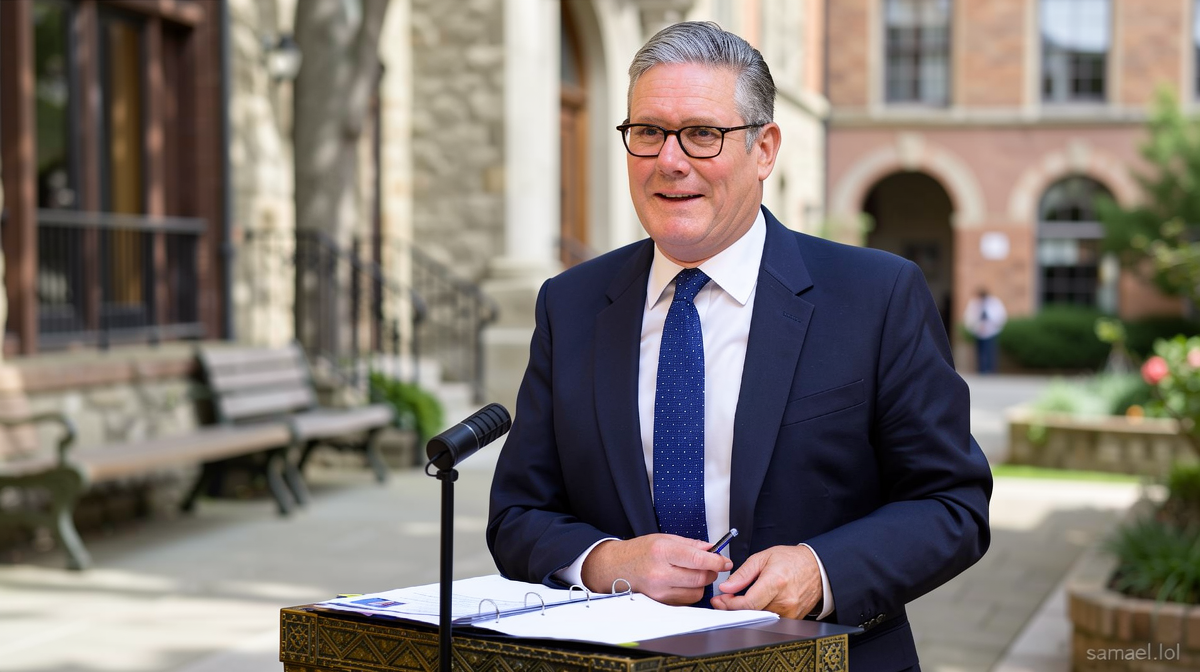
Both Sir Keir Starmer and Conservative leader Kemi Badenoch have asserted that Britain remains governable, despite the current chaos. At a recent press event, Starmer emphasized:
“No, I don’t think Britain is ungovernable.”
Badenoch echoed this sentiment in the House of Commons, stating:
“Britain is not ungovernable.”
Yet, their own factions in Parliament have shown a propensity for swift support or removal of leaders, driven by a combination of public impatience and internal factionalism.
The challenges facing modern prime ministers are multifaceted. They must navigate a labyrinthine administrative and regulatory framework, which often slows down policy implementation. Simultaneously, voters and MPs appear to demand immediate results, unwilling to accept the complexities and trade-offs inherent in political decision-making. This dynamic has created an environment where leaders are both celebrated and discarded with remarkable speed, testing the resilience of the political establishment.
Expert Perspectives on Governance Challenges
Hannah White, CEO of the Institute for Government (IFG), suggests that the UK’s political parties have contributed to this instability by elevating prime ministers who lack essential leadership qualities.
“The UK is not ‘ungovernable,’ but its political parties have handed the country a series of prime ministers lacking in key leadership skills at a time when crises have hit thick and fast,”
she explains. White attributes the difficulty of governance to a combination of factors, including rapid succession of leaders and the compounded effect of global crises.
Professor Anand Menon, director of the UK in a Changing Europe think tank, concurs.
“Our system provides significant power to a government with a majority. That this majority has not been deployed to drive through change is a failure of leadership rather than indicative of a systematic trend towards ungovernability,”
Menon argues. He highlights that while the UK’s parliamentary system is designed for stability, the current administration has failed to harness its full potential, leading to a perception of dysfunction.
Skills and Humility in Leadership
Sir Anthony Seldon, a historian and biographer of several prime ministers, offers a different perspective. He contends that some recent leaders have struggled due to a lack of political acumen and humility.
“They didn’t have the skills and weren’t willing to bring people in,”
Seldon says, citing figures like Boris Johnson, Liz Truss, and Sir Keir as examples. He notes that past leaders often had mentors or advisors who helped navigate the complexities of office, a resource that seems less available today.
This critique extends to the civil service, which some MPs claim is not adequately supporting the prime ministers. Baroness Cavendish, former head of David Cameron’s policy unit, pointed this out during a BBC Radio 4 interview.
“Every government seems to come in and is astonished that things are so difficult to do,”
she observed. Cavendish adds that Labour ministers have expressed agreement with Dominic Cummings’ assertion that parts of the civil service require reform, suggesting a growing disconnect between the executive and the bureaucracy.
Crisis and Consequence
Starmer himself acknowledged the difficulties of leadership in a frank address before the House of Commons Liaison Committee.
“My experience as prime minister is of frustration that every time I go to pull a lever, there are a whole bunch of regulations, consultations, and arm’s length bodies that mean the action from pulling the lever to delivery is longer than I think it ought to be.”
This sentiment underscores the challenges posed by a system that requires extensive checks and balances, even as leaders strive to act decisively.
While the political class has faced unprecedented global pressures, including the financial crash of 2008, the political upheaval of Brexit, the economic disruption of the pandemic, the war in Ukraine, and the influence of Donald Trump’s presidency, the UK is not alone in this struggle. Across Europe, incumbent governments have similarly faltered against economic headwinds and a populace increasingly eager for swift solutions. The question is whether the UK’s political leaders have adequately adapted to these challenges or if the system itself is now in crisis.
Some civil servants, though unable to speak publicly, have privately expressed concerns about the political class’s ability to govern effectively. They question whether ministers have forgotten the art of leadership, or if the system has simply become too cumbersome for even the most capable individuals. This internal debate highlights the tension between the ideals of democratic governance and the practical realities of managing a complex, interconnected world.
The debate over ungovernability is not merely academic. It has real implications for policy continuity and public trust. If leaders are unable to maintain stability, the long-term consequences could be profound. The UK’s political landscape, shaped by rapid change and shifting priorities, may soon determine whether the nation’s ability to govern is a relic of the past or a modern challenge yet to be mastered.