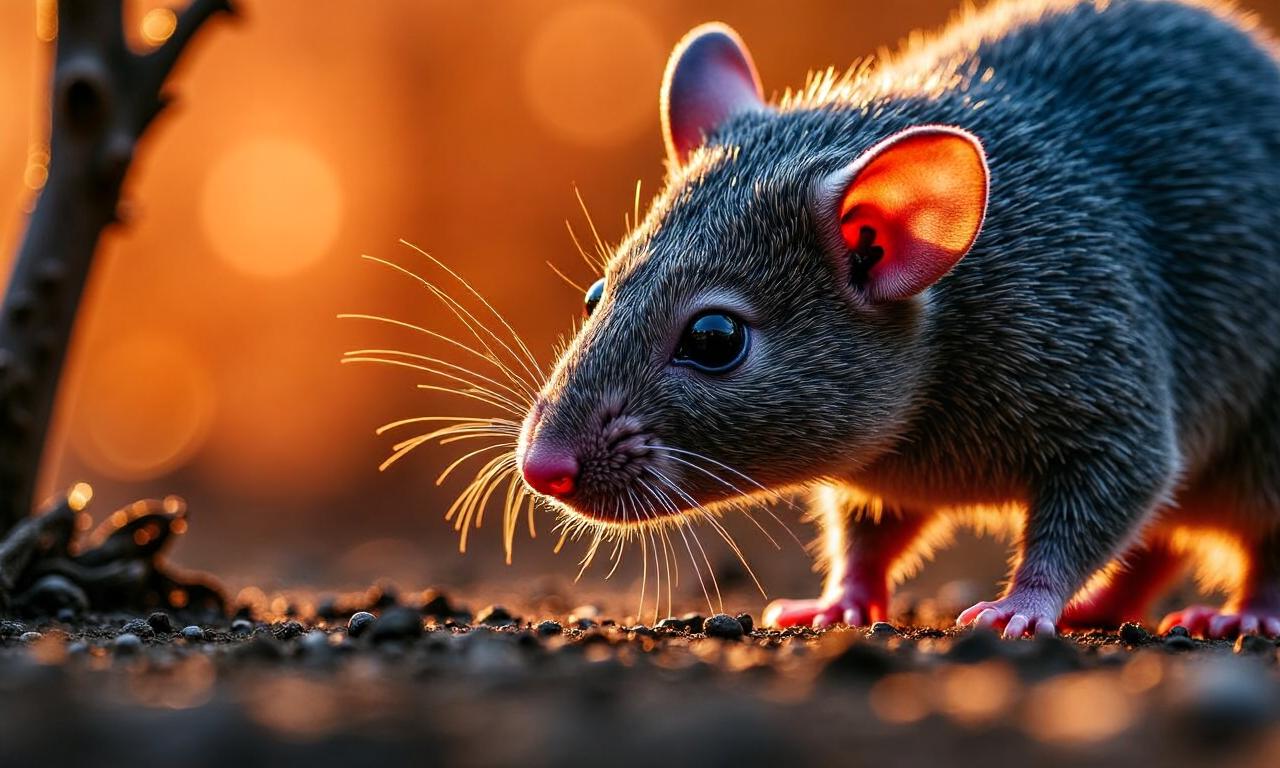
‘It’s like a decaying body’: Australian farmers battle mouse plague
Samael.lol – Australian farmers are confronting a severe rodent infestation that has turned their fields and homes into battlegrounds. The mice, now multiplying in unprecedented numbers, are devouring crops and invading living spaces, creating a crisis that extends beyond agricultural losses. This surge in rodent activity coincides with existing challenges, as supply chains for fuel and fertiliser have been disrupted by the ongoing US-Israeli conflict in Iran. Farmers are now shouldering additional costs, spending vast sums on replanting or deploying poison-laced bait to safeguard their harvests.
A Costly Challenge for Rural Communities
For Geoff Cosgrove, a 43-year-old farmer managing a 14,000-hectare operation in Mingenew, Western Australia, the current mouse plague feels like a relentless adversary. “It’s not just the price of the bait—it’s the mental toll too,” he explains, describing how the rodents have taken over his farm and even infiltrated his home. “You can hear them scurrying at night, and they’re everywhere—ceiling, aircon units, even the pantry. It’s like a decaying body in your house.” Cosgrove has spent 25 years in farming, but this year’s infestation is “way worse than the one in 2021,” he insists.
“They’re staying where the food is,” says Belinda Eastough, an agronomist with over 40 years of experience. “Last year, we had a record harvest, so the grain spilled across the paddocks, creating a feast for the mice.”
Eastough, who operates a 5,500-hectare farm in Nolba, 80km northeast of Geraldton, recalls the 2021 plague that devastated parts of Western Australia. “Back then, they were in my handbag,” she says, illustrating the extent of their intrusion. “Everywhere you looked, there were mice—floors, walls, pantries. But this year, they’ve stayed out in the fields, far from the homes.” The shift in mouse behavior is tied to the abundance of food in the paddocks, which were flooded with grain during crop processing. A summer rainstorm further exacerbated the situation by encouraging the growth of green shoots, providing mice with an even richer diet. “They had steak and salad, not just steak,” Eastough says, highlighting the mice’s comfort in their current environment.
The Devastation of a Record Harvest
The 2021 mouse plague left a lasting mark on the agricultural sector, with New South Wales and Queensland experiencing their worst outbreaks in decades. In some regions, the rodents even caused damage to a jail, forcing the relocation of hundreds of prisoners. This year, however, the situation in Western Australia has reached new heights. Farmers first noticed the plague in March, with neighboring South Australian regions soon following suit. Eastough, whose farm is in one of the hardest-hit areas, estimates that her canola fields now host 8,000 to 10,000 mice per hectare—a figure comparable to the size of a rugby field. “Sometimes we’ve had mouse plagues before, and the numbers would drop once food ran out,” she notes. “But this year, they haven’t. I’m living the nightmare.”
Expert Insights on the Plague’s Scale
Steve Henry, a research officer at Australia’s national science agency CSIRO, has been studying the rodent populations for years. He defines a plague as an infestation of 800 mice per hectare, but the current numbers in Western Australia are staggering. “They’re talking about thousands and thousands of mice per hectare,” Henry says, pointing to the northern and southern cropping zones as the most affected areas. During a recent visit, he observed 30 to 40 active burrows in a 100-meter strip, a measurement farmers use to estimate population density by multiplying the count by 100. This method suggests that there are at least 3,000 to 4,000 burrows per hectare, a level of density that poses a significant threat to crop production.
Henry explains that the mice’s ability to thrive depends on environmental factors, such as grain availability and moisture levels. The combination of a bountiful harvest and summer rain has created ideal conditions for their population boom. “This is a really important time for farmers,” he adds, referring to the autumn months when sowing occurs. “Mice can start chewing seeds before they’re even planted, which means every delay in baiting could cost millions in lost yield.”
Agricultural Resilience Under Pressure
Despite the challenges, farmers remain resilient. However, rising diesel and fertiliser prices—linked to the Iran conflict—have intensified their financial strain. “We’re paying twice as much for fuel now compared to two or three months ago,” Eastough says, describing the dual burden of the mouse plague and supply chain disruptions. For many, the combination of these factors is like “another headache” on top of an already overwhelming workload.
One of the most critical periods for grain growers is the autumn planting season, when the seeds are laid in the soil and the crop’s future depends on timely interventions. Eastough urges farmers to act quickly, advising them to apply bait immediately after sowing. “If the baiter doesn’t follow the seeder, mice will feast on the seeds in the furrows overnight,” she warns. “By the next day, you might find entire rows of crops missing.”
Cosgrove, who has seen the plague’s impact firsthand, agrees that the situation is dire. His farm, which grows wheat, canola, lupin, and barley, has been hit hard by the rodents. “This isn’t just about losing a few crops—it’s about survival,” he says. “Every hour spent on baiting is an hour not spent on other farm duties, and every dollar spent on poison is a dollar that could have gone to something else.”
The scale of the infestation has led to a sense of urgency among farmers, who are now working tirelessly to combat the crisis. With the autumn months approaching, the stakes have never been higher. The mice’s relentless activity not only threatens the harvest but also disrupts the daily lives of those in rural areas, creating a situation that feels almost apocalyptic. “It’s like a decaying body in your house,” Cosgrove says, echoing the sentiment of many who are fighting to protect their livelihoods from the plague’s relentless grip.
As the battle against the mice continues, the question remains: will the current measures be enough to prevent a full-blown catastrophe? With prices climbing and the rodents multiplying, the answer may well determine the future of Australia’s agricultural sector for years to come.