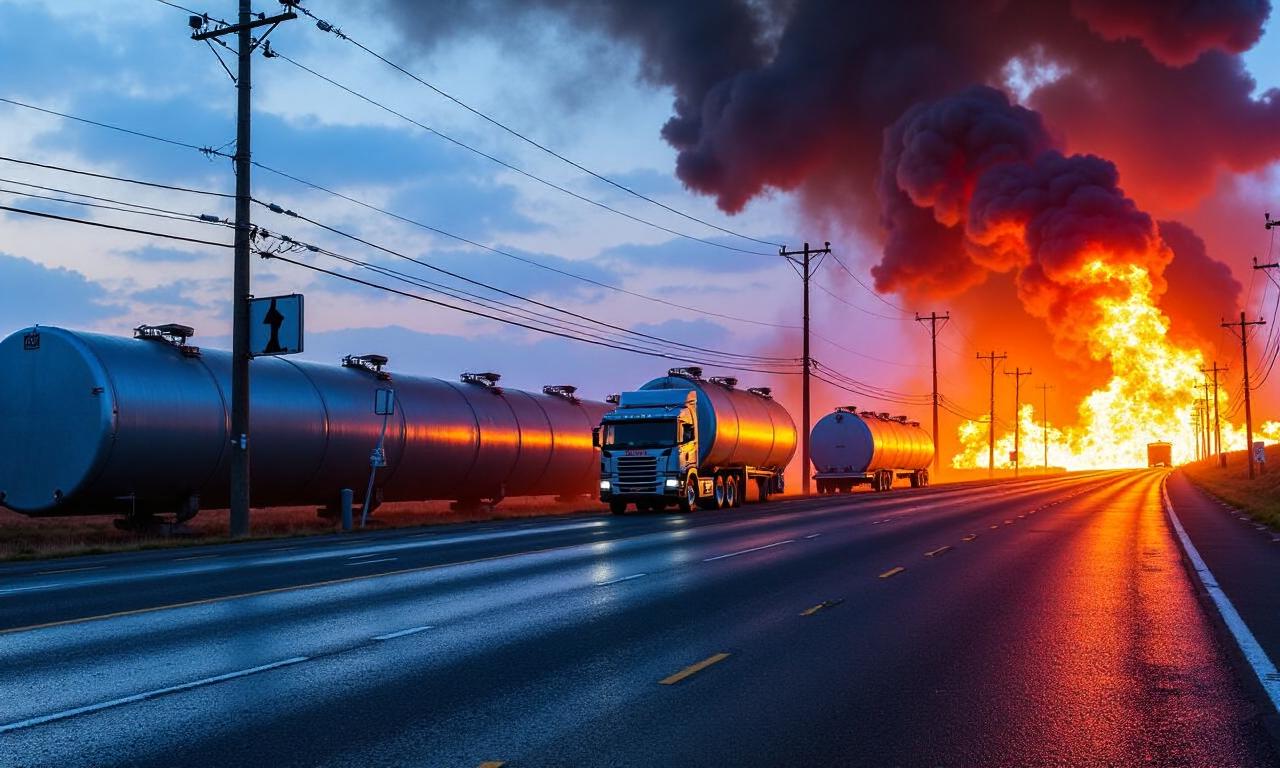
More than 40,000 Californians evacuated due to chemical tank leak
Aerospace Facility Incident Sparks Regional Emergency Response
Samael.lol – Emergency authorities in southern California have ordered the evacuation of over 40,000 residents after a hazardous chemical leak erupted at an aerospace manufacturing plant in Garden Grove. The incident, which unfolded on Thursday afternoon, was triggered by a sudden temperature spike in a storage tank containing methyl methacrylate, a substance known for its high volatility and flammability. The Orange County Fire Authority (OCFA) confirmed the evacuation, which expanded beyond the immediate vicinity of the facility as safety concerns grew. This development has raised alarms across the Los Angeles region, prompting a coordinated response to ensure public safety.
The chemical in question, methyl methacrylate, is a key component in polymer production and is commonly used in the manufacturing of plastics, composites, and coatings. Its flammable nature means that even a small leak could escalate into a significant fire hazard or release harmful vapors into the air. The OCFA reported that the tank involved holds an estimated 7,000 gallons of the substance, which is now under scrutiny for its potential to cause widespread damage. While the exact cause of the temperature increase remains under investigation, officials have identified a compromised cooling system as a critical factor in the situation.
The initial evacuation orders were issued for the surrounding area of the facility, but the zone has since been broadened to include nearby neighborhoods. This expansion was necessary as the risk of the chemical spreading or the tank failing increased. The OCFA’s operations team has been working alongside hazardous materials specialists to assess the threat and implement containment strategies. As of Friday, the situation has not stabilized, and further precautions are being taken to prevent the incident from worsening.
“This thing is going to fail, and we don’t know when… We’re doing our best to figure out when or how we can prevent it,” said OCFA Chief Craig Covey during a press briefing on Friday. The chief outlined two possible scenarios: either the tank would rupture, releasing “very bad chemicals” into the environment, or it could enter thermal runaway, leading to an explosion that would endanger adjacent tanks filled with fuel or other volatile materials.
Covey emphasized that the evacuation was not a precautionary measure but a necessary step to protect people from an imminent danger. The facility, located in a densely populated area, has three chemical storage tanks, with the affected one now at the center of the crisis. While the cooling system for this tank has been temporarily stabilized, the inoperable valve remains a challenge in fully draining the contents. Crews are working to depressurize the tank and reduce the risk of a catastrophic release, but the process is ongoing.
The incident has disrupted daily life for thousands of residents, with evacuation centers set up in nearby locations to accommodate those displaced. These centers are staffed by OCFA personnel and provide essential supplies, shelter, and information to affected individuals. A dedicated hotline has also been established to answer questions and update the public on the situation. However, officials have urged residents to avoid calling with unsolicited advice, as they are focusing on managing the crisis rather than debating potential solutions.
As the OCFA continues to monitor the tank’s condition, the community remains on high alert. The facility’s proximity to residential areas and major transportation routes has heightened concerns about air quality and potential contamination. Local authorities are conducting air tests to determine if the chemical has dispersed into the atmosphere and are preparing for scenarios where the leak could affect larger regions. Residents within the evacuation zone have been advised to stay indoors and avoid exposure until further notice.
The aerospace industry plays a vital role in the region’s economy, and this incident has underscored the importance of safety protocols in industrial settings. Methyl methacrylate is widely used in the production of lightweight, durable materials for aircraft components, but its storage requires meticulous attention to detail. The compromised tank, which was part of a larger system, highlights the potential for even minor mechanical failures to trigger large-scale emergencies. OCFA officials are now investigating whether the cooling system’s malfunction was due to maintenance neglect or an unforeseen technical issue.
Residents in the evacuation zone have expressed a mix of fear and frustration, with many unable to return home while the situation is unresolved. Some have reported concerns about the long-term effects of the chemical exposure, while others are focused on the immediate logistical challenges of displacement. Local businesses near the facility have also been impacted, with some forced to close temporarily to ensure the safety of their employees and customers. The OCFA has been working closely with city officials to coordinate relief efforts and provide regular updates to the public.
Despite the urgency of the situation, the OCFA has praised the swift response of first responders and the community’s cooperation. “We’re making progress, but this is far from over,” Covey stated, acknowledging the complexity of the task. The hazmat team is using specialized equipment to monitor the tank’s stability and has deployed containment barriers to prevent the chemical from spreading further. However, the presence of an inoperable valve has delayed the full draining process, forcing teams to rely on alternative methods to control the leak.
Authorities have also issued warnings about the potential for secondary hazards, such as fires or secondary explosions, if the tank continues to heat up. These risks have prompted additional safety measures, including the closure of nearby roads and the activation of emergency sirens. The OCFA is collaborating with environmental agencies to assess the impact of the leak on local ecosystems and to determine whether the chemical could contaminate water sources or soil. This multi-agency approach aims to address both immediate and long-term consequences of the incident.
As the investigation into the cause of the leak progresses, officials are reviewing the facility’s safety records and maintenance logs. The OCFA has confirmed that the cooling operation was successful in preventing the tank’s temperature from reaching critical levels, but the inoperable valve has created new challenges in the drainage process. These complications have delayed the containment efforts, leaving the community in a state of uncertainty. Covey reiterated that the situation is dynamic, and the team is preparing for multiple contingencies.
The incident has sparked a broader discussion about industrial safety standards in California. With the state’s stringent regulations on chemical storage, the leak raises questions about how such a large-scale evacuation could occur. Industry representatives have called for a review of current protocols, while environmental advocates are pushing for stricter oversight of hazardous materials. For now, the focus remains on stabilizing the tank and ensuring the safety of those in the affected area.
Evacuation orders are expected to stay in place for the foreseeable future, with authorities keeping the public informed through regular press briefings and updates on the information hotline. The OCFA has also urged residents to remain patient and follow guidelines to minimize the risk of further complications. While the situation is still evolving, the coordinated efforts of emergency teams and the community’s resilience are providing hope that the crisis can be contained effectively.
Residents are now adapting to life in temporary shelters, with many expressing gratitude for the support provided by local organizations. The evacuation centers have become hubs of activity, offering not only shelter but also food, medical assistance, and emotional support. As the OCFA works to resolve the issue, the incident serves as a reminder of the delicate balance between industrial progress and public safety in urban environments.