Western Sahara’s Territorial Dispute Gains New Attention Amid Rising Tourism
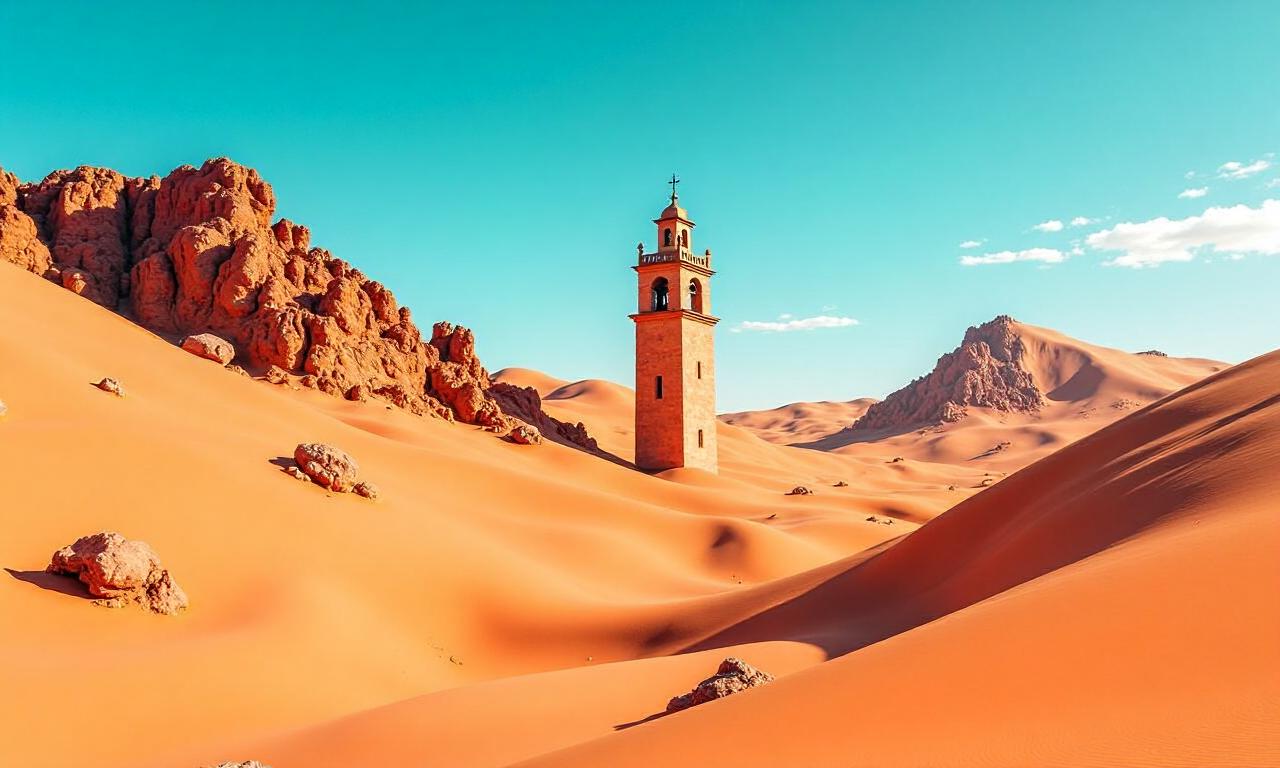
Samael.lol – While Morocco aims to bolster its global image by inviting visitors to its southern regions, the political status of Western Sahara remains a contentious issue. The country’s recent focus on promoting tourism in the area has sparked debate about the extent of its control over the territory. For many, the allure of Dakhla—a city nestled on a windswept peninsula where the Sahara meets the Atlantic—has made it an attractive destination. Yet, beneath the promise of sunlit beaches and affordable flights lies a complex history of occupation and self-determination.
Airlines and Tourism Boosters
The journey to Dakhla, however, requires a stop in Madrid, where return flights start at just €30 ($35). This affordability, combined with an array of accommodations—from budget-friendly hostels to newly constructed luxury resorts—has fueled the city’s appeal. Advertisements now label Western Sahara as Morocco’s “hidden gem,” enticing travelers with the idea of an undiscovered adventure. Yet, this branding overlooks the fact that the territory is one of the world’s longest-standing disputes, with the United Nations classifying it as a “non-self-governing territory.”
For the UN, this classification means the Sahrawi people have yet to establish full sovereignty over their land. Instead, the region’s vast majority is under Moroccan administration, with the country claiming it as part of its southern provinces. This status quo has been in place for over five decades, yet the indigenous population has not been granted the right to vote for their own governance. Rights organizations argue that Morocco’s expansion into Western Sahara has been facilitated by its strategic marketing, which blurs the lines between occupation and sovereignty.
International Law and Corporate Responsibility
Experts in international law warn that labeling the territory as Moroccan could perpetuate a legal fiction. “When companies market destinations there as Moroccan, they risk contributing to a distortion of international law and public understanding,” says Erik Hagen of the Western Sahara Resource Watch. He highlights the potential for airlines and travel platforms to normalize Morocco’s control, despite its status as a disputed region. This raises critical questions about the due diligence of corporations operating in areas under foreign occupation.
The Moroccan government has not publicly commented on the issue, leaving its position on the territory’s political status to be inferred from its promotional efforts. Over the past seven years, the number of tourists visiting Morocco-controlled Western Sahara has surged by more than 50%, according to the Moroccan Ministry of Tourism. Visitor numbers climbed from 490,297 in 2019 to 743,133 in 2025, driven by improved air connectivity. Airlines such as Royal Air Maroc, Ryanair, and Transavia France now offer direct routes from Madrid, Paris, and the Canary Islands, respectively, making the area more accessible to international travelers.
Traveler Perspectives and Local Realities
Tom Ruck, a 29-year-old UK tourist, recently traveled to Dakhla from Madrid via Ryanair. He describes the experience as “very much in its infancy,” noting that the resorts he visited were largely empty. “There were just a few other tourists around for a summer family holiday kind of thing,” he says. Despite the Moroccan flag flying prominently in the city and a stamp in his passport, Ruck acknowledges the area’s political ambiguity. “It feels like a place on the cusp of something bigger,” he adds, hinting at the tension between tourism and territorial claims.
Airline representatives, like Transavia France, assert that their operations comply with local authorizations. “We operate flights to Dakhla in accordance with the authorisations received from the authorities,” the company told the BBC. Ryanair, however, has yet to provide a statement on the matter. Meanwhile, Binter Canarias, the flag carrier of Spain’s Canary Islands, takes a different approach. It consistently refers to the territory as Western Sahara, emphasizing its distinct status. This contrast in branding underscores the growing divide between companies and the political reality of the region.
Booking Platforms and Traveler Awareness
Even the largest international booking platforms contribute to this narrative. When searching for accommodations in Western Sahara on Expedia, Booking.com, and Trivago, the options are often listed as being in Morocco. A Booking.com spokesperson explains that the company adds contextual information about disputed regions, advising travelers to consult official government travel advisories. “Our approach is consistent globally,” they say. Expedia has not responded to inquiries, while Trivago remains pending for a statement.
This practice raises concerns among human rights advocates. Dr. Andrea Maria Pelliconi, an international human rights law expert at the University of Southampton, argues that businesses should clearly distinguish Western Sahara from Morocco. “It’s possible that companies are unintentionally supporting Morocco’s claim by treating the territory as part of the country,” she notes. The increase in tourist activity, she suggests, could weaken the global awareness of the conflict, framing it as a temporary inconvenience rather than a prolonged struggle for self-rule.
Implications of the Tourism Boom
The tourism boom in Western Sahara reflects broader geopolitical strategies. By investing in infrastructure and marketing, Morocco seeks to legitimize its control and integrate the region into its national identity. This effort has not only attracted airlines but also created an economic dependency on Moroccan governance. For the local population, the influx of visitors may offer new opportunities, yet it also risks overshadowing their aspirations for independence. As visitor numbers rise, the question remains: does tourism in Western Sahara strengthen Morocco’s claim or undermine it?
The conflict’s persistence highlights the challenge of balancing economic development with political recognition. While Morocco continues to promote the territory as an extension of its sovereignty, the UN remains steadfast in its advocacy for a referendum. This divide has created a situation where travelers can enjoy the desert’s beauty without fully understanding the political implications. For those who visit, the experience is often framed as a cultural and economic success, but for the Sahrawi people, it is a reminder of their ongoing fight for autonomy.
As the global tourism industry expands its reach into disputed regions, the case of Western Sahara serves as a cautionary tale. The way destinations are labeled and marketed can shape perceptions, sometimes at the expense of historical and legal accuracy. Whether this approach fosters international support for Morocco or deepens awareness of the conflict depends on how information is presented to travelers. In the meantime, the city of Dakhla continues to draw visitors, its sands untouched by the full weight of political debate—yet ever-present in the stories of those who arrive there.