Prisoner Exchange Moves Forward Amid Kyiv’s Grief Over 24 Killed in Russian Attack
Samael.lol – On Friday, Russia and Ukraine finalized a significant prisoner exchange, releasing 205 captured individuals just hours after rescue teams in Kyiv concluded their search of a flattened residential complex where 24 lives were lost. The event marked a brief respite in the ongoing conflict, but the emotional weight of the tragedy in the capital overshadowed the diplomatic gesture. President Volodymyr Zelensky highlighted that most of the Ukrainian prisoners had been detained since the war began in 2022, underscoring the prolonged nature of the conflict and its human toll.
Ryazan Strike Sparks Casualties and Drones
Meanwhile, the Russian military reported casualties in Ryazan, a city southeast of Moscow, as Ukrainian drones struck a key oil refinery. The attack, which killed four people including a child, caused extensive damage to two apartment buildings, according to local officials. Governor Pavel Malkov noted that debris from the strike had devastated the structures, leaving 28 individuals injured. The refinery, one of Russia’s largest, became a focal point of the assault, with Ukrainian forces claiming it as a strategic target. This incident occurred alongside a wave of Russian strikes across Ukraine, which resumed after a short-lived ceasefire.
“A fire was burning, and there was smoke everywhere,” said 18-year-old Ivan, one of the first responders to the Kyiv disaster. “I helped a policeman lower a disabled woman [to safety] she couldn’t walk, and the policeman carried her in his arms.”
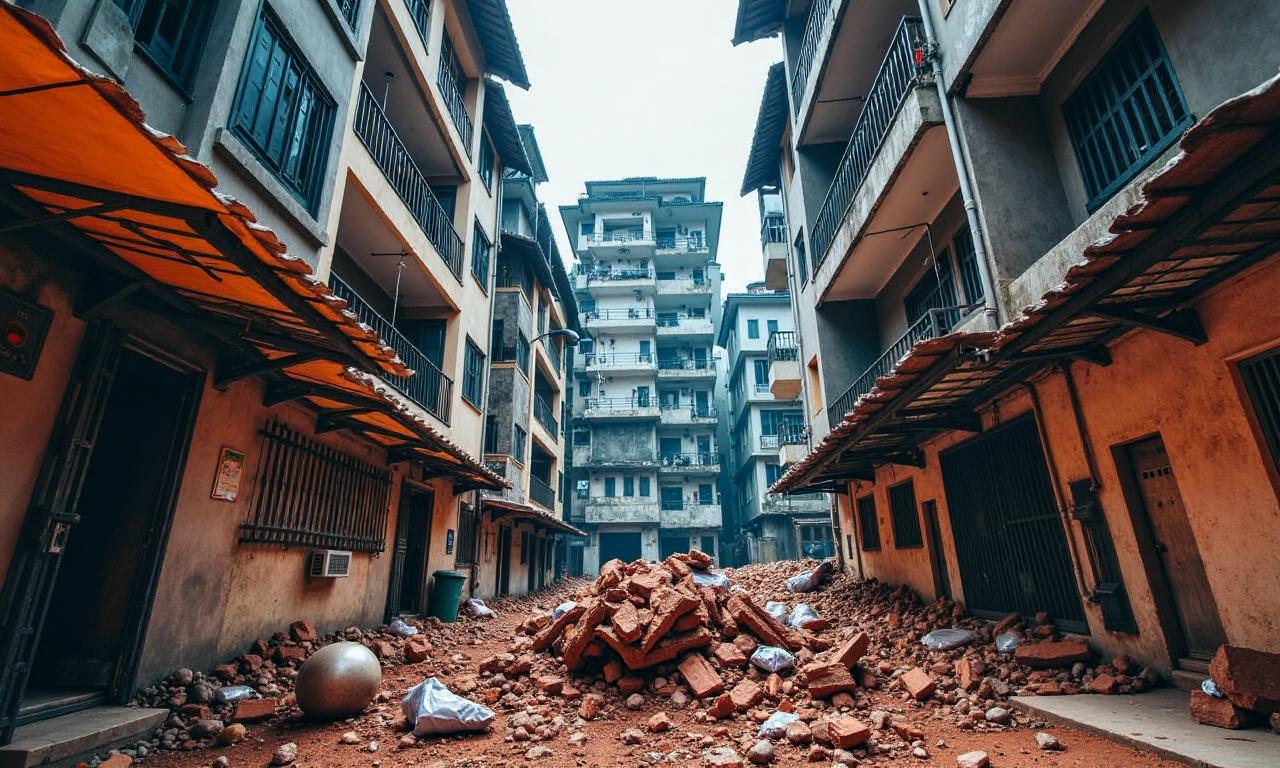
Ivan’s account of the rescue effort highlighted the urgency of the situation, as residents and soldiers watched the destruction unfold. The nine-storey building, reduced to rubble, had been the site of a devastating strike that claimed 24 victims, including three girls aged 12, 15, and 15. Their school issued a poignant statement on social media, describing the “scariest face of war” as the loss of children’s lives.
Victims Include Families and Workers
The tragedy in Kyiv left many families shattered, with two postal workers from Nova Poshta, both named Dmytro, among the deceased. One of the victims, Dmytro, was also killed alongside his wife, adding a personal dimension to the war’s impact. Former hockey player Yuriy Orlov and his 24-year-old partner, English teacher Maryna Homeniuk, were also among those who lost their lives. Svitlana Moskalishyna, a kindergarten teacher, joined the list of casualties. Lyubava Yakovleva, a 12-year-old girl, was the youngest victim, her father having perished earlier in the conflict. Her older sister was initially reported missing but was later confirmed dead, further deepening the grief.
As Kyiv honored the 24 victims, President Zelensky emphasized the need for accountability, stating that Russia’s deliberate attacks aimed to erase lives without consequence. He described the Russian X-101 cruise missile that flattened the building as a symbol of the war’s relentless escalation. “This means that Russia is still importing the components needed for missile production, as well as the necessary resources and equipment, in circumvention of global sanctions,” he remarked in a social media post, linking the attack to ongoing logistical efforts by Moscow.
Three-Day Ceasefire and Its Collapse
The prisoner exchange was part of a three-day ceasefire agreed between the two nations from May 9 to 11, which coincided with Russia’s scaled-down Victory Day parade in Moscow. Despite the pause, the ceasefire was marred by repeated violations, leading to its swift termination. This week, Russian forces launched their most intense drone assault since the war began, targeting Ukrainian cities and communities. According to Ukrainian officials, 1,410 Russian drones and 56 missiles were deployed in a single 24-hour period from May 13 to 14, intensifying the conflict’s violence.
Zelensky praised the rescuers who saved 30 lives during the Kyiv operation, noting their critical role in extracting survivors from the rubble. The destruction of the building’s entrance and the collapse of its structure left residents and soldiers in a state of anxious anticipation, waiting for news of missing relatives. The tragedy became a stark reminder of the war’s indiscriminate nature, with civilians bearing the brunt of the attacks.
Brokering the Swap and Its Implications
The deal to release 205 prisoners was negotiated by the United States and the United Arab Emirates, with Russia’s defense ministry stating that the freed individuals included those held since the war’s outbreak. Among those released were fighters from the siege of Mariupol, a pivotal moment in Russia’s full-scale invasion that began in February 2022, as well as soldiers who had participated in battles near the Chornobyl nuclear plant, previously known as Chernobyl during the Soviet era. The swap was intended to be the first of a planned 1,000-person exchange, but the recent escalation in attacks suggests the agreement was more symbolic than a long-term solution.
Although President Vladimir Putin had previously signaled optimism about the war nearing an end, no substantive negotiations have taken place since February. Ukrainian commentators noted that the resurgence of Russian strikes, including the massive drone onslaught, has dashed hopes of a peaceful resolution. The attack on Kyiv, which claimed 24 lives, was particularly devastating, as most of the 18 flats destroyed were single-room apartments or the kitchens and bathrooms of two-room units. This pattern of destruction highlighted the vulnerability of civilian infrastructure in the face of relentless military action.
Rescue Efforts and Human Stories
The rescue operation in Kyiv’s Darnytskyi district, which lasted 28 hours, was a harrowing endeavor. Residents and soldiers gathered at the site, hoping to find survivors or confirm the fate of loved ones. The efforts culminated in the recovery of 30 individuals, a testament to the resilience of those involved. Yet, the emotional aftermath lingered, with families mourning their lost ones. The Nova Poshta staff’s deaths, along with those of Orlov and his girlfriend, illustrated how the war affected both military and civilian populations.
Zelensky’s visit to the scene brought a somber message of solidarity. “Pressure must be applied to a Russia that deliberately destroys lives and hopes to remain unpunished,” he declared, as he laid flowers alongside the wreckage. His remarks echoed the broader sentiment of Ukrainian citizens, who viewed the attack as a deliberate strike on innocent civilians. The three girls who died were among the most vulnerable, their loss serving as a grim reminder of the war’s impact on children. Their school’s Facebook statement captured the anguish, stating that the “scariest face of war” was the lives it took from the young.
The exchange of prisoners, though a diplomatic success, came at a time when the conflict was intensifying. With 205 Russians reportedly taken to Belarus for medical and psychological care, the gesture symbolized a temporary truce. However, the resurgence of drone attacks and missile strikes indicated that the war’s momentum was unlikely to slow. As Kyiv mourned, the international community watched closely, wondering if such exchanges could pave the way for broader peace or merely delay the inevitable escalation.
Legacy of the Ceasefire and Future Outlook
The three-day ceasefire, which had been meant to ease tensions, was quickly overshadowed by the renewed aggression. The destruction of 18 flats in Kyiv and the casualties in Ryazan underscored the lack of progress in the peace talks. Zelensky’s acknowledgment of the Russian missile’s origin hinted at the ongoing reliance on global supply chains, even as sanctions sought to limit Moscow’s war capabilities. The war’s evolution, marked by shifting tactics and targets, continued to blur the lines between combat and civilian life, leaving both nations to navigate a complex and devastating conflict.