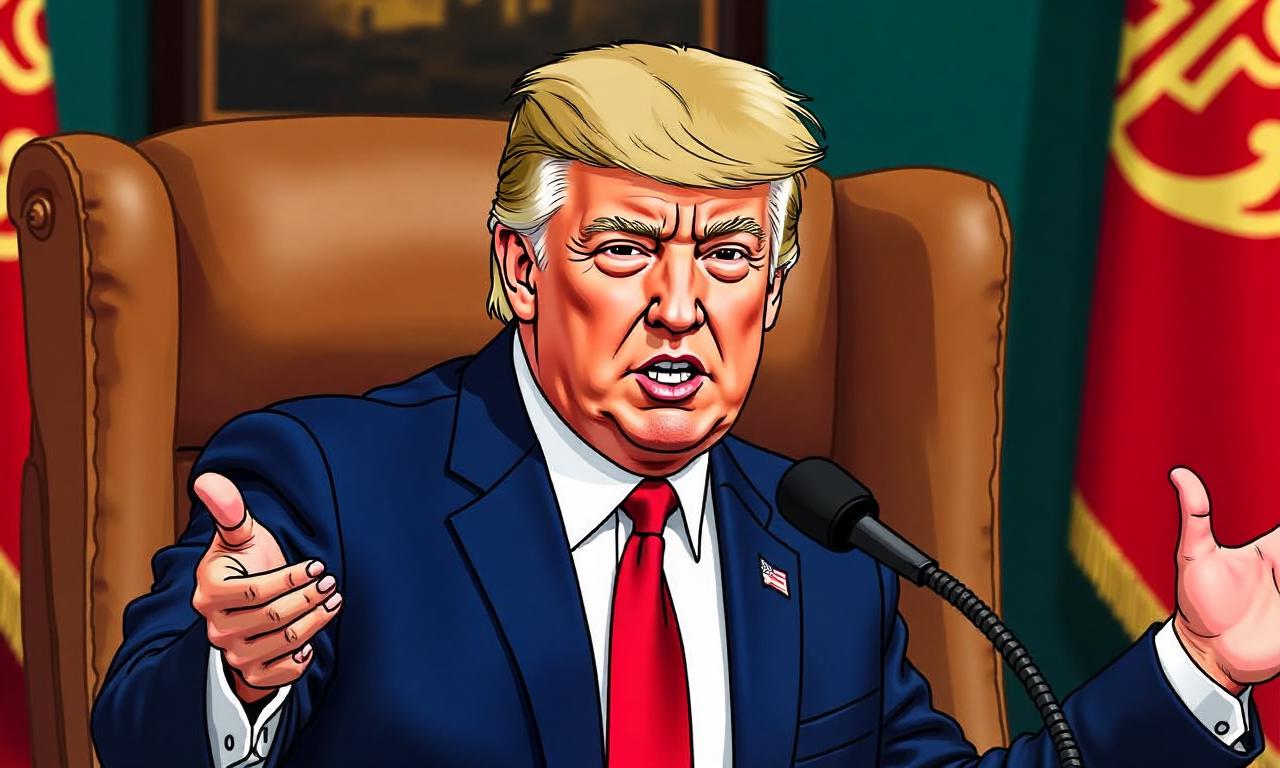
Trump Says He Called Off New Iran Attack at Request of Gulf States
Samael.lol – Donald Trump, the US president, announced on Truth Social that he has postponed a scheduled military strike against Iran. The decision, he claimed, came at the urging of leaders from Qatar, Saudi Arabia, and the United Arab Emirates. According to Trump, the delay is due to “serious negotiations now taking place,” which he believes will yield a “very acceptable” agreement for the United States. He emphasized that this deal would ensure “NO NUCLEAR WEAPONS FOR IRAN!” while allowing the US to maintain its strategic position.
The administration’s plans to launch air strikes on Iran had been set for Tuesday, but Trump said the Gulf states convinced him to hold off. His remarks highlighted the growing influence of regional allies in shaping US foreign policy. However, the president warned that if the talks fail, the US remains prepared to escalate the conflict “on a moment’s notice.” This statement underscores the tension between diplomatic efforts and the readiness for military action.
Context of the Conflict
The conflict between the US and Iran has intensified since February 28, when Israeli and US forces initiated large-scale air strikes targeting Iranian positions in the region. In response, Tehran launched drone and missile attacks against Israeli and US targets across the Gulf, escalating the crisis. The Gulf states, however, have been vocal about their concerns over potential Iranian retaliation, prompting Trump to reassess the timing of the assault.
Iran’s military has long been a key player in regional warfare, with a stockpile of drones and missiles capable of striking neighboring states, airports, petrochemical plants, and critical desalination facilities. These assets are particularly valuable as summer temperatures in the Gulf rise, making water security a vital concern. The Gulf leaders, fearing a broader escalation, have advised the US to temper its approach, even as tensions remain high.
Political Implications
The decision to halt the attack coincides with a decline in Trump’s approval ratings. A recent New York Times/Siena poll revealed that 64% of voters think the war with Iran was a “wrong decision,” signaling public dissatisfaction with the conflict. The survey also noted that only 37% of respondents approve of Trump’s leadership, highlighting the challenges Republicans face in the upcoming midterm elections.
Public frustration with the war has been compounded by concerns over the economy and immigration. Trump’s administration has faced criticism for its handling of these issues, with the war serving as a backdrop to growing discontent. The president’s remarks about the “positive development” of the pause in strikes reflect both his confidence in the talks and his awareness of the political fallout.
Current Negotiations and Ceasefire
Despite the pause, the situation remains volatile. A ceasefire agreement reached in April has been largely upheld, though occasional clashes have occurred. The truce, which Trump described as being on “massive life support,” has allowed for ongoing discussions but has not resolved the core issues. The US continues its blockade of Iranian ports to pressure Tehran into concessions, while Iran maintains control of the Strait of Hormuz, a vital waterway for global oil and gas transportation.
Iran’s control of the Strait of Hormuz has had a measurable impact on global markets, driving oil prices upward. The US, in response, has enforced a naval blockade to limit Iran’s ability to export oil and sustain its military operations. This economic pressure is part of a broader strategy to weaken Tehran’s leverage in negotiations. Meanwhile, Iran has insisted its demands include an end to the Israeli attacks on Hezbollah in Lebanon, a halt to the US blockade, and guarantees against future strikes.
Iran’s Stance and Recent Statements
Iran’s semi-official Tasnim news agency reported that Supreme Leader Mojtaba Khamenei issued warnings about the US and Israel’s actions, urging them to avoid “strategic mistakes and miscalculations.” These comments, which Tasnim claimed were from March 12, suggest that Iran is prepared to take the fight to new fronts. The agency also highlighted that exchanges between Tehran and Washington continue through Pakistani mediators, indicating that the talks are far from over.
Trump’s insistence on a “very good chance” of an agreement contrasts with his earlier skepticism. The president had previously dismissed Iran’s proposals as “totally unacceptable,” labeling the truce as “massive life support” for the war effort. However, his recent optimism may reflect a shift in strategy or the belief that a compromise is within reach. Iranian officials, on the other hand, have emphasized their commitment to sovereignty and compensation for war damage, framing the talks as a test of US resolve.
Strategic Balancing Act
The Gulf states’ involvement in persuading Trump to delay the strike highlights their role as key players in regional stability. Their concerns about Iran’s retaliatory capabilities have forced the US to adopt a more cautious approach, balancing military aggression with diplomatic outreach. This dynamic has also influenced Iran’s own position, as it seeks to protect its interests while engaging in negotiations.
Trump’s comments on the ceasefire and the potential deal reflect a strategic balancing act. While he acknowledges the Gulf states’ input, he also insists the US is not backing down. The president’s warning that “Clock is Ticking, and they better get moving, FAST” underscores his determination to secure favorable terms. Yet, the pause in strikes has provided Iran with an opportunity to leverage its position, even as the US remains prepared to act decisively.
Analysts suggest that the Gulf states’ influence stems from their economic ties to the US and their fear of a wider regional conflict. Saudi Arabia, Qatar, and the UAE have all expressed caution, with leaders warning that a failed deal could lead to a catastrophic escalation. This has pushed Trump to prioritize diplomacy, even as the war’s cost in lives and resources continues to mount.
Global Impact and Future Outlook
The war’s global implications are significant, with the Strait of Hormuz serving as a critical artery for international trade. Iran’s ability to disrupt this waterway has sent oil prices soaring, affecting economies worldwide. The US, in turn, is using its naval presence to counter these disruptions, illustrating the strategic importance of the region.
As the negotiations progress, the outcome will shape the future of US-Iran relations. Trump’s insistence on a “full, large scale assault” if no deal is reached signals a readiness to use military force, but the Gulf states’ mediation may prevent a further breakdown. The situation remains fluid, with both sides navigating a complex web of interests and threats. Whether the talks will lead to a lasting agreement or another round of conflict remains to be seen, but the pause in strikes has provided a brief respite for diplomacy.
In conclusion, Trump’s decision to delay the attack reflects a combination of regional diplomacy and strategic patience. While the US seeks to weaken Iran’s position, the Gulf states’ intervention has tempered the assault. This moment of truce offers a chance for resolution, but it also highlights the deepening divide between the two nations. As the negotiations continue, the outcome will determine the next phase of this ongoing conflict, with global markets and public opinion watching closely.