Trump Says Iran Ceasefire Is on ‘Massive Life Support’
US President Challenges Iran’s Stance Amid Ceasefire Uncertainty
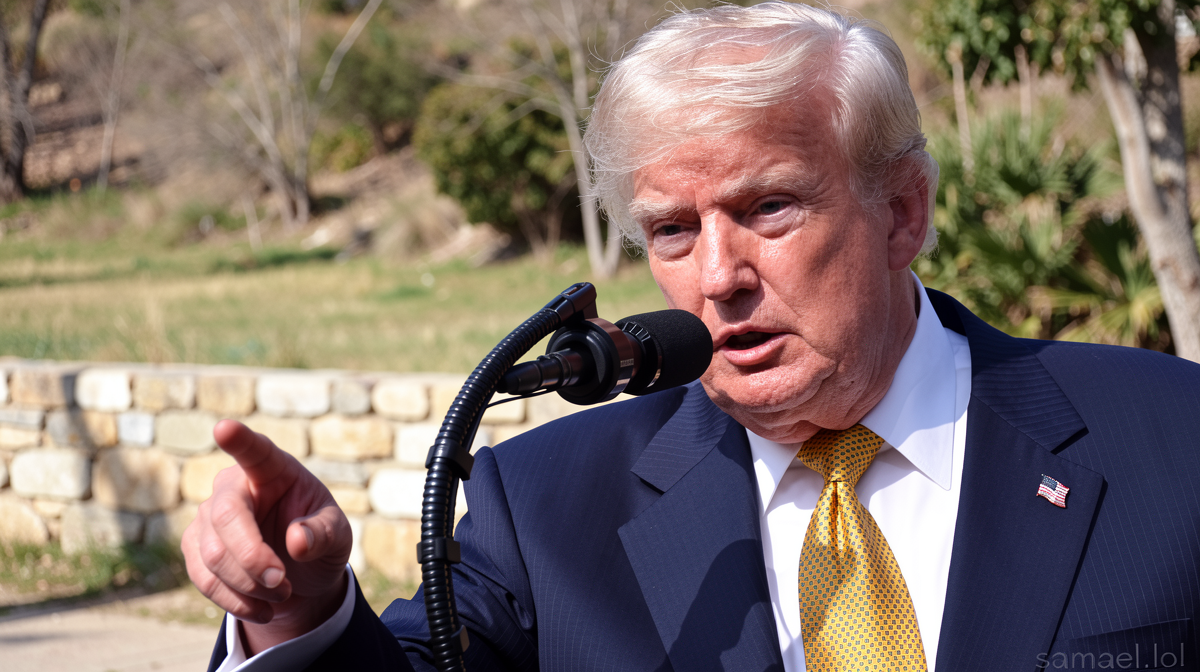
Samael.lol – Donald Trump, the U.S. president, described the ongoing ceasefire with Iran as being ‘on massive life support’ during a Monday briefing in the Oval Office. While the truce has held for a month, he characterized it as ‘unbelievably weak,’ suggesting the agreement is fragile and dependent on continued efforts to sustain it. This came after Trump criticized Iran’s recent counter-offer, which he deemed ‘totally unacceptable’ and ‘a piece of garbage,’ as outlined in his remarks on Truth Social.
“I would say the ceasefire is on massive life support… when the doctor walks in and says, ‘Sir, your loved one has approximately a 1 percent chance of living’.” – Donald Trump
Despite the ceasefire’s presence, tensions remain high. Iranian parliamentary speaker Mohammad Ghalibaf responded to Trump’s comments on X, stating that Iran’s armed forces were ‘ready to respond and to teach a lesson for any aggression.’ Ghalibaf later emphasized that there was ‘no alternative but to accept the rights of the Iranian people as laid out in the 14-point proposal,’ signaling a firm stance on the terms of the agreement.
Iran’s 14-Point Proposal and US Reactions
Iran detailed its demands to conclude the conflict and restore access to the Strait of Hormuz in a counter-offer submitted to the United States on Sunday. The proposal includes an immediate end to the war on all fronts, referencing the Israeli attacks on Iran-backed Hezbollah in Lebanon. It also calls for a halt to the U.S. naval blockade of Iranian ports and guarantees against further military strikes on Iran, as reported by the semi-official Tasnim news agency.
According to Tasnim, the offer also demands compensation for war-related damages and underscores Iran’s sovereignty over the strategic waterway. However, Trump dismissed the proposal, calling it ‘a piece of garbage’ and expressing dissatisfaction with the Iranian leadership. He claimed the country’s leaders were ‘very dishonourable people,’ noting that they had ‘changed their mind’ multiple times during negotiations.
“There is no such thing in Iran’s proposal as accepting taking out enriched nuclear material.” – Tasnim news agency citing a source close to the negotiating team
Trump’s criticism extends to Iran’s nuclear program. He accused the country of reneging on an agreement to allow the removal of its enriched uranium supply. While insisting Iran ‘will never have a nuclear weapon,’ Trump highlighted the dispute over the enrichment sites, which Israeli Prime Minister Benjamin Netanyahu also mentioned. Netanyahu stated that the war in Iran ‘will not be over’ until the country’s uranium stockpile is ‘taken out,’ emphasizing the need for dismantling enrichment facilities.
Strategic Implications of the Ceasefire and Blockade
Iran’s counter-offer comes amid a broader conflict between the U.S. and Iran, which has seen both sides engage in periodic skirmishes. The ceasefire, which took effect last month, has largely been observed despite occasional exchanges of fire. However, the U.S. has maintained a naval blockade of Iranian ports, a tactic aimed at pressuring Tehran to meet Washington’s conditions. This action has drawn ire from Iran, which views it as an aggressive move.
The Strait of Hormuz, a critical shipping route, has been a focal point of the dispute. Normally, about 20% of the world’s oil and liquefied natural gas transits through the waterway. Iran’s continued blockage of the strait has contributed to rising global oil prices, underscoring the economic stakes of the conflict. The U.S. has been enforcing the blockade to exert pressure, but the measure has been met with resistance from Tehran.
Trump reiterated his belief that the war in Iran would be ‘over quickly,’ though the timeline remains uncertain. The 14-point proposal, initially presented by the U.S. in a one-page memorandum, includes provisions such as a suspension of Iranian nuclear enrichment, the lifting of sanctions, and the restoration of free transit through the Strait of Hormuz. However, sources briefed on the negotiations noted that many terms in the memo would be conditional, contingent on a final agreement being reached.
Historical Context and Ongoing Negotiations
The conflict between the U.S. and Iran has been marked by shifting priorities and unresolved issues. Israeli and U.S. forces launched massive air strikes on Iran on 28 February, escalating tensions in the region. Since then, the ceasefire has been a fragile peace, with both sides vying for strategic advantages. Trump’s comments reflect his frustration with Iran’s refusal to commit to the U.S. terms, while Iranian officials have framed their proposals as responsible and generous.
Iran’s foreign ministry spokesperson, Esmail Baghaei, defended the country’s position, stating that Tehran would ‘act in any way necessary to secure our interests.’ This sentiment aligns with Ghalibaf’s assertion that Iran was prepared to respond to any perceived aggression. The two officials’ statements highlight the contrasting perspectives of the parties involved, with the U.S. viewing the ceasefire as unstable and Iran positioning itself as the aggrieved party.
The debate over nuclear enrichment has become a central issue in the negotiations. Trump claimed Iran agreed to the removal of its enriched uranium supply, but a source close to the Iranian team clarified that the proposal ‘does not include accepting the removal of enriched nuclear material.’ This disagreement underscores the complexities of the talks, with both sides seeking to assert their positions.
As the standoff continues, the global oil market remains vulnerable to disruptions. The Strait of Hormuz, a lifeline for energy exports, has seen intermittent blockades, raising concerns about supply chain stability. Analysts warn that prolonged tensions could lead to further economic repercussions, with American taxpayers bearing the brunt of the costs.
With the ceasefire under scrutiny, the U.S. and Iran face a critical juncture in their negotiations. Trump’s insistence on the proposal’s inadequacy and Iran’s commitment to its demands highlight the challenges of reaching a lasting agreement. The 14-point plan, while comprehensive, may require significant concessions from both sides to succeed.
Amid these developments, the broader geopolitical landscape continues to shift. The involvement of Israel adds another layer to the conflict, with Netanyahu’s stance on nuclear enrichment serving as a reminder of the interconnected nature of regional tensions. As the U.S. and Iran navigate their differences, the outcome of these talks could have far-reaching implications for the Middle East and global markets.