Presidential Health Reports: A Blend of Medical Data and Political Strategy?
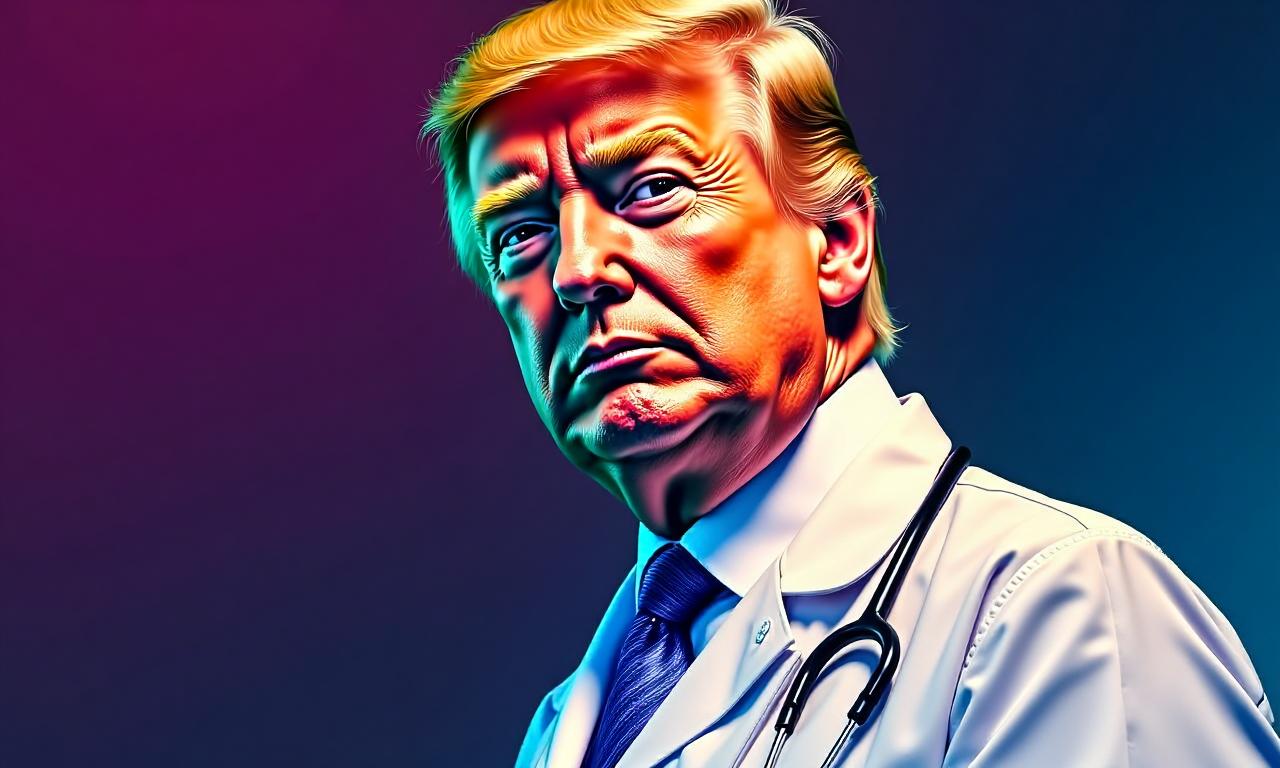
Samael.lol – During his recent physical examination, Donald Trump’s physician issued a statement affirming the president’s “excellent health,” emphasizing his robust cardiac, pulmonary, and neurological functions. Yet, this declaration sparked renewed debate about whether such health assessments are more about managing public perception than providing transparent medical insights. The question of a president’s well-being has long been a focal point, but in an era of heightened political scrutiny, it often feels like a carefully curated PR campaign.
A Tradition of Public Health Exams
Since the early days of the American presidency, physical check-ups have been a routine part of the job. Every leader in modern history has undergone the short trip from the White House to Walter Reed National Military Medical Center, where their health is evaluated. However, these exams have increasingly evolved beyond their medical purpose, becoming a strategic tool to project vitality and authority. As political historian Dr. Matt Dallek notes, “Americans historically have wanted masculine presidents, vigorous presidents.” The physical exam serves as a visual and verbal affirmation of a leader’s physical prowess, reinforcing their ability to command power.
This practice gained traction in the 1960s, particularly during Lyndon B. Johnson’s presidency, when health reports began to be shared publicly. Prior to that, presidents often concealed their medical conditions. Woodrow Wilson, for instance, suffered a severe stroke in 1919, which left him largely incapacitated for the final year of his term. His doctors and staff worked to minimize the visibility of his condition, allowing his wife to make critical decisions on his behalf. Similarly, Franklin D. Roosevelt’s battle with polio-related paralysis was downplayed by the White House, with his wheelchair use kept largely private until his death in 1945.
Even today, the release of health information can be selective. Gerald Ford, during the 1970s, pushed for transparency, insisting on making his medical details public despite his physician’s objections. Ford famously claimed, “I feel fit as a fiddle. Getting healthier every day,” following his 1976 check-up, and highlighted his daily swimming routine as a sign of wellness. In contrast, Ronald Reagan waited until five years after leaving office to disclose his Alzheimer’s diagnosis, fueling speculation about his cognitive abilities during his second term. “If I were the public,” said medical ethicist Jacob Appel, “I would ignore that information entirely. The president can cherry pick what looks good, and what doesn’t look good.”
Modern Scrutiny and the Aging Presidents
Recent years have amplified the focus on presidential health due to the age of incoming leaders. After a series of relatively youthful presidencies—Bill Clinton was 46 when he took office, George W. Bush was 54, and Barack Obama was 47—the U.S. elected two of its oldest presidents in quick succession. Trump, at 70, began his first term in 2017, and Biden, who assumed the role at 78, stepped down at 82. This shift has “turbocharged” the public’s interest in annual health reports, according to Dallek. “The scrutiny of Biden and Trump because of their age operates in a totally different plane,” he explained, noting how media and public debates now revolve around their physical condition.
Despite the White House’s assurances, there remains skepticism about the thoroughness of these evaluations. Trump’s doctor highlighted his excellent health, yet the same reports often include details of minor ailments. For instance, a New York Times article noted that Bill Clinton’s 1996 check-up revealed a precancerous skin lesion removed from his nose, while the following year he was advised to use hearing aids. These findings, though seemingly trivial, underscore the dual nature of health disclosures: they aim to balance factual information with the narrative of a leader’s strength.
The political stakes of health assessments are significant. In a hyperpartisan climate, revealing vulnerabilities can be seen as a strategic disadvantage. Appel, a medical ethicist and presidential health historian, points out that health data can also serve national security interests. “Anything we release to the American public will also be known by the Russian secret service, the Chinese government, and adversaries,” he warned. This duality—where medical reports are both a personal and public matter—has led to a culture of selective disclosure, with leaders often choosing what to share and what to withhold.
While the White House maintains that these exams are routine, critics argue that they are frequently leveraged for messaging. Trump’s emphasis on his physical fitness, for example, became a defining element of his presidency. His doctor’s memo, released shortly after his check-up, framed his health as a testament to his leadership, even as it hinted at lifestyle factors that could impact his long-term well-being. This approach mirrors historical patterns, where presidents have used health reports to bolster their image, whether through showcasing resilience or downplaying chronic conditions.
Yet, the transparency of these assessments varies widely. Unlike private medical records, a president’s health data is protected by the same privacy laws as any citizen, meaning there’s no legal obligation to disclose all findings. This flexibility allows for a mix of candor and control, with leaders often emphasizing their vitality while sparingly mentioning other issues. The result is a landscape where health checks are both a medical necessity and a political asset, shaped by the unique pressures of the office.
Public Trust and the Politics of Health
As the public becomes more accustomed to examining the health of their leaders, the line between medical fact and political spin grows thinner. While some may view these reports as a democratic tool that keeps leaders accountable, others see them as a means of maintaining an illusion of infallibility. “The president can choose what to highlight,” Appel said, “and what to obscure, depending on the narrative they want to control.”
For many Americans, the health of their president is not just a personal matter but a national concern. A leader’s physical condition can influence their ability to make decisions, especially in high-stakes scenarios. This has led to a culture where health disclosures are scrutinized for their implications, whether on policy effectiveness or the stability of the administration. The annual check-up, once a simple routine, has transformed into a spectacle, with media outlets dissecting every detail for signs of potential weakness.
Nevertheless, the practice of public health assessments persists, reflecting the enduring importance of a president’s appearance and demeanor. While some leaders, like Ford, have embraced transparency, others have used it to craft a narrative of strength. In an age where public opinion can sway the course of governance, the health report serves as a critical component of a president’s public persona. It is a reminder that in the world of politics, even the most factual information can be shaped to serve a greater purpose.
As the U.S. continues to elect leaders at advanced ages, the role of health checks in political strategy is likely to grow. Whether they are a genuine reflection of a president’s condition or a calculated PR move, these reports remain a focal point of public discourse. The balance between transparency and image management will continue to define how presidents navigate their health in the spotlight, ensuring that every physical examination is as much about power as it is about wellness.