Whale Found Dead Near Danish Island After German Rescue Operation
Samael.lol – A humpback whale that had been stranded on a German beach and later freed by a private rescue effort has been discovered lifeless off the coast of a Danish island. The creature’s remains were spotted on Thursday, April 25, near Anholt, a small island situated between Denmark and Sweden. Initial reports confirmed the whale’s presence in the area, but officials have yet to officially verify its identity. The event has reignited discussions about the ethics and effectiveness of human intervention in marine wildlife rescue.
The Rescue and Its Controversy
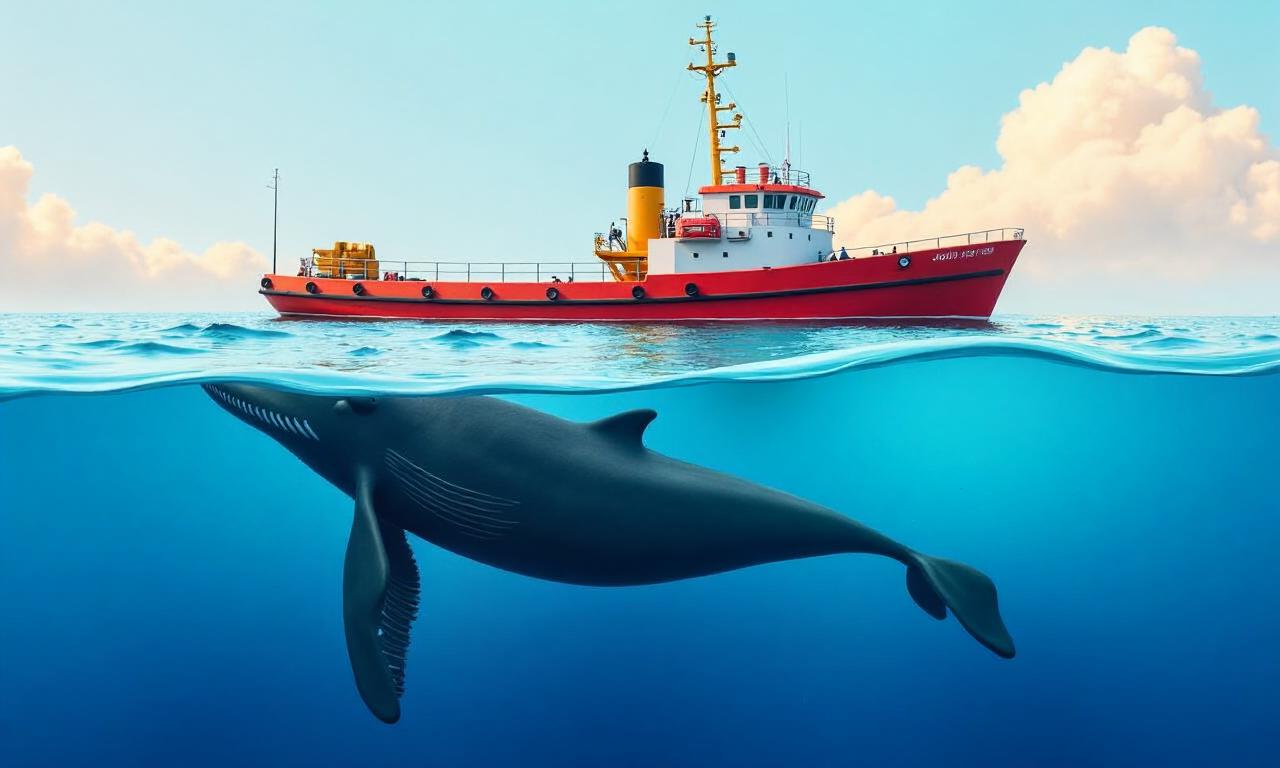
The whale initially became stuck on a sandbank off the Baltic Sea coast in Germany on March 23. After several attempts to free itself, the animal remained stranded for weeks, drawing attention from local communities and environmentalists. German authorities initially tried to assist, but their efforts were deemed insufficient. Eventually, two private entrepreneurs, Karin Walter-Mommert and Walter Gunz, stepped in to fund a specialized operation. The team used a water-filled barge to transport the whale back into the North Sea, where it was eventually released in early May.
The rescue sparked intense public debate. While supporters praised the daring operation, critics argued that it might have caused the whale unnecessary stress. Some questioned whether the act of moving the animal from its stranded location could have led to further harm. The incident highlighted the growing role of private initiatives in wildlife conservation, especially when government resources are limited or time-sensitive.
Discovery and Initial Assessments
Following the whale’s release, it was presumed to be safe and free to return to its natural habitat. However, its carcass was later found near Anholt, raising concerns about its fate. Danish authorities have not yet confirmed if the whale was the same individual that had been rescued, though they noted that conditions on Saturday allowed for the verification of its identity. The agency also mentioned that a tracking device fitted during the operation could be retrieved to monitor the whale’s movements.
“There are no concrete plans to remove the whale from the area or to perform a necropsy, and it is not currently considered to pose a problem in the region,” said the Danish Environmental Protection Agency. The agency also advised that people should avoid approaching the whale due to potential health risks.
Experts warned that the carcass might carry infectious diseases that could be transmitted to humans. Additionally, there was a risk of explosion from the buildup of internal gases as the whale’s body decomposed. These factors have made the site a point of interest for both scientists and the public, with ongoing observations being conducted.
The Stranding and Its Aftermath
The whale, nicknamed “Timmy” or “Hope” by rescuers and German media, became stranded on Timmendorfer Beach in Lübeck Bay. At first, it seemed to free itself, but it repeatedly became stuck, indicating a struggle to regain mobility. German officials attempted multiple rescue efforts, including using equipment to guide the whale back to deeper waters. However, they ultimately decided to hand over the operation to private individuals, acknowledging the complexity of the situation.
Karin Walter-Mommert and Walter Gunz, both local business owners, spearheaded the private rescue. Their initiative involved not only relocating the whale but also equipping it with a tracking device to monitor its progress. The operation was hailed as a success by Till Backhaus, the environment minister of Mecklenburg-Vorpommern, who described it as a “model for Germany of what can be achieved through collaboration and innovation.”
Concerns About the Whale’s Survival
Despite the initial triumph of the rescue, wildlife groups have expressed skepticism about the whale’s long-term survival. The German Oceanographic Museum pointed out that the creature was extremely weak, raising the possibility of drowning in the open sea. This concern was echoed by Whale and Dolphin Conservation, which noted that the whale had suffered significant skin damage due to the low salinity of the waters along the Baltic Sea coast.
“The whale had no long-term chance of survival, and the lack of salt in the coastal waters likely contributed to its physical deterioration,” stated a representative from the conservation organization. This sentiment was shared by several other experts who believed the rescue, while well-intentioned, might not have been enough to ensure the whale’s recovery.
The incident has prompted a broader reflection on the challenges of marine rescue. While the operation demonstrated the potential for human ingenuity, it also exposed the difficulties of accurately assessing an animal’s condition and predicting its ability to thrive in its natural environment. The whale’s death serves as a reminder of the delicate balance between intervention and natural processes in wildlife conservation.
Public Reaction and Broader Implications
Public opinion has been divided on the rescue. Some praised the entrepreneurs for their quick thinking and resources, while others questioned whether the whale’s release had been a temporary fix or a long-term solution. The use of a private barge, Fortuna B, to transport the whale highlighted the role of private entities in filling gaps in government-led conservation efforts.
Environmentalists have also debated the ecological impact of such operations. While the whale’s survival was a priority, its presence in the North Sea might have affected local ecosystems. The Danish Environmental Protection Agency, however, has emphasized that the whale’s current state does not pose an immediate threat. It is now up to nature to determine the next chapter of the whale’s journey.
The discovery of the carcass near Anholt has brought renewed attention to the Baltic Sea region. Scientists are analyzing the area to understand whether the whale’s death could indicate broader issues affecting marine life. Meanwhile, the incident has sparked conversations about the need for improved coordination between public and private rescue teams to ensure the best outcomes for stranded animals.
Looking Ahead
As the whale’s identity is verified and its tracking device retrieved, the focus shifts to understanding the full extent of the rescue’s impact. While the operation may have saved the whale’s life in the short term, its eventual death raises questions about the long-term viability of such interventions. The case of the humpback whale near Anholt is now a subject of study for marine biologists and conservationists alike, underscoring the importance of continued research and adaptive strategies in wildlife protection.