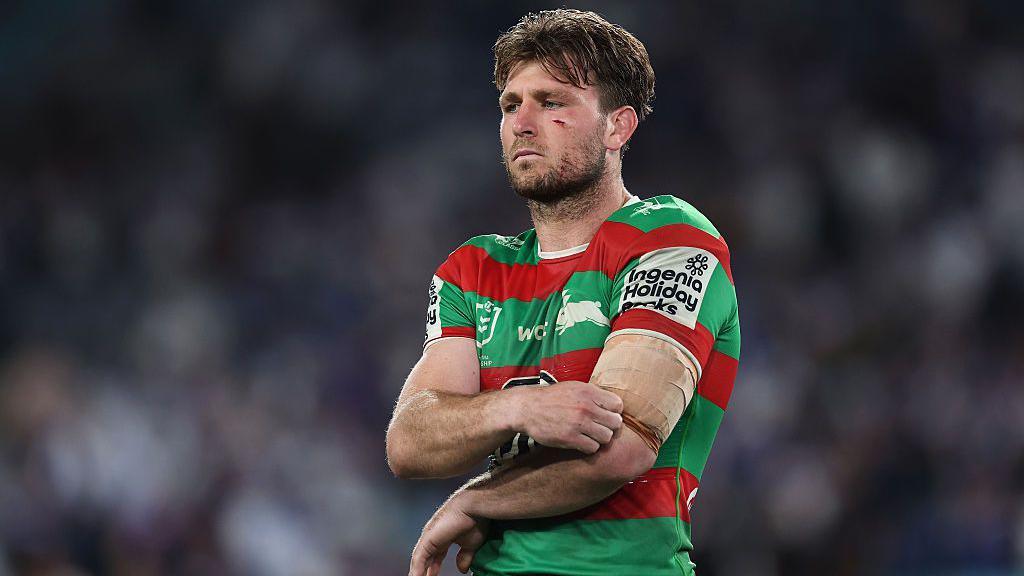
NRL star Jai Arrow retires at 30 after MND diagnosis
Samael.lol – South Sydney Rabbitohs forward Jai Arrow, 30, has taken an immediate leave from professional rugby league after being diagnosed with Motor Neurone Disease (MND). The news was shared during a press conference held on Wednesday, where Arrow was visibly emotional and unable to speak, prompting his family to deliver a statement on his behalf.
“After thorough medical evaluations and consultations regarding my persistent symptoms, I have recently received a diagnosis related to a neurological condition,” Arrow said in the statement. “Further assessments, specialist reviews, and diagnostic procedures are still in progress, and my medical team continues to monitor my condition. Based on their recommendations, I am no longer fit to train or compete at the required level, so I will step away from those responsibilities to focus entirely on my health, treatment, and recovery.”
Arrow’s career, which spanned a decade, saw him play 178 National Rugby League (NRL) matches for the Brisbane Broncos, Gold Coast Titans, and Rabbitohs. He also represented Queensland in 12 State of Origin games, showcasing his skills on the biggest stage of Australian rugby. His journey began in 2016 with the Broncos before moving to the Titans in 2018 and joining the Rabbitohs in 2021, where he made 98 appearances.
About MND
Motor Neurone Disease (MND) is a progressive neurological disorder that targets the brain and spinal cord nerves responsible for muscle control. As the condition advances, these nerves deteriorate, leading to muscle weakness and stiffness. Symptoms typically manifest in challenges such as walking, speaking, eating, and breathing. While the exact cause of MND remains elusive, researchers believe it may stem from a mix of genetic predispositions and lifestyle factors.
The illness has impacted multiple rugby players globally, including Carl Webb, who passed away in 2023 at the age of 42. Rob Burrow, a former England half-back, succumbed to the disease in 2024, five years after his diagnosis. In addition, Doddie Weir, a former Scotland rugby union star, died in November 2022, and Lewis Moody, a World Cup-winning England international, was diagnosed with MND in September 2025.
Statement on Retirement
Arrow expressed deep gratitude for the support he has received during this challenging period. “The past few months have been incredibly difficult, and my symptoms have begun to affect different areas of my daily life,” he said. “I want to sincerely thank everyone at the South Sydney Rabbitohs for the personal support they have extended to me and my family throughout this journey. Their dedication has made this complex situation more bearable. What I need now is understanding, empathy, and privacy as my family and I navigate this phase. This is only the beginning of my story, and I will share more when the time feels appropriate. For now, I ask for your respect and support as I continue working with my medical team.”
Rabbitohs CEO Blake Solly highlighted Arrow’s perseverance, stating, “We have all witnessed how tough the last few months have been for Jai, but we are certain he will face this illness with the same strength and determination that defined his playing career. Jai and his family will always remain integral to this club, with their connection to South Sydney enduring for many years.”
Around the same time, the rugby community has been grappling with the broader implications of brain injuries. Legal actions concerning the long-term effects of head trauma in the sport are now facing potential collapse, intensifying discussions about player safety and health protocols. Arrow’s retirement adds a poignant chapter to this ongoing narrative, emphasizing the need for continued attention to neurological conditions in sports.
Arrow’s decision to retire marks a significant moment in his career, ending a decade of contributions to the NRL. His journey with the Rabbitohs, which included 98 games, was a testament to his versatility and resilience on the field. Now, with a new focus on personal health, he aims to engage in rehabilitation and treatment while maintaining a connection to the sport he loves.
The diagnosis has brought both personal and professional challenges, with Arrow’s family playing a central role in supporting his transition. His statement underscores the importance of privacy and emotional well-being during this critical phase. As the Rabbitohs prepare to move forward without him, the club has expressed confidence in Arrow’s ability to tackle this new chapter with the same tenacity that defined his playing days.
The impact of MND on professional athletes continues to be a subject of concern, with Arrow joining a growing list of players who have battled the condition. His case highlights the unpredictable nature of the disease and the importance of early detection and comprehensive care. As the rugby league community reflects on his retirement, there is also a renewed focus on the long-term health of athletes, especially in light of recent legal developments.
Arrow’s story serves as a reminder of the physical and mental toll of professional sports. The combination of rigorous training, high-impact collisions, and the demands of competition can contribute to conditions like MND, raising questions about the role of genetics and environmental factors in its onset. While there is no known cure, ongoing research and support networks are critical in helping players like Arrow adapt to their new reality.
As the South Sydney Rabbitohs honor Arrow’s legacy, they also look to the future, ensuring the next generation of players benefits from the lessons learned. His retirement, though a personal loss, has sparked conversations about the importance of health and the need for proactive measures in preventing and managing neurological conditions in sports. Arrow’s journey is far from over, and his commitment to recovery remains a source of inspiration for fans and fellow athletes alike.