The footballer setting record straight after 46 years
Samael.lol – Breaking his silence after four decades, Roly Gregoire has finally spoken about the challenges he faced as Sunderland’s first black player. The 67-year-old recalls the emotional toll of racism that followed his debut in 1978, a period he had long chosen to forget. “I waited 46 years to share my story because I didn’t think anyone would listen,” he says in an interview with BBC Look North. “I thought I’d take these experiences to my maker, but now I’m here to make them known.”
A Pioneering Debut
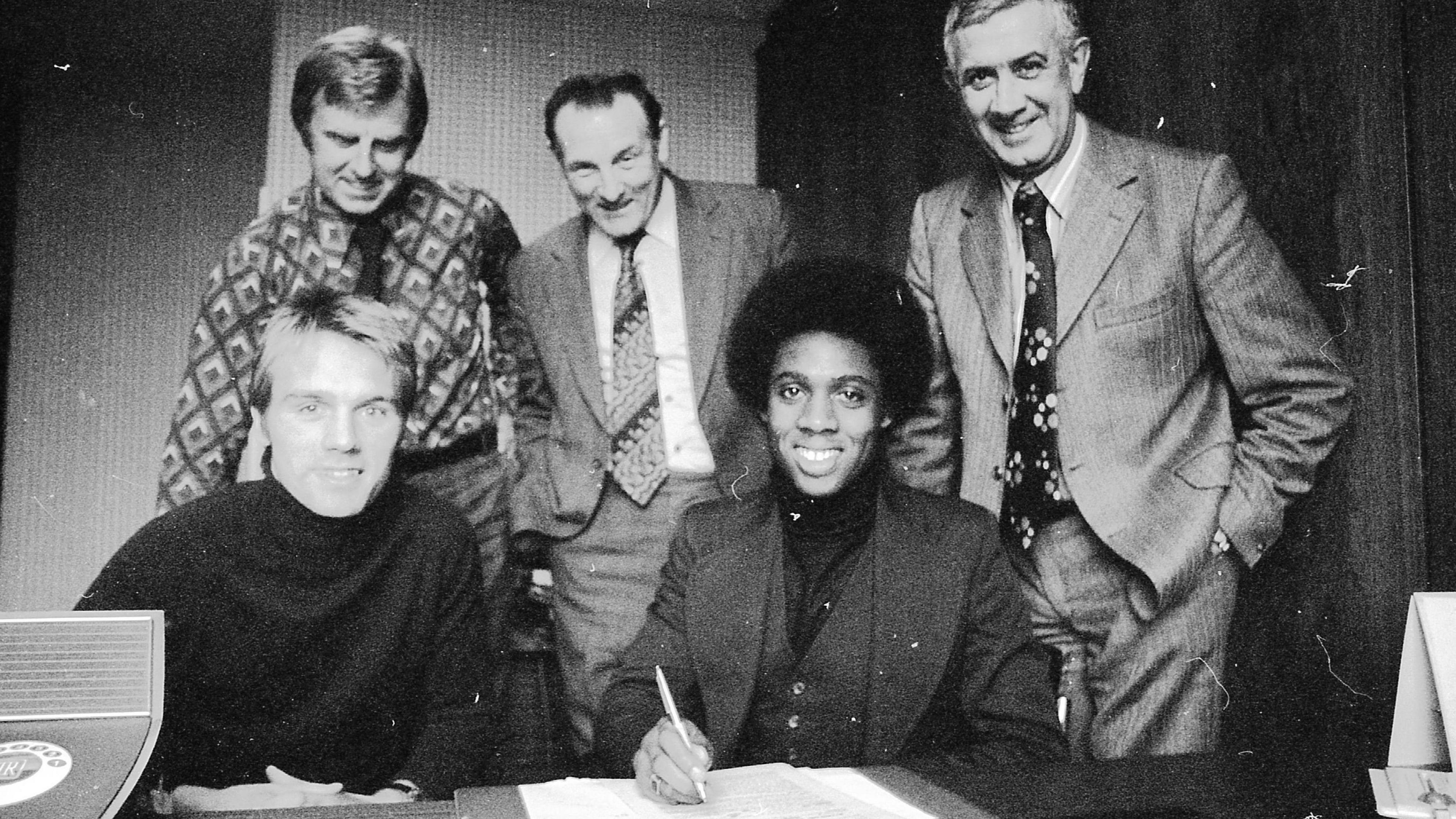
Roly Gregoire, known for his quickness and confidence on the pitch, joined Sunderland from Halifax Town in November 1977. The signing, made on Bonfire Night, was a milestone for the club and for him. At the time, the team was in the Fourth Division, and Gregoire’s arrival marked a historic shift in the sport’s landscape for the North East. His debut came just weeks later, on 2 January 1978, in a Second Division match against Hull City. The game was a success—Gregoire provided an assist in a 2-0 victory, a moment he still remembers with pride.
“After the game, I was having a drink with some fans, and one of them asked: ‘Were your brothers at the game today?’ I said: ‘Yes, five of them.’ And he said: ‘They’re fast!’ But someone interrupted, and I didn’t get the chance to ask what he meant.”
The joy of his debut was short-lived. As he walked back from the pitch, the racist abuse began. The incident unfolded near the club’s hostel, where he was staying. A fan who had initially praised his performance soon turned hostile, using offensive language that left Gregoire shaken. “Later, I called one of my brothers to check if they’d made it home safely,” he explains. “He said they’d been looking for me at the hostel, but on the way, someone threw half a brick at them and shouted—what I’ll call the N-word.”
Gregoire recalls the group of men who chased his family through the park near the stadium, a moment that haunted him for years. “They were just teenagers, but they were so scared,” he says. “It was a lynch mob, and it felt like the whole world was against us. From that day on, my mother never spoke of Sunderland again, not even on the day she passed away.”
The Aftermath and a Shattered Career
The attack was the beginning of a difficult chapter for Gregoire. Despite his talent and the support of some teammates, the racism he endured grew more intense. By 1980, his career had been cut short by injury, leaving him to leave the sport behind. He moved away from Seaburn, the seaside suburb where he had lived, and changed his name to escape the scrutiny and hatred that followed him.
“Sometimes I wish I’d never played football,” he admits. “The pain is still there, even now. Talking to you, I can feel myself getting emotional, but I’m trying to stay strong because I want to make sure the supporters understand what I went through.”
Gregoire’s journey to Sunderland was shaped by his upbringing in Bradford, a city with a rich multicultural heritage. Born in 1958 in Liverpool’s Toxteth area to parents of Caribbean descent from Dominica, he grew up in a community where diversity was part of daily life. However, when he arrived in Sunderland, the racial dynamics were starkly different. According to Census data from 1981, less than 1% of Sunderland’s population of nearly 300,000 were of African-Caribbean origin. At that time, only a handful of clubs had signed black players, and Viv Anderson of Nottingham Forest would not become the first to earn a senior England cap until 1978.
“I knew only one other black person in Sunderland,” Gregoire says. “He was at the polytechnic. Wayne Entwistle, a white striker who signed on the same day for £30,000 from Bury, shared a flat with me for a while. He was a good guy, but it was still a lonely time.”
A Legacy of Resilience
Despite the hostility, Gregoire found allies within the team. Bobby Kerr, the 1973 FA Cup-winning captain, and Mick Docherty, a veteran midfielder, were among those who welcomed him into the dressing room. They helped him adapt to the club’s environment, and he made eight first-team appearances in his debut season. Yet, the summer of 1978 brought a turning point. During a pre-season tour in Kenya, Gregoire experienced further discrimination, an incident that deepened his resolve to leave the game.
“The racism wasn’t just at home,” he says. “It followed me even when I was away. The way people treated me in Kenya, I realized how much of a struggle it would be to stay in the spotlight. I didn’t want to be the only black player in the league, but I was. It was like being a symbol of something people wanted to mock.”
Gregoire’s story is a testament to the resilience required of pioneers in a segregated sport. His journey from a young striker with dreams of playing in the top tier to a man who endured years of racial abuse highlights the challenges faced by black players in the 1970s and early 1980s. While his time at Sunderland was brief, it left an indelible mark on his life, shaping his perspective on football and its role in society.
Now, as he reflects on his past, Gregoire hopes to shed light on the experiences of others who might have been silenced by similar hardships. “I want to share my story so that future generations of players can know they’re not alone,” he says. “Racism is still a part of the game, but it doesn’t have to define someone’s career.”
Gregoire’s debut was a moment of hope, but the racist abuse he faced after it turned that hope into a burden. His legacy, though often overshadowed by the challenges he endured, remains a crucial part of football’s history. As he steps into the spotlight again, he carries the weight of 46 years of silence, determined to ensure his voice is heard.