Ukraine steps up attacks on Russian oil industry as Kremlin reaps export windfall
Ukraine Intensifies Strikes on Russian Oil Facilities Amid Rising Prices
Recent weeks have seen Ukraine launch a series of coordinated assaults on Russia’s energy infrastructure, with Kyiv’s military targeting key refineries and export hubs to disrupt Moscow’s financial gains. The attacks, which have included drone strikes deep within Russian territory, are part of a broader strategy to weaken one of the Kremlin’s primary revenue streams. Analysts note that Russia’s oil exports have recently surged in value, bolstered by global market shifts and partial easing of sanctions.
The war in the Middle East and the blockade of the Strait of Hormuz have created favorable conditions for Russian crude, allowing it to trade at a premium. This has increased the state budget’s reliance on oil earnings, which now account for nearly a third of its total income. Meanwhile, Ukrainian forces report 10 significant strikes this month, including an assault on a major refinery in Yaroslavl, northeast of Moscow, which caused a fire and damaged nearby residential and commercial structures.
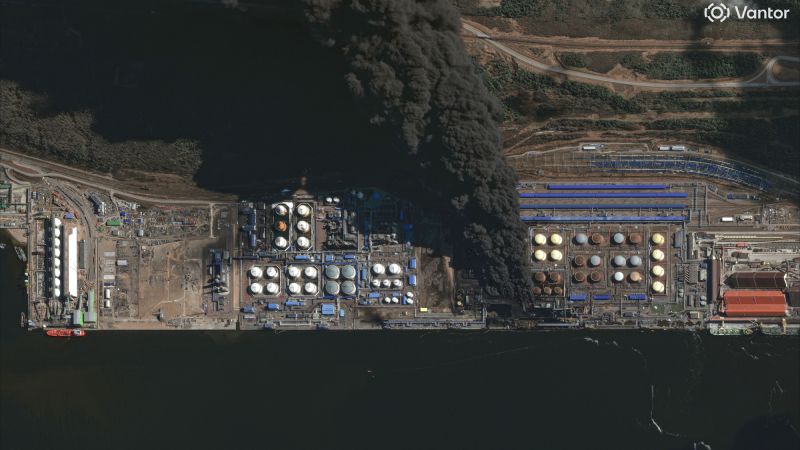
“We responded to the strike on our energy infrastructure. We responded with a powerful strike, reducing the capabilities of Ust-Luga,” Zelensky told CNN during a press briefing. He emphasized that 40% of the refinery’s operational capacity remained after the attack, underscoring the ongoing pressure on Russian energy production.
Regional officials in Yaroslavl confirmed damage to oil-loading stations and a storage facility, though they noted over 30 drones were intercepted. The same week, long-range strikes hit the Ust-Luga terminal on the Baltic coast, disrupting oil shipments and prompting the Russian emergency services to issue warnings about air quality in St. Petersburg. Fires at both Ust-Luga and the nearby Primorsk port remain visible as of Saturday.
Zelensky also linked the attacks to Russia’s ongoing strikes on Ukrainian power grids, which have led to widespread winter power outages. “Russia must stop striking our energy infrastructure. We will then not retaliate against it,” he stated, framing the conflict as a response to Moscow’s aggression. Analysts warn that the Kremlin’s financial gains could have doubled since the start of the year, fueling its ability to sustain operations.
Despite these challenges, Russia is considering reimposing a gasoline export ban, effective from April 1, as reported by state media TASS. The decision follows discussions between Deputy Prime Minister Alexander Novak and industry stakeholders. Some domestic producers argue that chasing higher profits has damaged the local market, though the ban was temporarily lifted in January. Russian outlets like Kommersant acknowledge that unscheduled maintenance at refineries and recent strikes have complicated the situation.
With the US Treasury halting sanctions on Russian crude already at sea earlier this month, Zelensky criticized the move as enabling Moscow to exploit satellite imagery for targeting allied bases. “By lifting sanctions on the aggressor, who makes money every day, they are passing on relevant information regarding attacks,” he said, highlighting the strategic implications of the policy shift.