The EU’s recipe for trade deals : easy on beef, tough on wine
The EU’s trade deals : A strategy of flexibility and focus
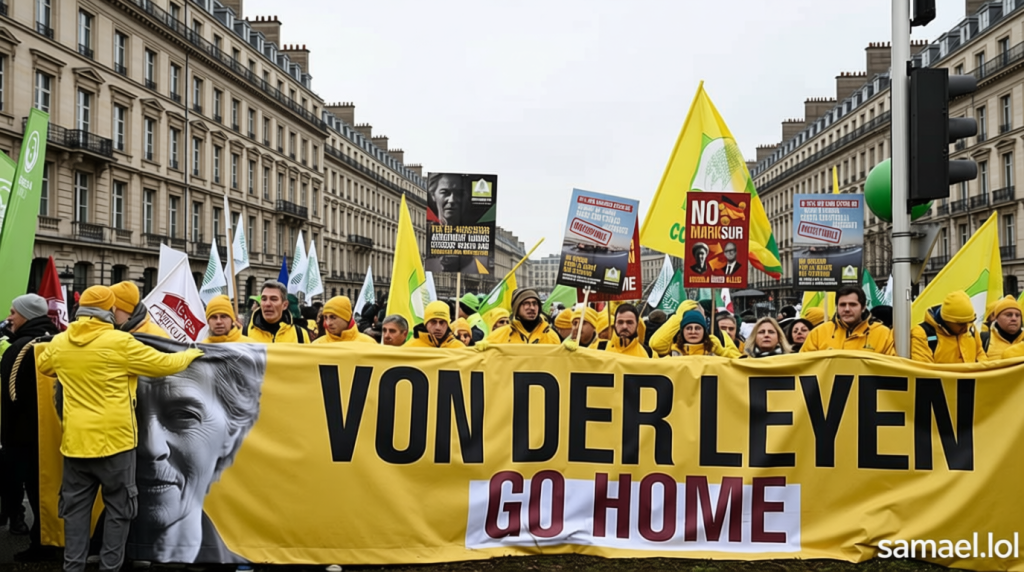
The European Union has concluded three major trade agreements with Mercosur, India, and Australia, each targeting distinct economic regions. While the Australia deal was celebrated as a strategic victory, the EU’s agricultural sector remains divided over the Mercosur agreement. Farmers across the bloc have voiced strong concerns about the terms of this pact, which has sparked legal action and stalled its ratification.
The Commission’s negotiation tactics reveal a pattern of leniency on basic agricultural products like beef, paired with stricter demands for high-value exports such as wine, geographical indications, and automobiles. “The EU possesses the tools to lead in agri-food innovation,” noted Luc Vernet from Farm Europe, a Brussels-based think tank. “Yet we’re missing a cohesive plan that spans all product categories, as the European standard sets unmatched benchmarks for quality across the board.”
Mercosur deal: A contentious compromise
The South American trade pact grants annual quotas of 99,000 tonnes of beef, 25,000 tonnes of pork, and 188,000 tonnes of poultry. Despite safeguards, EU farmers argue these concessions have created a flood of imports. Meanwhile, the agreement includes strict protections for over 1,600 wine geographical indications, with additional GI designations from 12 member states. Yet, the backlash against meat imports highlights lingering fears of unfair competition.
“Our experience with safeguards shows they’re hard to activate because the burden of proof falls on us, the farmers,” said a representative from the agricultural sector. This sentiment underscores the perceived imbalance in the agreement’s dispute mechanisms.
Australia deal: Phased access and market shifts
After eight years of talks with Australia, the EU secured entry-level quotas for beef and sheep meat, but the outcome was a compromise. The final agreement allows 30,600 tonnes of beef annually, with phased-in access over a decade. Sheep and goat meat receive a 25,000-tonne duty-free quota, while sugar and rice face tighter limits. The EU also imposed sustainability certifications for sugar and extended safeguard clauses for sensitive goods.
Car and wine industries saw significant tariff reductions, with car duties falling from 110% to 10% and wine tariffs dropping to 20% for premium products. However, the luxury car tax in Australia remains untouched, offering preferential treatment instead to EU electric vehicles. This reflects the EU’s prioritization of key market access goals, even at the cost of partial concessions.
India: A more balanced negotiation
In contrast to Mercosur, the India deal faced fewer objections. New Delhi’s resistance to market liberalization, particularly in dairy, helped shield EU products from major concessions. The EU, however, successfully pushed for reduced tariffs on wine, with rates cut from 150% to 20% over seven years. This marks a shift in the EU’s strategy, focusing on specific sectors rather than broad agricultural reforms.
Brussels also gained improved access to critical raw materials, a demand that may have influenced further meat-related concessions. While the Australia and Mercosur agreements highlighted tensions, the India deal illustrates the EU’s ability to navigate complex negotiations with a more targeted approach.