Spreading Islamist insurgency dominates Benin’s presidential campaign
Spreading Islamist insurgency dominates Benin’s presidential campaign
Security Concerns Over Islamist Threats
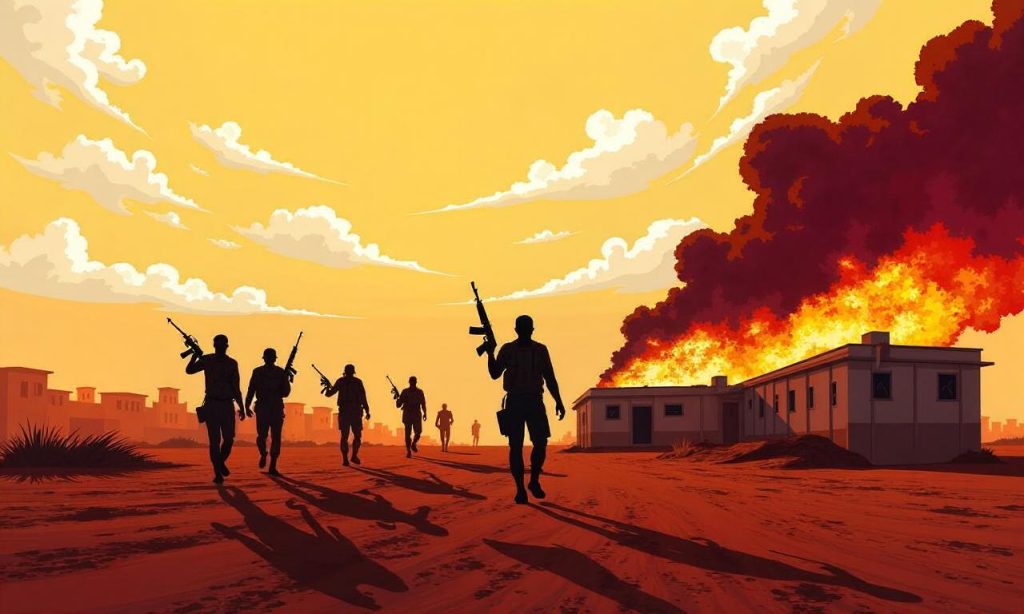
Benin’s upcoming presidential election is centered on concerns about the Islamist insurgency spreading across West Africa. The nation, which has historically maintained stability, now faces growing anxiety as militant groups extend their reach. This shift has made security a focal point for voters and candidates alike.
A Coup Averted by Regional Power
Four months before the election, former President Patrice Talon narrowly avoided a coup attempt. Nigeria, the regional superpower, intervened by deploying warplanes to target rebel soldiers threatening to overthrow him. This action spared Benin from following the path of several neighboring countries, such as Niger, Burkina Faso, and Mali, where military takeovers occurred due to public frustration with civilian governments.
Border Attacks and Military Losses
Recent violence in Benin underscores the growing danger. Last month, an al-Qaeda-linked group known as JNIM attacked a military base in Kofouno, near the Niger border, killing 15 soldiers. This incident reflects a troubling pattern, with 28 troops killed in January 2025 during an assault in the W National Park and another 54 in March of the same year. These attacks have marked the highest casualties for the Benin military in recent history.
The W National Park, alongside adjacent Pendjari and Arly parks, forms the largest protected wilderness area in West Africa, spanning 1.7 million hectares. Its dense forests and the region’s porous borders enable insurgents to establish hidden bases and cross into neighboring countries undetected by security forces.
Local Impact and Fear
Residents have felt the strain of escalating violence. A school teacher shared with the BBC:
“We only want to work, to educate the youth, but it’s becoming so difficult. We can’t imagine our country becoming like Nigeria with Boko Haram’s threats, which has killed so many people.”
Similarly, a mother expressed concern:
“We are afraid to go to the fields. I don’t know what to do, where to go. Anytime, those guys could come here and rape us, steal our stuff or kill us. It’s not easy. Benin doesn’t deserve this. The youth don’t deserve this.”
Candidates Focus on Security
Finance Minister Romuald Wadagni, 49, the ruling coalition’s candidate, launched his campaign in March from Kandi, a key trade center near the Niger and Nigeria borders. He emphasized that safeguarding citizens would be a “daily priority” if elected, vowing to shield the country from external threats.
“We will not let any dark forces to come and take our lands or threaten citizens. We will make sure our whole country is under protection,”
he declared in front of supporters.
His rival, Paul Hounkpè, 56, echoed similar pledges in Cotonou, the economic capital.
“We must join forces with our neighbours without losing our dignity. Benin cannot act alone, close cooperation with Niger and Burkina Faso is essential,”
he stated, highlighting the need for regional unity.
Regional Tensions and Political Shifts
Benin’s relationship with Niger and Burkina Faso has deteriorated since those nations experienced coups. The West African regional bloc Ecowas suspended their memberships and threatened military action to restore civilian leadership in Niger. In response, the three countries formed a separate alliance, aligning with Russia and accusing Ecowas of acting as Western proxies.
Wadagni has signaled support for mending ties with the military-ruled states, though his alignment with Western powers is perceived more strongly than Hounkpè’s. The latter, who served as culture minister under former president Boni Yayi, is seen as a bridge to regional cooperation. Meanwhile, Niger’s Gen Abdourahmane Tiani has kept the border with Benin closed since 2023, citing “hostile manoeuvres” from Benin’s territory as a justification.