Seven games to save Tottenham’s season – but why De Zerbi?
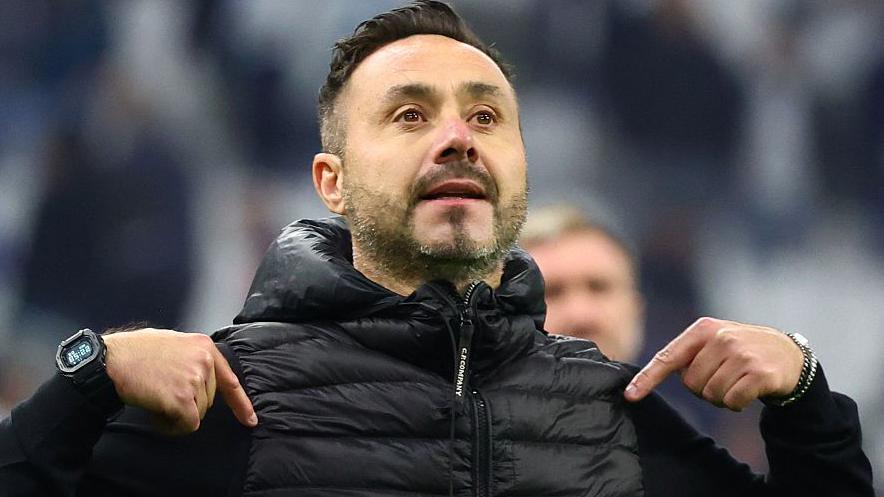
Seven Games to Save Tottenham’s Season – But Why De Zerbi?
Tottenham Hotspur are in a precarious position, sitting just one point above the relegation zone in the Premier League. With a critical seven-game stretch ahead, the club is eyeing the appointment of Roberto de Zerbi as their next manager. If the Italian agrees to the role—expected soon—his task will be to steer the team away from the Championship. The outcome of this period will determine whether De Zerbi becomes a savior or a symbol of a dismal campaign.
The Unlikely Candidate
De Zerbi, 46, is set to replace Igor Tudor, who was sacked after a mere 44 days in charge. Known for his tenure at Brighton, where he guided the team to European qualification between 2022 and 2024, De Zerbi now aims to apply his tactical acumen to a Tottenham squad in turmoil. His first matches as manager will include a trip to Sunderland on 12 April and a home clash against former club Brighton just six days later. Remaining fixtures against Leeds, Everton, Wolves, Aston Villa, and Chelsea will test his ability to stabilize the team quickly.
“He will be having his own way—he’s quite a character,” said Paul Robinson, a former Tottenham goalkeeper. “He’s a very outspoken manager. It’s similar to how Jose Mourinho or Antonio Conte operated when they were at the club.”
A Vision for Change
De Zerbi’s footballing philosophy is rooted in the Pep Guardiola era, emphasizing positional play, pressing intensity, and control through possession. Yet his approach is not a mere copy—it’s an evolution. His previous successes, including leading Marseille to second place in Ligue 1 before departing in February, suggest he can thrive under pressure. However, his methods have occasionally sparked controversy, such as altering formations and lineups frequently, which left players and observers bewildered.
The Crucible of Relegation
The timing of his appointment is strategic. Spurs don’t play until 12 April, giving De Zerbi a window to evaluate the squad and implement his system. But his success hinges on the support he receives. At Marseille, his project faltered when internal conflicts—like clashes between Jonathan Rowe and Adrien Rabiot—eroded unity. De Zerbi’s uncompromising style, while effective, also alienated some players. For Tottenham, the challenge is ensuring their football operations are stable and aligned with his vision, a tall order in a season defined by uncertainty.
While De Zerbi’s credentials are strong, the question remains: can he deliver in a high-stakes relegation battle? Marseille fans felt both relief and regret when he left midway through his second season. The final weeks were a slump, but his early impact had shown promise. Spurs, too, have faced structural issues. If De Zerbi is to succeed, he’ll need a cohesive team and unwavering support from the club’s hierarchy. The next two months will be the ultimate test of his resolve and ability to transform chaos into order.