‘We did everything they wanted’: The American families caught in Italy’s citizenship crackdown
We did everything they wanted: The American families caught in Italy’s citizenship crackdown
The Dream of Reclaiming Roots
In August 2024, Kellen Matwick, his wife Jacqueline, and their two children boarded a one-way flight to Italy, embracing what they hoped would be a fresh beginning. Matwick, whose great-grandparents migrated from central Italy to Pennsylvania, is part of the Italian diaspora. He joined millions who felt their aspirations shattered when the Italian government revised its citizenship by descent rules a year prior, on March 28, 2025. This change was further solidified this month, as Italy’s constitutional court signaled it would dismiss the first legal challenge to the new law.
A Legal Shift
The government’s abrupt policy shift, implemented through an emergency decree, targeted the growing numbers of citizens by descent who had never resided in Italy. For Matwick, this change didn’t just derail his ambitions—it upended his daily life. As one of many diaspora members who relocated to Italy to start the citizenship process, he found his path blocked before the paperwork was finalized. With no transitional period for those already in the country, he now faces uncertainty in employment, travel, and healthcare access while awaiting resolution.
The Process Unraveled
For the Matwicks, moving to Italy was a strategic choice. After living in New York City, they raised their children in Arizona before deciding to emigrate in 2022. They had two options: Spain, where Matwick could secure a digital nomad visa, or Italy, where he qualified for descent-based citizenship through his great-grandparents. Though both spoke Spanish fluently, they opted for Italy, believing citizenship offered a more stable future. Rather than applying through a U.S. consulate, which usually takes years, they chose to settle in Italy and complete the process upon arrival—a method long permitted for Italo-descendants.
“It was an incentive to start our lives quicker,” said Jacqueline. “It didn’t seem like a risk—the process has existed for decades.”
Stranded in Uncertainty
The immigration journey for descent-based citizenship is a labyrinth of bureaucratic steps. Upon arrival, applicants must secure a long-term rental, register with local authorities in a 45-day period, and obtain a residency permit from the police. Only after these stages can they present their documents to local officials, who would then formally recognize their citizenship—until the 2025 law altered the landscape.
“We said, ‘Let’s do it the right way,’” said Kellen. “We treated it like an actual move, chose the city we wanted to live in. We got an apartment, had the kids learn Italian, and lived a real Italian life. We did everything they wanted us to do. Now I feel so stupid—because we did it the right way, we got penalized.”
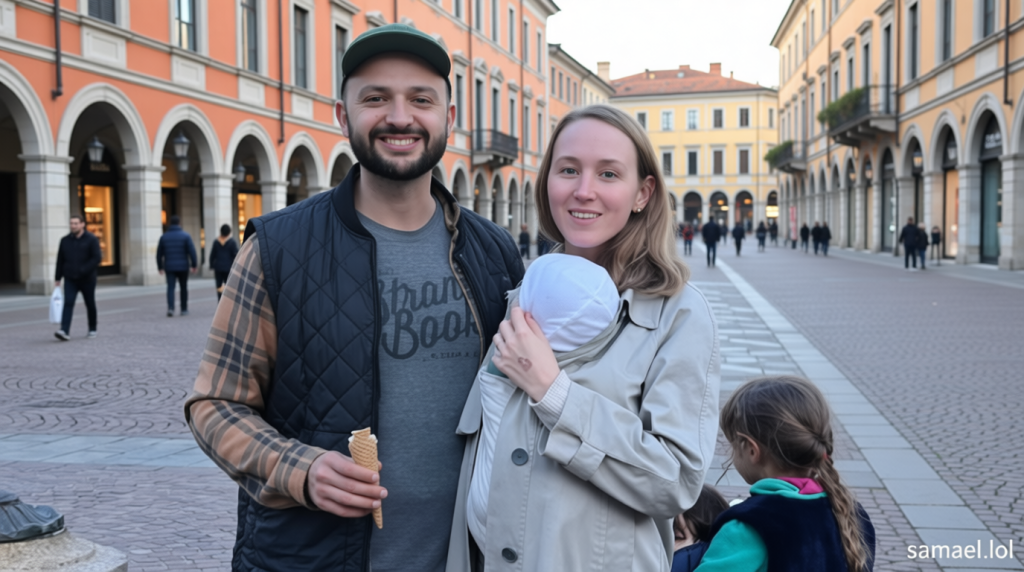
After two years of gathering documentation, the family arrived in Turin in August 2024. The next day, they emailed city authorities to announce their intent to claim citizenship. “It was August, so nobody responded,” Jacqueline recalled—most businesses in Italy close for the month. She followed up three weeks later, only to be told to wait until mid-October. On October 3, the Italian government issued a circular that left thousands of Americans ineligible for citizenship, trapping them in legal limbo.