Artemis II splashes down in Pacific after historic moon trip
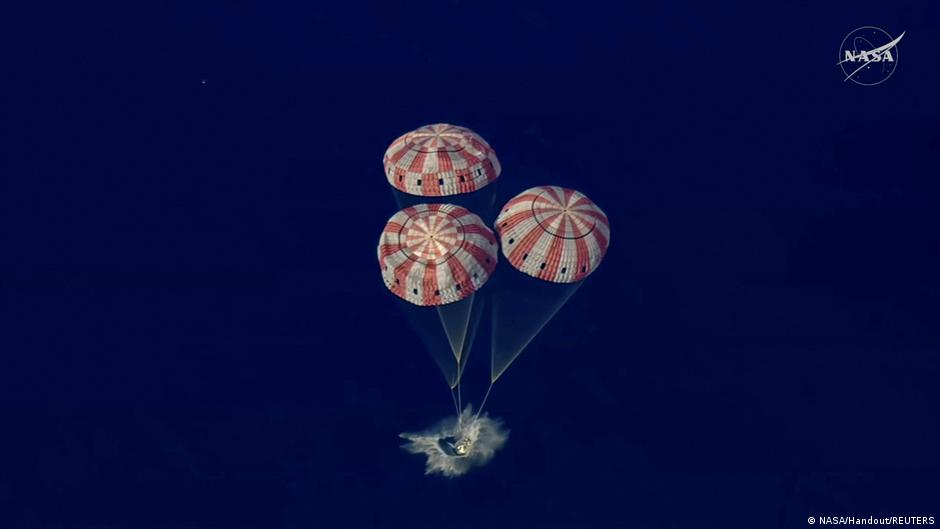
Artemis II Crew Returns to Earth via Pacific Splashdown
Following a 10-day journey to the Moon, the Artemis II crew has completed their return to Earth with a water landing in the Pacific Ocean near southern California. The mission, the first crewed lunar voyage in over 50 years, concluded successfully as the Orion spacecraft, named *Integrity*, brought the astronauts back to our planet.
Historic Lunar Mission and Crew Composition
The four astronauts—US representatives Reid Wiseman, Victor Glover, and Christina Koch, along with Canadian astronaut Jeremy Hansen—broke records by traveling farther into space than any humans since the Apollo era. Their mission marked a milestone in NASA’s efforts to reestablish a sustainable presence on the Moon and pave the way for future Mars exploration.
Reentry and Communication Challenges
As the spacecraft descended, a six-minute communications blackout was expected, a common occurrence during atmospheric reentry. This was confirmed when contact was temporarily lost, but mission commander Reid Wiseman later confirmed the return:
“Houston. Integrity. We have you loud and clear,”
he said after restoring communication post-splashdown.
The Orion capsule shed its propulsion system before reentry, ensuring a controlled descent. NASA shared stunning images captured by the crew during their flyby of the Moon, including unseen views of its far side. The agency also released a video documenting the spacecraft’s approach to Earth, highlighting the technical marvel of the mission.
Heat Shield Performance and Mission Implications
A critical test during reentry involved the Orion’s heat shield, a 16.5-foot-wide (approximately five meters) structure designed to endure temperatures up to 5,000 degrees Fahrenheit (2,760 Celsius). The shield, made of ablative Avcoat material composed of silica fibers, chars and erodes predictably to protect the crew from extreme heat.
The spacecraft entered Earth’s atmosphere at 25,000 miles per hour (40,234 kilometers per hour), slowing to 19 miles per hour (30 kilometers per hour) for the final splashdown. NASA expressed confidence in the shield’s performance, though the Artemis I mission in December 2022 revealed unexpected charring that raised questions about its durability.
The successful return of Artemis II clears the path for Artemis III, which aims to land humans on the Moon again. A flawless reentry would validate the safety of deep-space travel, setting the stage for more ambitious missions. This event also surpasses the Apollo 13 reentry in speed and intensity, underscoring the advancements in space technology.
Recovery and Future Prospects
Splashdown is scheduled for April 10, shortly after 8 p.m. US Eastern Time (0100 GMT), off the coast of San Diego. NASA’s recovery team, including Navy ships and divers, will secure the capsule for inspection, ensuring its condition is thoroughly assessed. The astronauts will then be extracted and transported to a naval vessel for further evaluation.
While the mission’s cost remains a topic of discussion, its success reinforces the feasibility of long-duration space travel. As the Moon becomes a strategic stepping stone for Mars, the Artemis program continues to push the boundaries of human exploration, redefining our approach to interplanetary journeys.