Can small nuclear reactors solve EU’s energy woes?
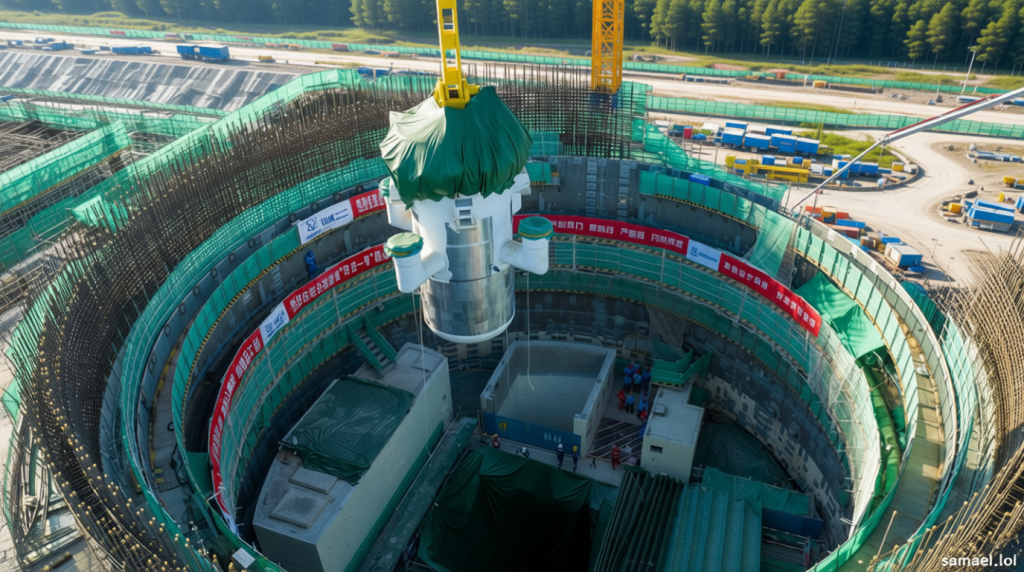
Can Small Modular Reactors Solve EU’s Energy Woes?
Amid the latest energy crisis, the European Union is once again prioritizing security, highlighting vulnerabilities in its energy supply despite past lessons from Ukraine. The Iran conflict has revealed how dependent many nations remain on sudden oil and gas supply disruptions, prompting a reevaluation of energy diversification strategies. This has renewed interest in nuclear power as a solution, with European Commission President Ursula von der Leyen recently calling the shift away from nuclear a “strategic error.” Brussels is now exploring additional funding for nuclear, focusing on deploying so-called Small Modular Reactors (SMRs) across the bloc by the early 2030s.
Even Germany, which retired all its reactors, is reconsidering nuclear energy, with Chancellor Friedrich Merz labeling the phase-out a “serious strategic mistake” though acknowledging its irreversibility. His close political ally, Bavaria’s state premier Markus Söder, advocates for a “new era of nuclear energy,” planning to build SMRs in his region. “The EU’s renewed focus on expanding nuclear energy is a strategically sound response to ensure long-term energy security and climate objectives,” said Henry Preston, a spokesperson for the World Nuclear Association. “Nuclear remains unique in delivering clean, secure, and scalable electricity,” he added.
SMRs are advanced nuclear reactors designed to generate less than 300 MW, roughly a third of conventional plant output. Advocates claim SMRs offer cost, speed, and safety advantages over traditional reactors. However, opponents, including M. V. Ramana, a professor at the University of British Columbia, argue that SMRs cost more per unit of power due to non-linear scaling of materials and labor. “Their material and work requirements do not scale linearly with power capacity,” Ramana stated, calling the EU’s strategy a “misplaced approach.”
Luke Haywood of the European Environmental Bureau emphasized that investing in unproven SMRs is a “costly distraction” for addressing energy challenges. “It’s too slow to build, too expensive, and too risky. SMRs are even further behind: years, if not decades, away from large-scale deployment,” he told DW. Meanwhile, EU nations have expanded wind and solar capacity, now accounting for nearly half of electricity generation and a quarter of overall energy demand. Yet proponents insist nuclear is vital for providing consistent “baseload” power, unlike variable sources like wind and solar.
Malwina Qvist of Clean Air Task Force noted that Germany’s higher renewable share doesn’t eliminate carbon emissions due to reliance on coal and gas, while France’s nuclear dominance results in near-zero carbon output. “This is where SMRs come in,” Qvist said, explaining that their modular design, lower upfront costs, and ability to provide industrial heat make them suited for hard-to-abate sectors like chemicals, steel, and cement. “SMRs could complement renewables by supplying reliable industrial heat and consistent power,” she added. Haywood, however, remains skeptical, arguing nuclear is a poor fit for an energy system already powered by wind and solar.