First gay rights movement: Berlin’s wild 1920s queer history
First gay rights movement: Berlin’s wild 1920s queer history
During the Weimar Republic, Germany’s 1920s became a transformative period for LGBTQ+ rights and queer culture. Berlin emerged as a vibrant hub, fostering research institutes, a dynamic nightlife scene, and one of the earliest organized efforts for gay rights. This era laid the foundation for modern queer identity and activism, shaping perceptions of sexuality and gender long before the National Socialists seized control in the 1930s.
A Legal and Cultural Turning Point
Germany’s legal framework against homosexuality began in 1871 with the introduction of Paragraph 175, which criminalized same-sex acts between men. Rooted in Prussian law, this statute persisted from 1872 to 1945, with varying enforcement. While East Germany abolished it in 1968, West Germany only fully repealed the law in 1994, after decades of reform.
The law sparked early resistance from activists, medical professionals, and writers, leading to the formation of one of Europe’s first visible LGBTQ+ movements. At its core was Magnus Hirschfeld, a pioneering physician and sex researcher who challenged the notion that sexual orientation was a moral failing. He argued instead that it was a natural aspect of human diversity.
Foundations of Queer Advocacy
In 1897, Hirschfeld established the Scientific-Humanitarian Committee in Berlin, marking a global milestone in LGBTQ+ rights advocacy. The organization aimed to dismantle Paragraph 175 through research, education, and public campaigns. A decade later, in 1919, he founded the Institute for Sexual Science, blending medical care with progressive studies on gender and sexuality.
The institute became renowned for its groundbreaking work, including early exploration of transgender identities and rejection of rigid gender binaries. It offered counseling, maintained extensive archives, and hosted events that reflected Berlin’s growing queer culture. Despite legal risks and societal prejudice, the city provided a space for open expression among artists and creators.
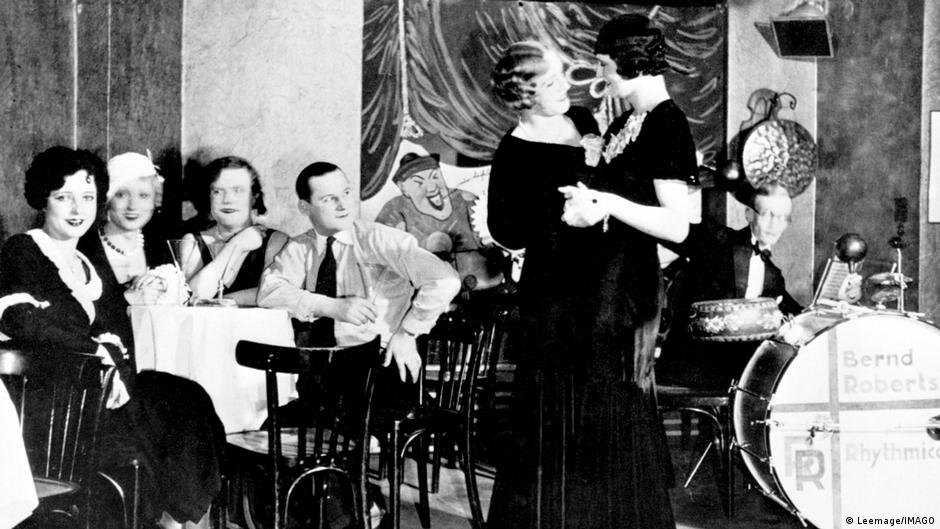
“At the time, Berlin was certainly one of the most liberal cities in the world,” said Birgit Bosold, a long-term board member at Berlin’s Gay Museum. “There were plenty of clubs, publications, and meeting places for gay, lesbian, and gender-nonconforming individuals.”
Iconic Venues of the Era
One of the most notable gathering spots was the cafe Dorian Gray, located on Bülowstrasse. This mixed venue catered to both women and men, featuring literary readings, music performances, and costume balls. It played a pivotal role in Berlin’s lesbian social scene, reflecting the city’s diverse queer community.
Meanwhile, Eldorado stood as a legendary nightclub in the Weimar years. Opened in 1924 in Kantstrasse, it later relocated multiple times but remained a cornerstone of Berlin’s LGBTQ+ culture. The club offered drag performances and a space for social freedom, inspiring figures like Otto Dix and Marlene Dietrich.
British author Christopher Isherwood documented this era in his book “The Berlin Stories,” drawing heavily from experiences at venues such as Eldorado. His work captured the bohemian, queer, and political energy that defined the 1920s. However, this cultural renaissance was short-lived as the Nazis consolidated power.
Crushing the Liberal Vision
With the rise of the National Socialists in 1933, Berlin’s progressive atmosphere was swiftly dismantled. Hirschfeld’s Institute for Sexual Science was raided and destroyed, its library looted, and its findings burned during the infamous Nazi book burning on May 10, 1933. Today, a commemorative plaque at the site reminds visitors of this lost era of queer innovation.