Germany: Stranded humpback whale moving again
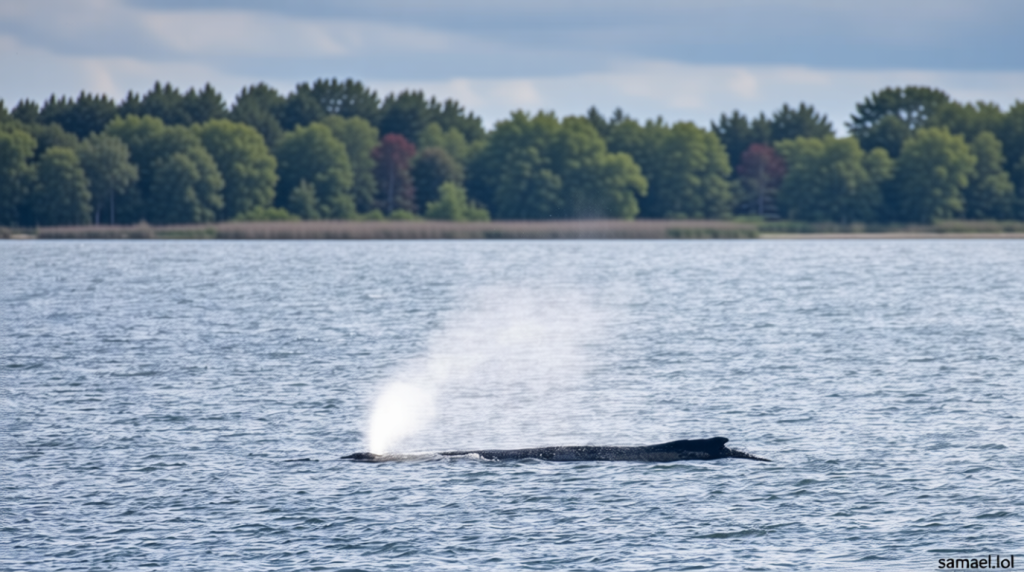
Germany: Stranded Humpback Whale Resumes Movement
A humpback whale that had remained motionless for nearly a week along Germany’s Baltic coast began to move again on Monday evening, marking a hopeful shift in its ordeal. Despite earlier indications of declining health, the creature’s progress offered a glimmer of optimism, though experts remain cautious about its future direction.
Opportunity for Escape
The whale had been trapped in two distinct locations within the Baltic Sea for over seven days before it started to swim. On Monday, water levels in Wismar Bay surged by approximately 30 centimeters, creating a possible pathway for the animal to escape. Rescue teams had been actively preparing to guide it toward open waters.
“It could now get on its way if it wanted to,” said Till Backhaus, the regional environment minister for Mecklenburg-Western Pomerania. However, the exact route the whale would take remains uncertain, with some speculation pointing toward Wismar harbor.
Environmental group Greenpeace suggested the whale might be heading in that direction, though its movements have been inconsistent. The creature’s initial stranding occurred on a sandbank near Timmendorf, a beach in Schleswig-Holstein, early last week.
Health Concerns Grow
Prof. Burkhard Baschek from the German Oceanographic Museum described Monday as a “decisive day” in the whale’s situation. He noted that the animal had only shifted about 1 to 1.5 meters in the past 24 hours, despite favorable conditions during the night. “Its breathing rate has dropped significantly, now roughly once every four minutes,” Baschek warned, highlighting the risk of secondary infections.
“When we gently tried to reanimate it by striking the water with our paddle, it barely reacted,” Franziska Saalmann of Greenpeace reported. “It’s not making any more noises. This lack of movement and response suggests it’s simply very weak and worsening.”
The whale’s path has been complicated by the Baltic Sea’s shallow waters and natural bottlenecks, which it navigated toward the North Sea and Atlantic Ocean. However, it became stranded again off Wismar Bay after swimming east instead of continuing north.
Collaboration and Criticism
Marine biologist Robert Marc Lehmann, who was present in Timmendorf, criticized ongoing rescue efforts over the weekend. He stated that he was excluded from later operations and urged teams at Wismar to don wet suits and approach the whale directly. State Environment Minister Backhaus acknowledged this feedback, emphasizing collaboration and stating he had been in contact with Lehmann.
Backhaus also praised the work of the German Oceanographic Museum and Greenpeace, noting no “deficits” in their efforts. The whale’s stranding is believed to have occurred in early March, likely due to disorientation and a mistaken route into the Baltic Sea.