Germany’s Merz sees backlash over Syrian refugee comment
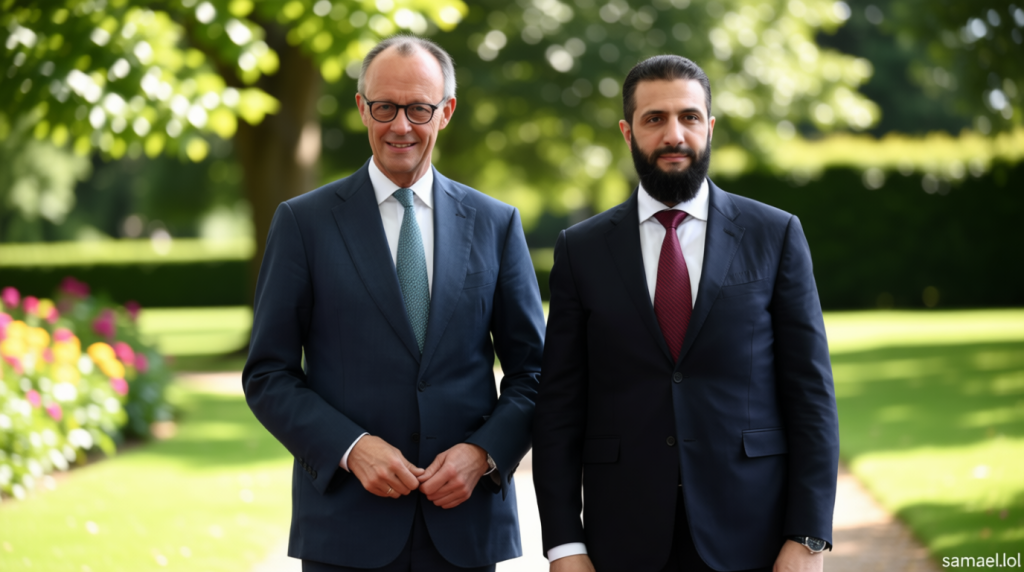
Germany’s Merz Faces Outcry Over Syrian Refugee Remarks
Chancellor Friedrich Merz proposed that 80% of Syrians residing in Germany should return to their home country within three years. This claim, which has sparked widespread controversy, was made during a press encounter with Syrian interim president Ahmed al-Sharaa in Berlin. The chancellor later clarified that the figure reflected al-Sharaa’s vision, not his own.
Backlash Emerges Amid Controversy
Merz’s statement has drawn sharp criticism from politicians and commentators. Some questioned whether such a high percentage of Syria’s over 900,000 diaspora in Germany could realistically be achieved. Others doubted the chancellor’s intent, suggesting he may have misinterpreted or oversimplified al-Sharaa’s remarks. The debate intensified after al-Sharaa denied the claim during a Chatham House discussion, stating the chancellor had made the comment in the event’s Arabic translation.
“Not only out of touch with reality, but cynical,” said Luise Amtsberg of the Green party, highlighting the contradiction between Merz’s statement and Syria’s ongoing security challenges. She also noted that many Syrians have become integral to German society.
Supporters of the chancellor argued that the statement aligned with Germany’s broader goals. Foreign Minister Johann Wadephul defended Merz, calling the return plan “the aim of the German government.” However, opposition voices, including Anke Rehlinger of the Social Democratic Party, criticized the use of specific figures, warning they could raise unrealistic expectations.
Merz’s remarks also drew attention to the professional contributions of Syrians. Roderich Kiesewetter, a CDU official, pointed out that a significant number of Syrians work in nursing and medical fields, emphasizing the potential impact of their departure. The German Hospital Federation echoed this, noting that Syrian doctors make up the largest foreign medical workforce in the country.
Meanwhile, Germany’s refugee population continues to grow. Over 1.2 million Syrians now live in the nation, which has an 84 million-strong population. More than a quarter hold German citizenship, a result of prolonged asylum processes. Most Syrians received subsidiary protection due to the ongoing conflict, which began in 2011. The pandemic slowed migration, but the civil war’s end in 2024 has prompted renewed discussions about repatriation.
Germany’s migration policies include provisions for transitioning asylum-seekers to labor migration status if they find work. This change, introduced in 2023, aims to address skill shortages and aid integration. Yet, the prospect of 80% returning raises questions about the feasibility of such a plan, especially as Syria’s political landscape remains uncertain.
The situation is now risking a diplomatic rift. With Merz’s comments, the focus shifts to whether Germany’s stance on Syrian refugees reflects a genuine commitment to their future or a strategic adjustment to manage the population.