Greek ministers resign over EU farming subsidy scandal
Greek ministers resign over EU farming subsidy scandal
Greece’s recent scandal involving the misallocation of EU farming subsidies has prompted the resignation of several key ministers. Allegations suggest that recipients submitted claims for land and livestock not under their ownership, approved by lawmakers aiming to secure political support.
Following a surge in resignations linked to an expanding farm subsidy fraud case, Prime Minister Kyriakos Mitsotakis announced the replacement of multiple officials on Friday. Among those stepping down were Agriculture Minister Kostas Tsiaras and Civil Protection Minister Yiannis Kefalogiannis, along with Deputy Health Minister Dimitris Vartzopoulos.
All three officials maintained their innocence, stating that their departures were designed to facilitate the ongoing inquiry. Their replacements include the appointment of Margaritis Schinas, a former European Commission vice president, as the new agriculture minister.
Mitsotakis’s reshuffle introduced Margaritis Schinas, a former European Commission vice president, as the new agriculture minister. Opposition groups criticized the changes, pushing for early elections and cautioning that the crisis might threaten political stability before the next scheduled vote.
“I vow to imprison the ‘thieves’ responsible and reclaim money from those who benefited,” Mitsotakis declared, emphasizing his commitment to holding perpetrators accountable.
The legal system in Greece has complicated the case, requiring parliamentary approval to strip ministers of immunity before they can face prosecution — a step frequently hindered by ruling party majorities.
This marks the second round of resignations linked to the scandal, following the departure of five top officials in the previous year. The European Public Prosecutor’s Office (EPPO) investigation has broadened to encompass at least 20 New Democracy party members, both current and former lawmakers. EPPO initially disclosed the scheme in May, accusing recipients of submitting claims for land they didn’t own and inflating livestock counts.
The scheme is believed to have siphoned approximately €23 million (around $26.5 million) in fraudulent payments since 2018. Suspicion has fallen on various schemes, such as banana plantations on Mount Olympus, olive groves within a military airfield, and pastures on an archaeological site.
A significant portion of the fraudulent subsidies was directed to the island of Crete, a region where the Mitsotakis family has wielded political influence for over a century. Official data reveals that around 80% of pasture-related subsidies from 2017 to 2020 were allocated to Crete.
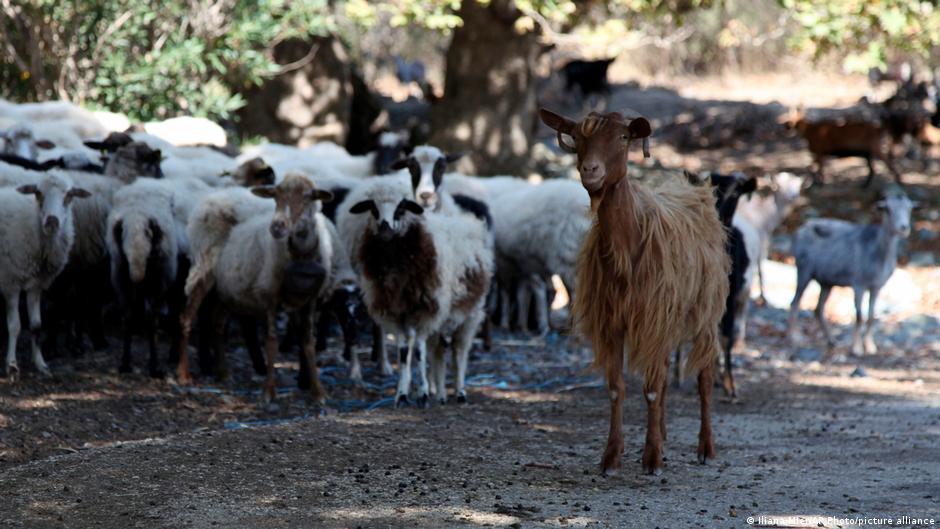
Despite a decline in livestock farmers across Greece, Crete registered 13,000 new farmers between 2019 and 2025. Simultaneously, the reported number of sheep and goats nearly doubled during this period.
Previous probes and law enforcement actions have resulted in arrests and financial penalties related to subsidy misuse.