Hungary election: Orban concedes ‘painful’ defeat to Magyar
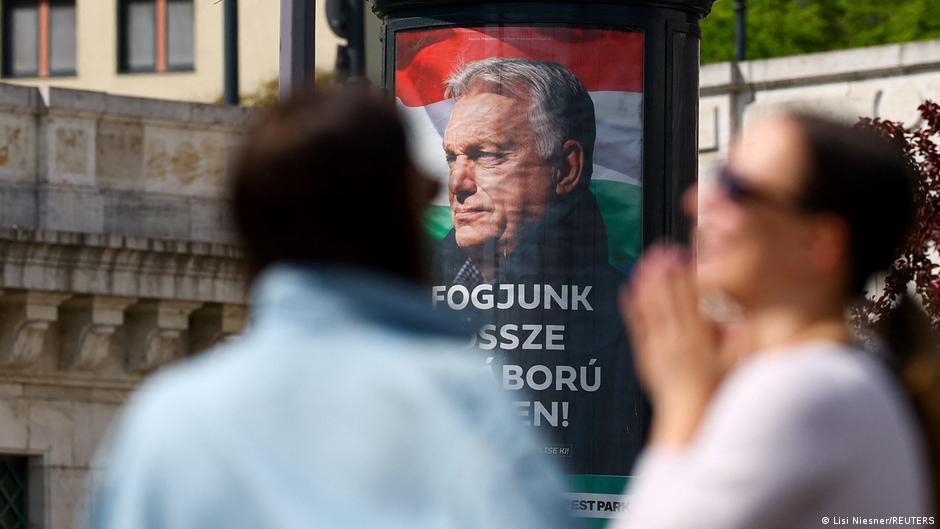
Hungary Election: Orban Concedes ‘Painful’ Defeat to Magyar
After a pivotal parliamentary vote on April 12, Hungary’s long-serving prime minister, Viktor Orban, acknowledged the significant shift in power to Peter Magyar and his Tisza party. The results marked a historic turning point, with Magyar’s campaign securing a strong majority. DW provides the latest updates on the event.
International Reactions to the Election Outcome
Spain’s Prime Minister Pedro Sanchez praised Magyar’s victory as a “historic” moment, highlighting its significance for European unity. In an online statement, he stated,
“Today Europe wins and European values win.”
He expressed anticipation for collaboration with Magyar to advance shared goals.
Germany’s Chancellor Friedrich Merz celebrated the election, tweeting,
“Hungary has decided.”
He emphasized,
“I look forward to working together for a strong, safe and, most of all, united Europe.”
Meanwhile, French President Emmanuel Macron commended Magyar’s success, noting it signaled a move “toward a more sovereign Europe.” He added,
“France welcomes this victory as a triumph for democratic participation, for the Hungarian people’s commitment to the values of the European Union, and for Hungary’s place in Europe.”
EU Commission President Ursula von der Leyen responded by asserting,
“Together, we are stronger. A country reclaims its European path. The Union grows stronger.”
Her message underscored the bloc’s resilience despite internal divisions.
Orban’s Political Journey and Magyar’s Rise
Viktor Orban, the 62-year-old leader of Fidesz, conceded the election, calling the result “painful but unambiguous.” He told supporters,
“I congratulated the winning party.”
Orban pledged to continue representing Hungary from the opposition, vowing to serve the nation “from opposition as well.”
Magyar, a 45-year-old lawyer, emerged as a formidable challenger. Previously part of Fidesz and married to Judit Varga, who served as justice minister in one of Orban’s administrations, he now leads the Tisza party. Early exit polls projected Magyar with 51% of the vote against Orban’s 40%, a stark contrast to the former’s earlier dominance.
Magyar’s victory could grant his party a two-thirds majority in Hungary’s 199-seat parliament, opening pathways for sweeping reforms. His campaign emphasized optimism, with Magyar declaring at an election party,
“We’ve seen the latest polls and the turnout, and based on the information we are getting we are optimistic.”
Meanwhile, outside the venue, supporters gathered along the Danube, anticipating a “celebration of democracy.”
Transition and Controversies
At a separate event, Gergely Gulyás, head of the Prime Minister’s Office, held a press conference. He acknowledged “a lot of reports about irregularities” but claimed,
“As of today, I’m not seeing the type of irregularity today that would raise questions about the final result.”
Gulyás assured that his coalition would ensure a smooth transition of power if necessary.
Orban’s first tenure as prime minister lasted from 1998 to 2002 before he was ousted. A political comeback in 2010 allowed him to regain control and serve four additional terms. His leadership has aligned closely with Russian President Vladimir Putin, a stance that drew criticism from some European allies.
Notably, US President Donald Trump had endorsed Orban prior to the polls. However, the election results now signal a pivotal moment for Hungary’s political landscape, with Magyar’s Tisza party poised to reshape the nation’s direction.